Change or rekey · Cachet
Deadbolt Installation in Cachet
You moved in three weeks ago.
In plain words
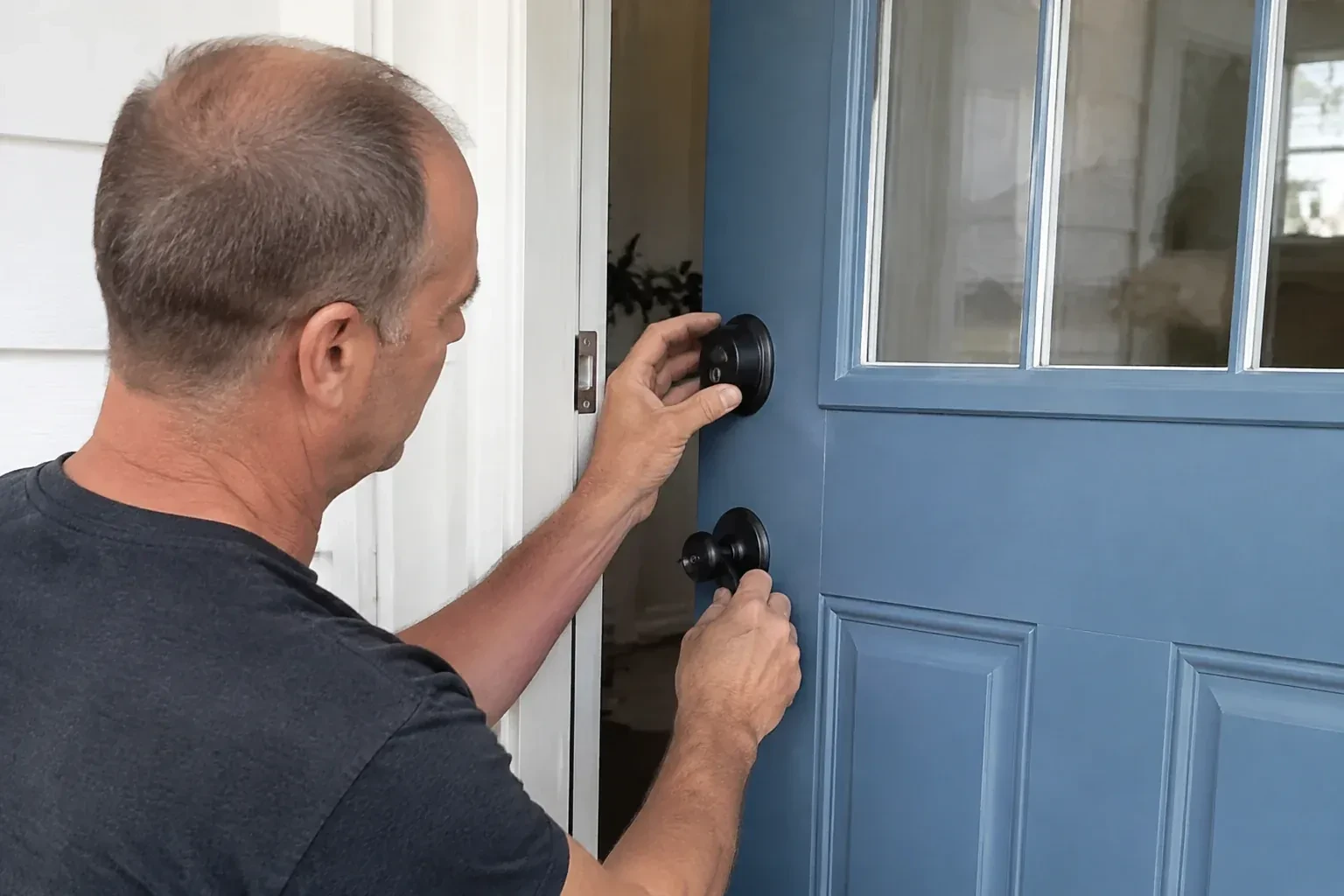
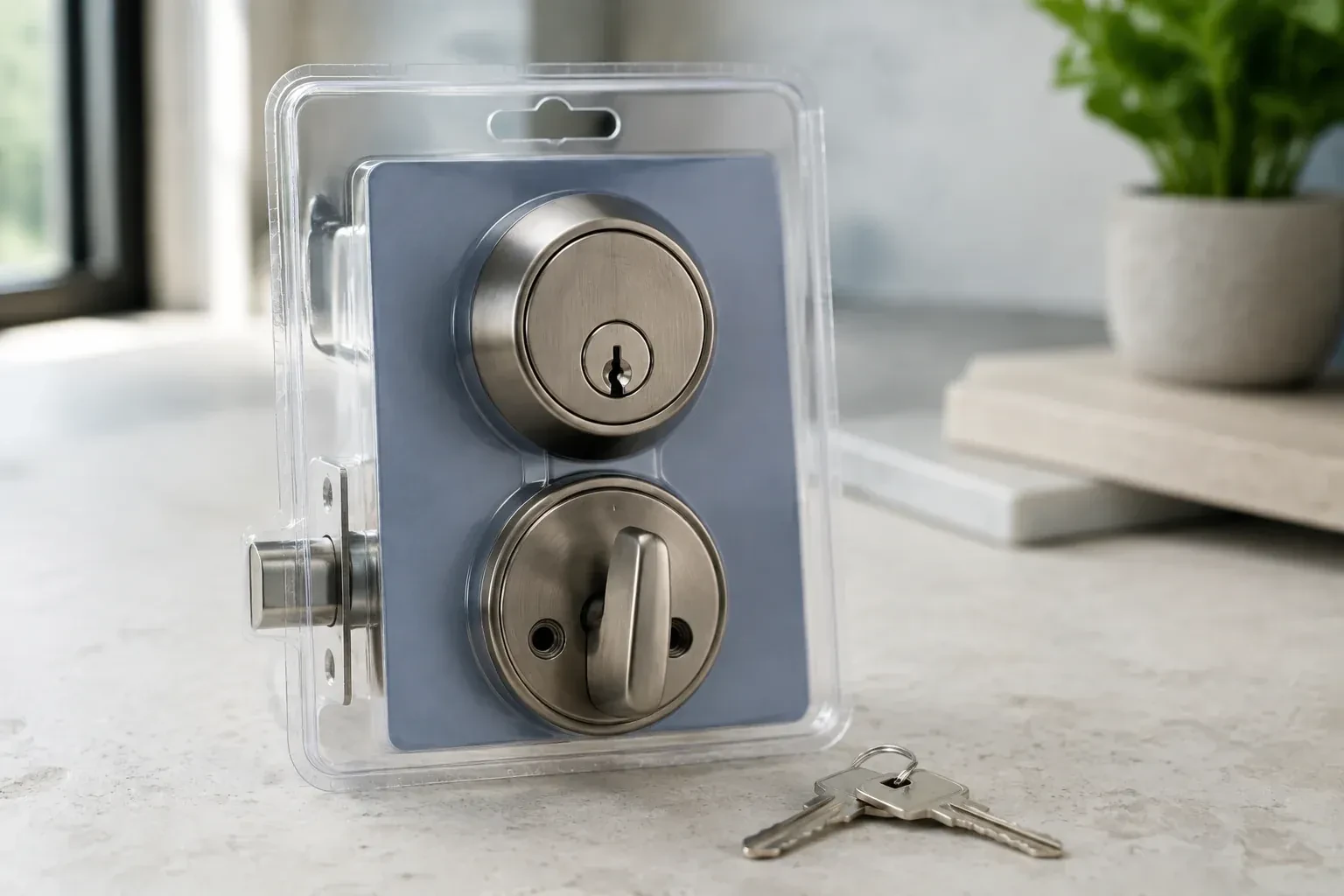
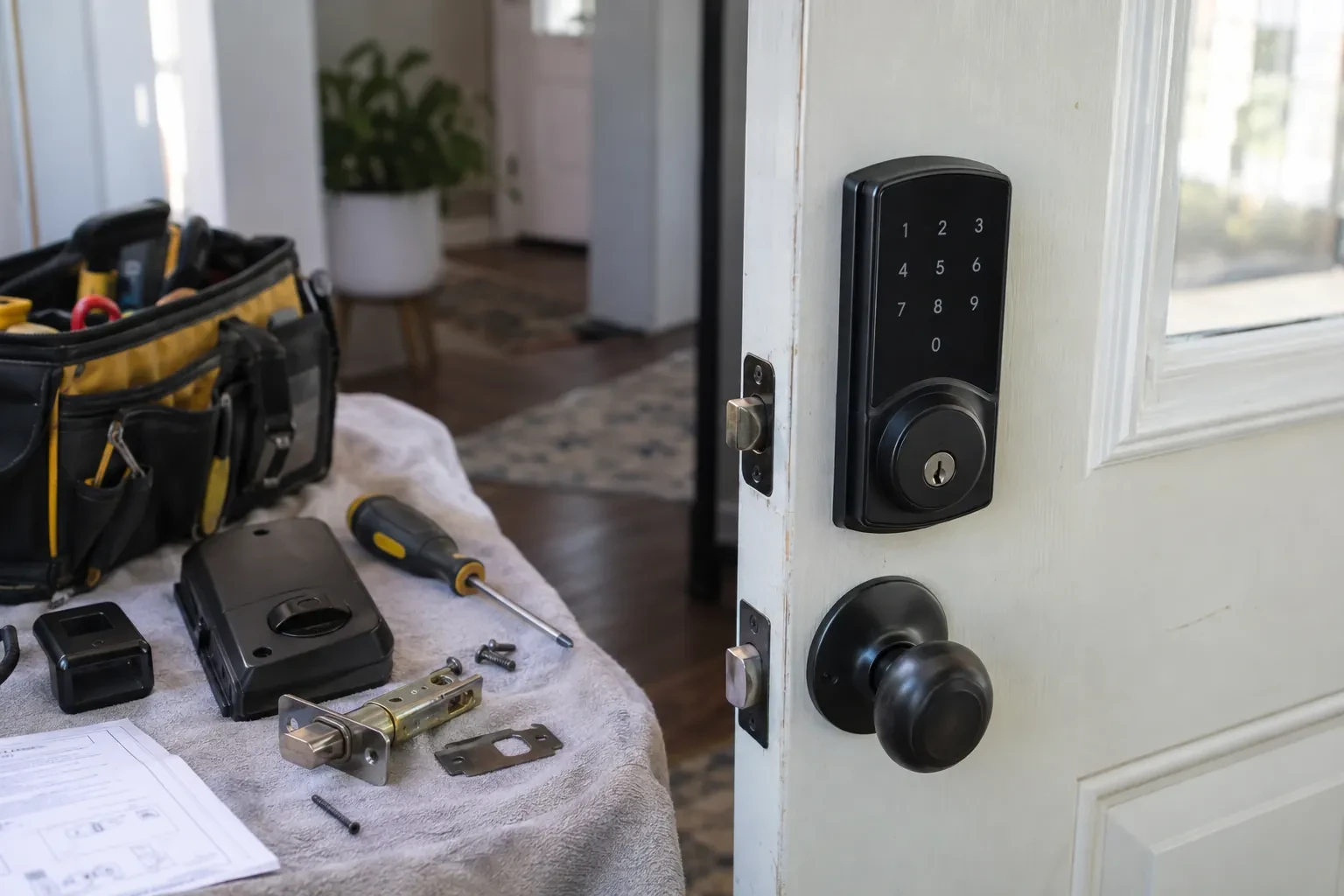
If your door already has a knob or lever bore and nothing above it, adding a deadbolt is a boring job in the literal sense. A jig clamps to the door at the right height, usually 140 to 150 mm above the knob centre, and guides a hole saw through the face and a smaller bit through the edge. The locksmith mortises the edge so the bolt faceplate sits flush, sets the bolt to the door's backset, then fits the cylinder outside and the thumb-turn inside. The frame is marked from the bolt itself, bored and chiselled for the strike, and the lock is tested open and closed.
How the visit goesYou moved in three weeks ago. The previous owner left a handful of keys, none labelled, and the bolt on the side door rattles in its housing. You would like every exterior door to bolt, and to know exactly who can open it.
Deadbolt Installation
How the visit goes
What the door is made of
The first thing the locksmith reads is the door itself, because it decides how the holes get cut. A solid wood slab in a century home bores cleanly but can split at the edge if the mortise is rushed. A steel-clad insulated door has a thin metal skin over foam, sometimes with a wood block at lock height, and needs a metal-cutting hole saw run slowly. Fibreglass behaves like a hard plastic and chips if the bit grabs. Thickness matters too: most exterior doors are 44 mm, some older ones 35 mm, and the deadbolt's screws and collar have to suit that. Ten seconds with a tape and a knuckle on the face answer all of this.
Fitting the bolt and setting the backset
The bolt assembly slides into the edge bore with the faceplate set the way its maker marks, commonly the word "top" facing up. Most residential bolts adjust between 60 mm and 70 mm by twisting or sliding the faceplate, and the locksmith sets it to the backset measured earlier so the tailpiece from the cylinder lands in the centre of the bolt's cam. The bolt is secured with its two short screws, and the locksmith works it in and out by hand to feel that it runs freely through the door without rubbing on the bore. On an insulated door a round drive-in collar may replace the flat plate where the edge is too thin to mortise.
Looking after it through the seasons
A deadbolt asks for very little, and most of it happens twice a year. In spring and again in autumn, throw the bolt with the door closed and notice whether it still slides in freely; wood doors swell in humid summers and shrink in dry winter air, and the first sign is a bolt that needs the door pulled before it will lock. If so, a small strike adjustment puts it right. Give the bolt and keyway a puff of whatever lubricant the lock's own maker specifies, often dry PTFE or graphite, since some cylinders are serviced with oil instead. Wipe salt off the outside trim after a slushy week so the finish stays bright.
Deadbolt Installation
In the van
Jamb reinforcer
Boring jig and 54 mm hole saw
Bolt faceplate or drive-in collar
Dry PTFE lubricant
75 mm (3 in) strike screws
Deadbolt Installation
What affects the quote
Finish and trim style
Coated finishes built for salt and sun, matching trim for an existing handleset, and low-profile faces cost differently from a standard brass or nickel unit, and you choose the level.
Travel to the property
Distance and access are part of any call-out: a house on a suburban street and a rural property down a long road involve different driving time, and the quote says so.
Rental and building requirements
Matching a building's keyway, providing keys to a landlord or fitting a lock that a condominium corporation specifies can add hardware or bench work, each shown as its own item.
What to have ready
- Does the door have to be pulled or lifted before it latches or locks at the moment?
- Do you want the new deadbolt to work on the same key as your other doors?
- Is there a storm door or screen door in the same opening?
Deadbolt Installation: questions
QuestionsHow do I look after a deadbolt once it is installed?
Very little is needed. Each spring and autumn, lock the door from inside and feel whether the bolt still goes home without the door being pulled; if it hesitates, the door has moved with the season and a small strike adjustment restores it. Whatever lubricant the lock's own maker specifies keeps it smooth, often a dry PTFE or graphite type in the keyway and along the bolt, though some cylinders are meant to be serviced with oil. In winter, wipe road salt off the outside trim to protect the finish.
Can a deadbolt be added to a door that only has a knob?
Yes, on nearly any wood, steel-clad or fibreglass entry door. The locksmith marks a spot above the knob, clamps a jig to the door and bores a cross hole through the face and a smaller hole through the edge, then cuts a pocket and fits a strike on the frame. The main things checked first are the door's thickness, what is inside it at that height and whether glass sits close by.
Can the new deadbolt use the same key as my other doors?
Usually, yes. If the new lock shares a keyway with your existing cylinders, the locksmith repins it on the bench so your current key operates it, and nothing changes on anyone's ring. If the keyways differ, the other doors can be brought onto the new key instead. Say which key you want to keep before the hardware is chosen, because keyway is part of picking the lock.
Related services
- Lock Replacement & UpgradeSomeone tried the back door while you were away.
- Vintage Mortise Lock ServiceThe old skeleton key still fits the keyhole, but it now needs a jiggle, a lean on the door and a little luck before the bolt moves.
- Smart Lock InstallationThe deadbolt is a stiff double-cylinder model that needs a key from both sides, and in the dark hallway finding it is a nuisance.