Lockouts · Cachet
Home Lockout Service in Cachet
Someone pushed the privacy button on the bathroom door and pulled it shut behind them, leaving the room locked and empty.
In plain words
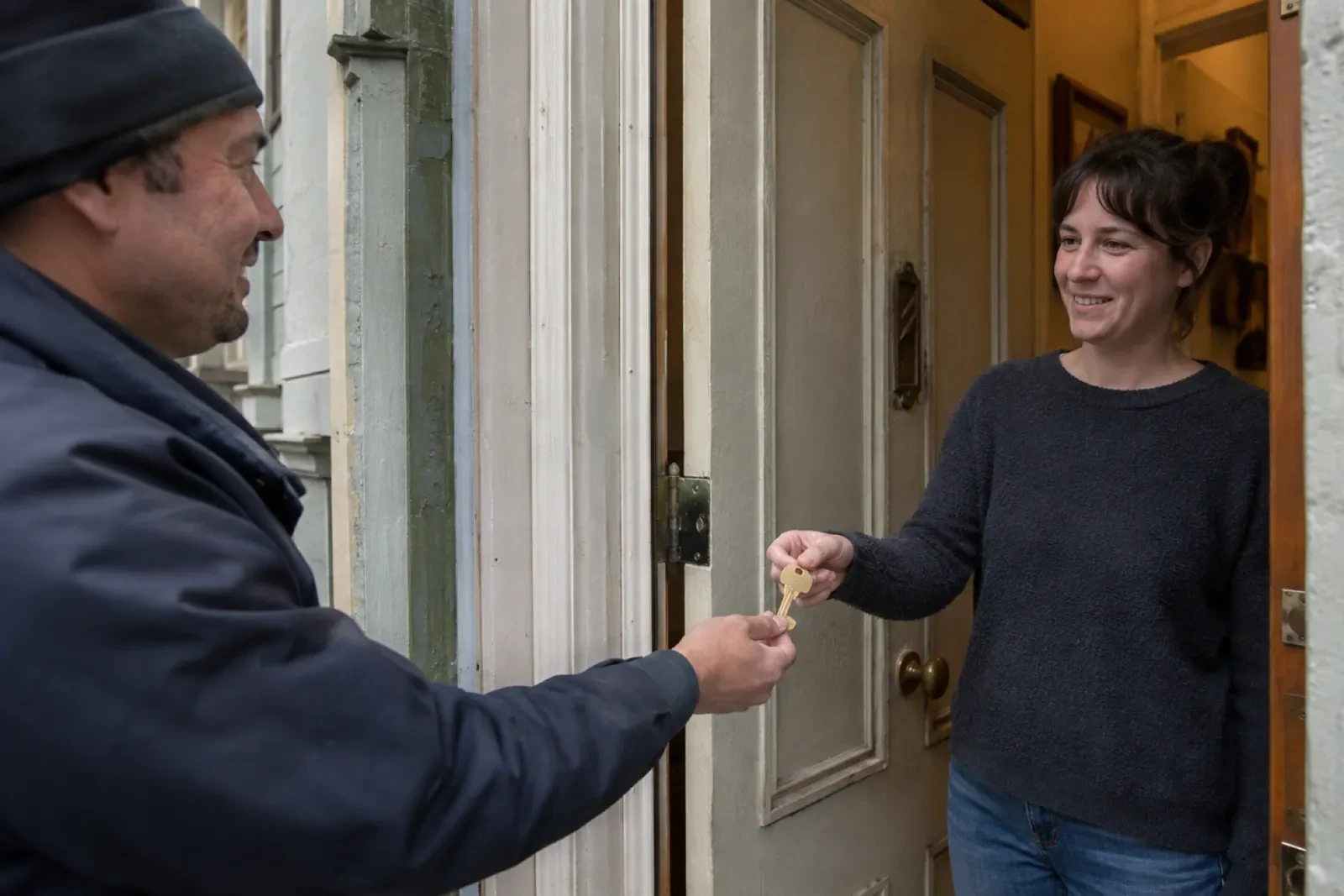
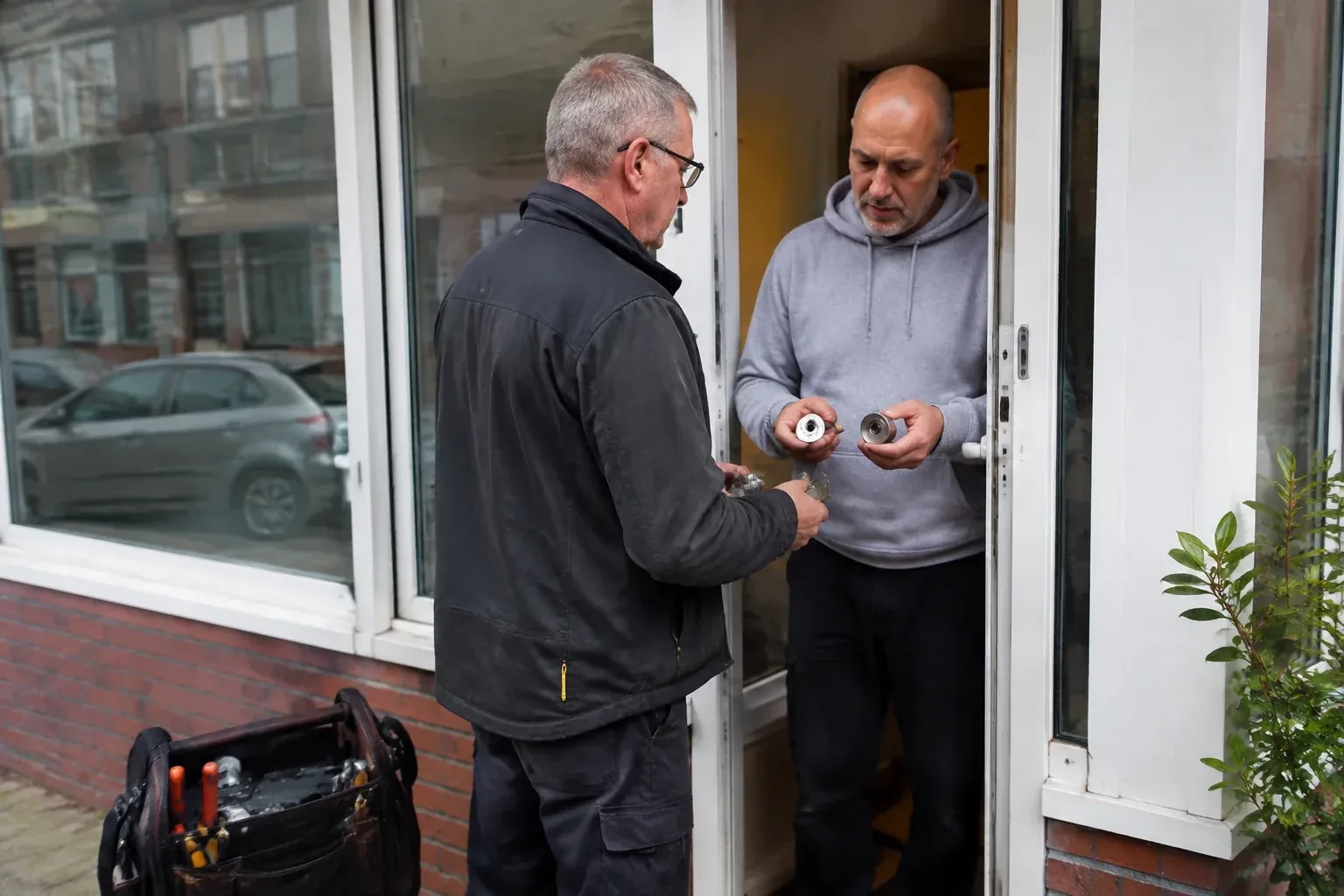
The visit follows a steady order. On the phone you describe the door, the lock and where the key went, which tells the locksmith what to bring. At the house, identification and address are checked and the lock is examined, including the door's fit in its frame. The opening itself comes next, using the least invasive technique that suits the hardware. Once inside, the lock is cycled several times to confirm it works, and you are told what was done. Any recommendation, such as rekeying because a key is missing, is explained then and carried out only if you want it.
How the visit goesYou stepped out to grab the recycling bin and the door swung shut behind you. Through the glass you can see your keys hanging on the hook by the stairs, exactly where they always are, and the latch has caught.
Home Lockout Service
How the visit goes
Other ways in, and other locks on the same key
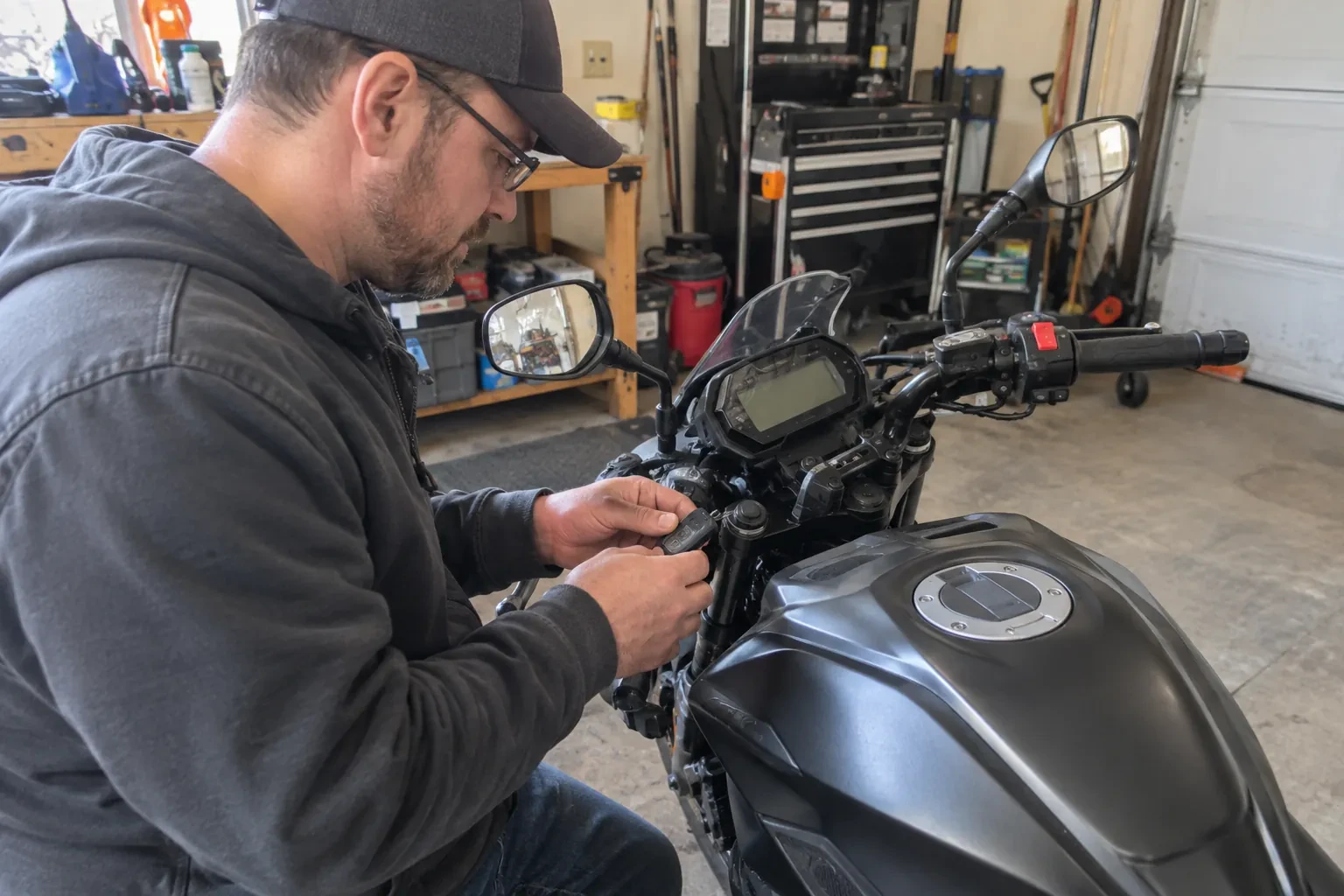
Before working on the front door, the locksmith asks about the rest of the house. A back door, a side entrance from the garage or a walkout basement may be on the same key or on a different one, and occasionally a family member with a spare is closer than anyone realized. Knowing whether the front and back locks are keyed alike also matters later: if one cylinder is rekeyed after a lost key, the others should follow so the household stays on a single key. A short tour of the openings takes a minute and often changes which door gets worked on and how.
Opening, then closing the loop on a lost key
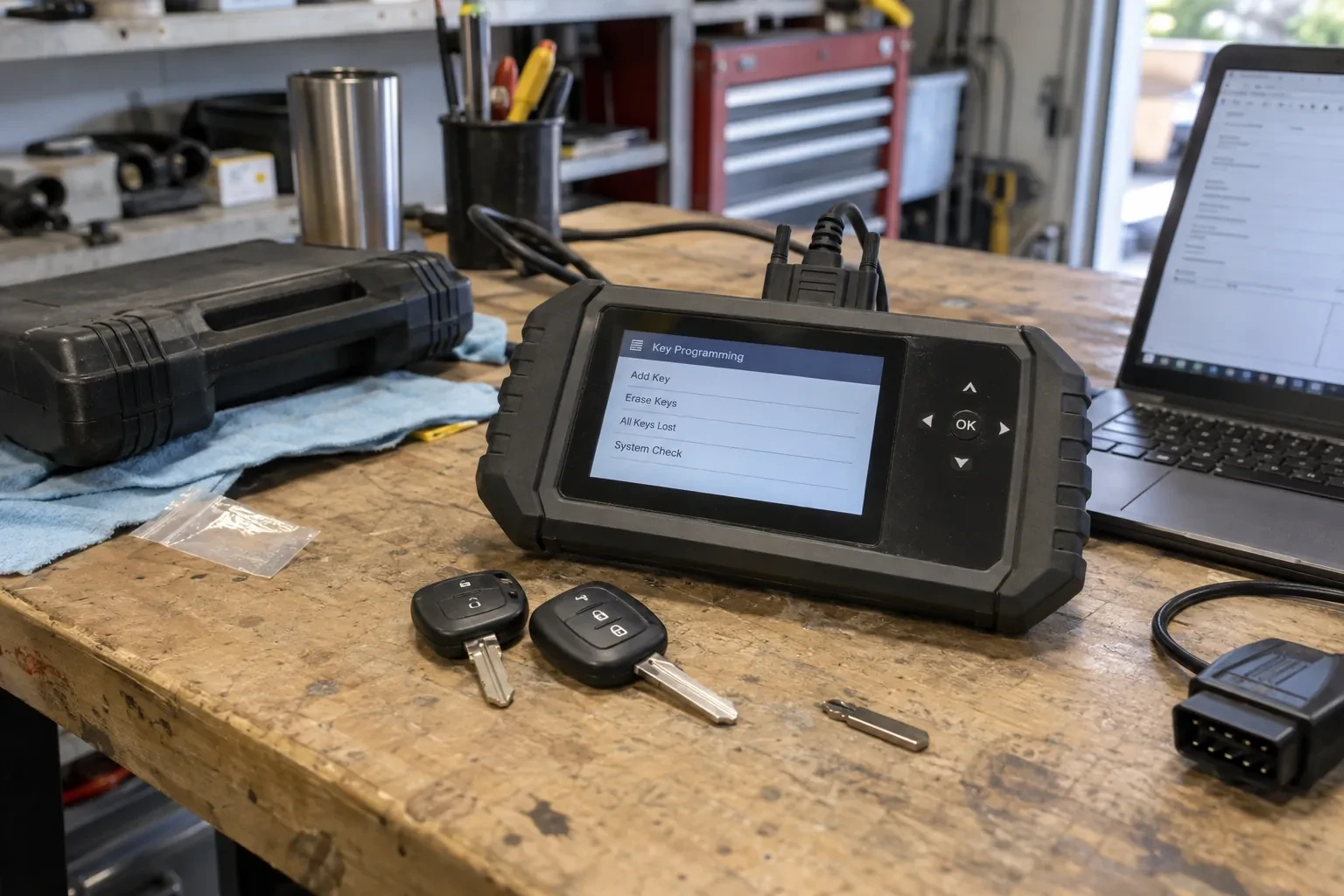
When the key is genuinely gone, the work has two halves. The first is the opening, done the usual way with picks, a decoder or a bypass. The second is making the missing key useless. The locksmith removes the cylinder, uses a plug follower to slide the plug out without spilling the springs, replaces the bottom pins to a new combination, and reassembles it so a freshly cut key operates it and the old one does not. Each exterior lock that shared the old key is treated the same so the house stays on one key. New keys are cut from the new pinning, tested in every door, and counted into your hand.
A door that locks the way it should
The visit ends with the lock working smoothly from both sides. The locksmith cycles the key several times, throws and retracts the bolt with the door open and then closed, and listens for the clean click of the bolt seating in the strike. You are shown anything that was noticed along the way, such as a loose handle or a strike screw backing out, so nothing is left as a mystery. Any hardware that was replaced is demonstrated and the packaging left with you. The door is closed and locked once more with your own key before the locksmith leaves, so you see for yourself that you are back in control of it.
Home Lockout Service
In the van
Key blanks and key cutter
Replacement cylinder or deadbolt
Strike plate and long hinge screws
Lock de-icer
Pick and tension tools
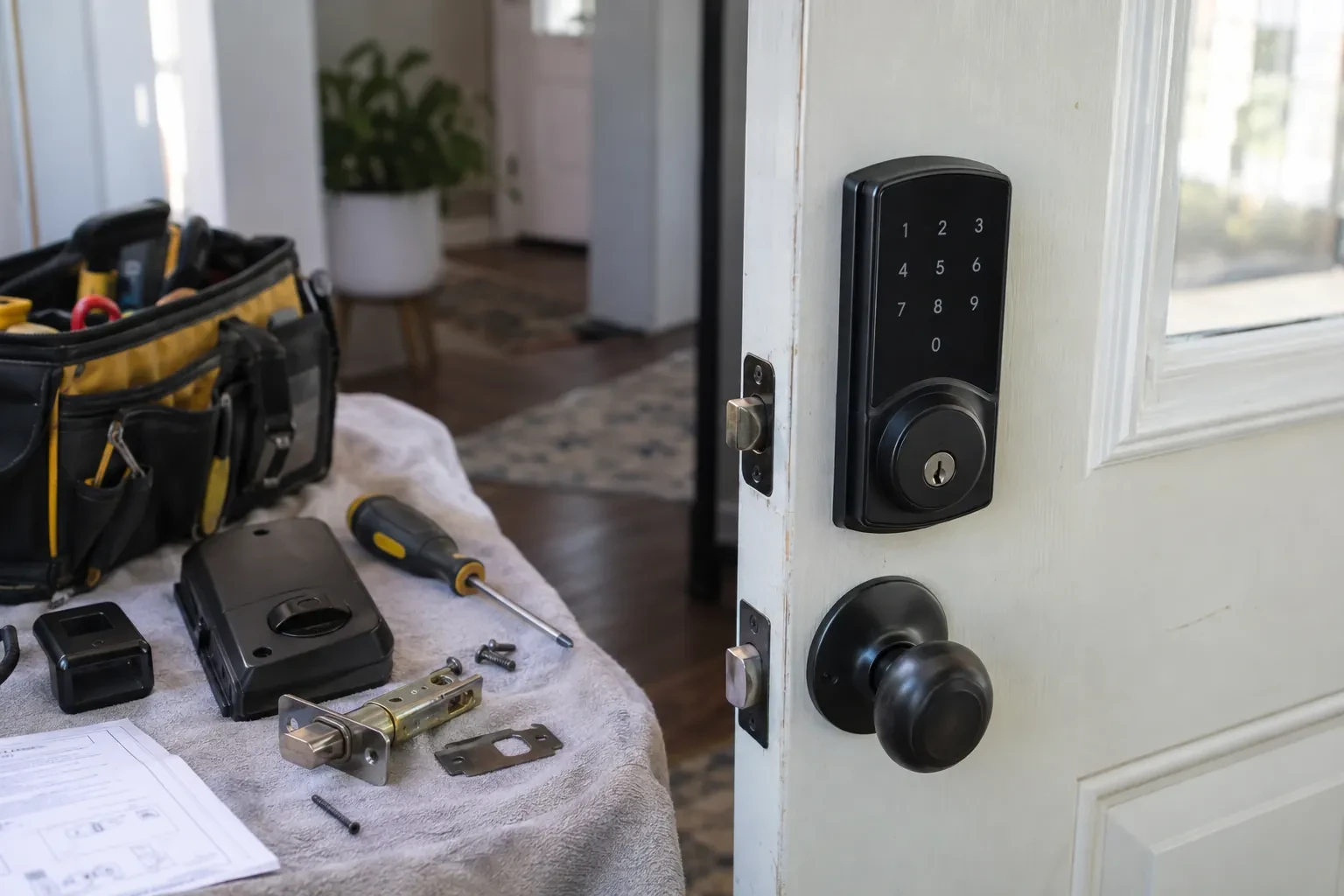
Home Lockout Service
What affects the quote
Distance to your door
Travel is part of every call-out. A house across town and a rural property at the end of a long road involve different driving time, and the quote reflects the trip as well as the work.
Whether the key is inside or lost
If the key is inside, the visit ends when the door opens. If it was lost out in the world, rekeying and fresh keys usually follow, and that is separate work priced on its own.
Getting to the door
A ground-floor house door is straightforward. A unit up several flights, a building with a locked lobby and no concierge, or a gated property where the gate is also locked adds steps that the quote takes into account.
What to have ready
- Which door are you locked out of, and what kind of lock is on it?
- Do you have photo identification with you, or is it inside?
- Has the lock been stiff, sticky or hard to turn in recent weeks?
Home Lockout Service: questions
QuestionsWill opening the door damage my lock?
In most residential lockouts the lock is untouched. Picking, decoding and latch tools operate the mechanism the same way your key does, so there is nothing to repair afterwards. A drill only appears when a cylinder is seized, plugged by a snapped key or engineered against picking, and you hear about that before it starts. Should it come to that, replacement hardware goes on before the locksmith leaves so you lock up normally that evening.
Do I have to show identification before you open my door?
Yes, and it is a reassuring step rather than a hurdle. Photo identification that matches the address settles it in seconds. When your identification still carries a previous address, other proof does the job: a tenancy agreement, a recent bill, a piece of addressed mail, or a word with your building manager. Locksmiths take this seriously because it protects every home they are asked to open, including yours.
If my key is lost, will I leave with a working key?
Yes, one way or another. If you choose to rekey, the cylinder is set to a new combination and fresh keys are cut for it on the spot, usually two or three, and tested in each door they should open. If you prefer to keep the existing pinning, a new key can be cut to the lock's code or by decoding the cylinder. Either way you are not left relying on a key that is somewhere else.
Related services
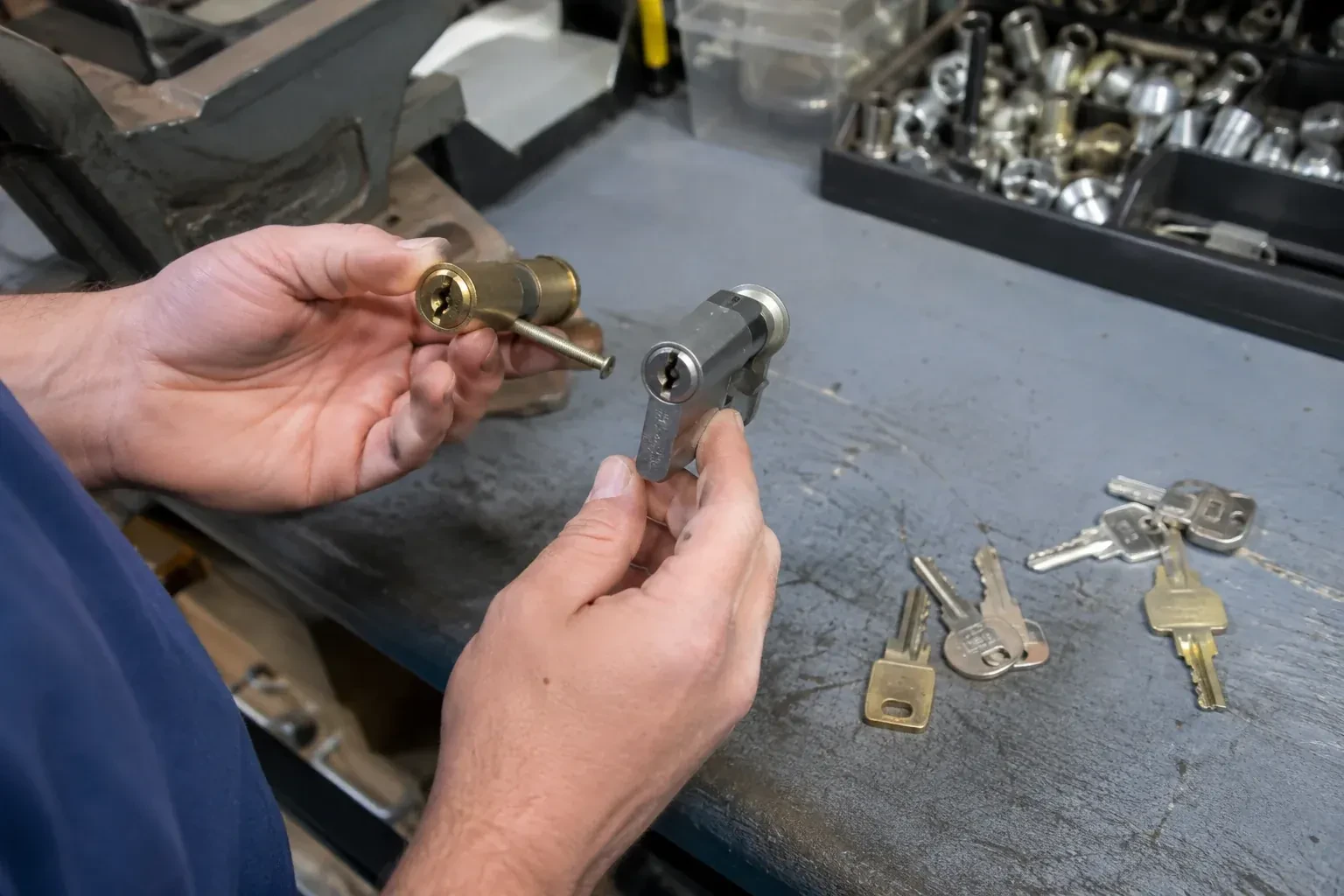
- Broken Key ExtractionThat key had been bending a little for years, and you kept straightening it.
- Break-In Damage Lock RepairThe back door looks closed until you touch it.
- Seized & Jammed Lock OpeningThe old mortise lock on the front door of the house turns the key halfway and stops with a dull clunk.