Change or rekey · Markham
Vintage Mortise Lock Service
The old skeleton key still fits the keyhole, but it now needs a jiggle, a lean on the door and a little luck before the bolt moves.
In plain words
Where the door has moved, the lock gets blamed. Solid wood doors in older houses swell in humid weather, shrink in winter and settle on their hinges, and a mortise lock that was set decades ago ends up with its latch and bolt aiming a little below the strike. Part of every vintage lock service is reading how the door hangs, tightening or packing the hinges, and moving or filing the strike so the latch catches and the bolt throws without lifting the handle. Often that alignment work, plus a clean and new springs, is the entire repair, and the customer gets back a door that closes with one hand.
How the visit goesThe key turns freely in the round cylinder on the door, all the way around and back, without the bolt shifting at all. The cylinder itself wobbles slightly when you press it, as if it has come loose inside the door.
Vintage Mortise Lock Service
How the visit goes
Which keys exist and who has them
The locksmith asks to see every key that goes with the door: the one that works, the ones that used to, and the bag of loose bit keys that came with the house. A worn original is still the most useful pattern for a new key, and a bent one explains why the lock has become temperamental. For a cylinder lock, a lost or stolen key is a reason to rekey while the case is out, and a key that only a former occupant holds is worth retiring. The count of keys wanted afterwards is settled now too, so the spares are cut while the lock is on the bench rather than on a return visit.
Inside the case on the bench
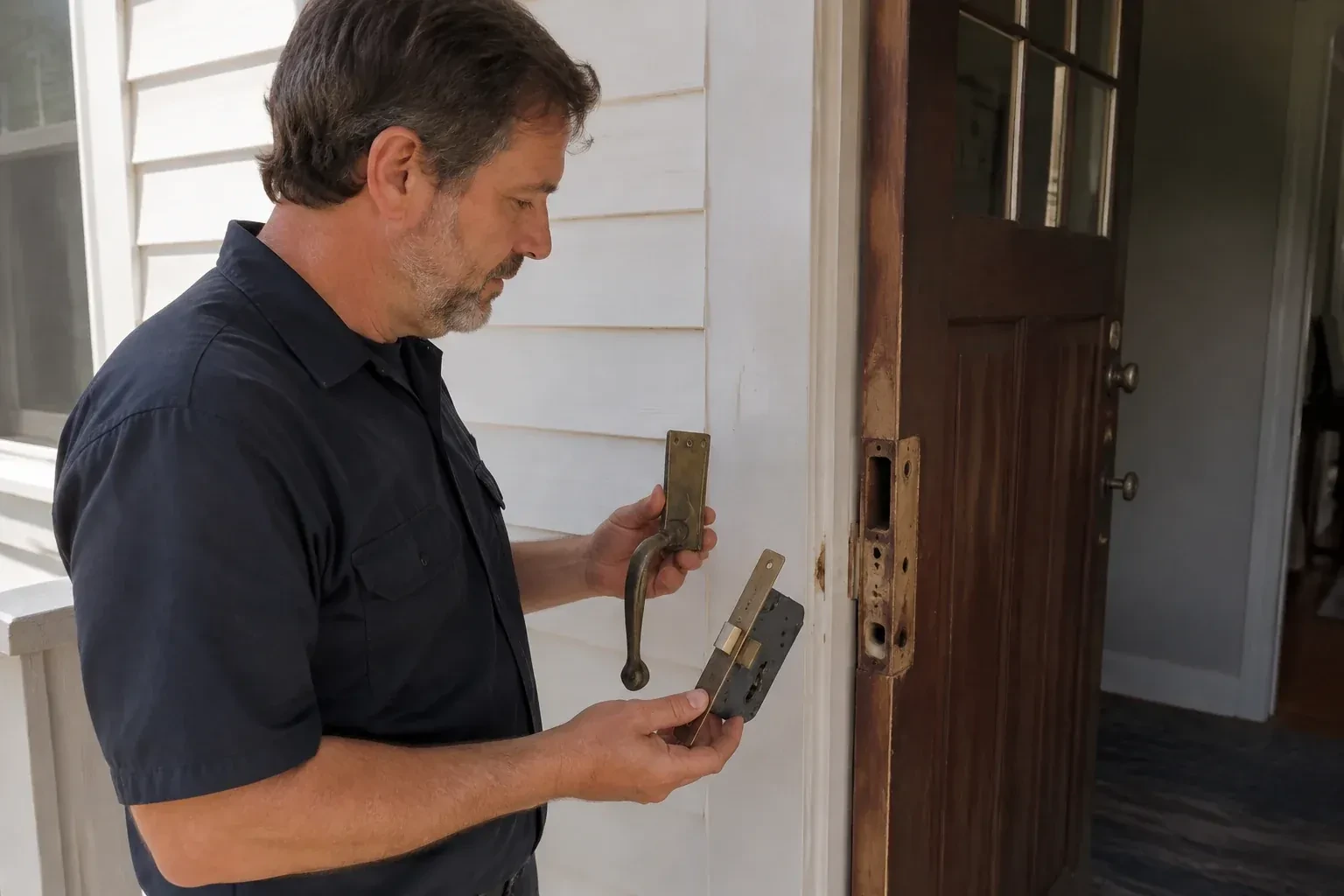
With the cover screws out, the case opens like a book: the latch bolt with its spring, the hub the spindle passes through, the deadbolt with its lever or tumblers, and the springs holding each in place. The locksmith notes what is broken, worn or merely stuck, then cleans the case with solvent and a brass brush until the old grease and rust are gone; old paint on the hardware is treated as a possible lead hazard and cleared with contained, lead-safe methods rather than dry brushing. Parts are cleaned individually, burrs are dressed off the bolts, and the hub square is checked against a fresh spindle to see whether it has rounded.
A clear way out
If the entry door's deadbolt was keyed from both sides, the service leaves the inside operable without a key: a thumb-turn fitted to the bolt tail, or a knob function that releases the latch from inside. This is simply good sense for a door people use to leave the home, so nobody is stuck hunting for a key inside their own house. You are shown how the inside release works and asked to try it, and everyone in the household should know it too, especially anyone who grew up with the old habit of leaving the key in the door on the inside.
Vintage Mortise Lock Service
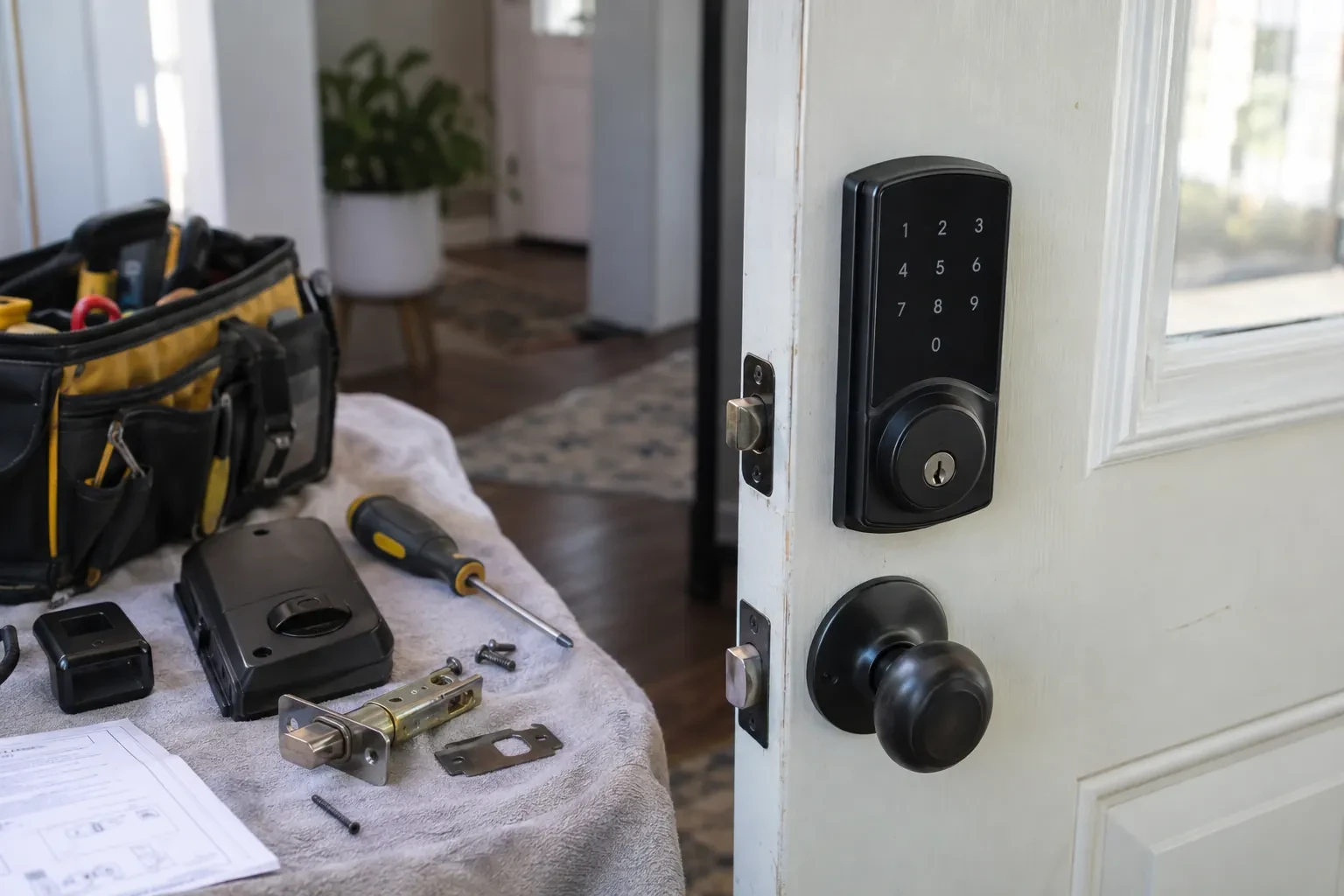
In the van
Light lock oil
Mortise cylinder and cam
Reproduction mortise case
Latch and hub springs
Warding files
Vintage Mortise Lock Service
What affects the quote
Travel and access
Distance to the property and how easy it is to work at the door, on a busy entry or a third-floor walk-up, are part of any call-out and are stated when the visit is booked.
Condition of the wood
Stripped screw holes, a loosened pocket or a split at the door edge need dowelling, shimming or gluing before the case can be trusted. That woodwork is quoted once the locksmith has seen the pocket empty.
What is actually broken inside
A clean and new springs is the lightest job. A worn hub, a cracked lever or a part that has to be fabricated to match the original adds bench time, and the assessment names which applies before any of it starts.
What to have ready
- How many keys would you like to have afterwards?
- Does the deadbolt throw fully with the key or the thumb-turn?
- Is the property designated as a heritage building?
Vintage Mortise Lock Service: questions
QuestionsWhat information helps before you come out?
Whether the door takes a skeleton-style bit key or a flat key in a round cylinder, roughly when the house was built, what the knob and bolt are doing, and whether the trouble is worse with the door closed. A photo of the faceplate in the door edge and one of the keyhole side is worth a great deal. Mention how many doors are involved and how many keys you would like afterwards.
Can you make a key for a lock that has none?
Yes. A bit key is cut to the lock rather than copied from another key: the locksmith chooses a blank of the right size and files the bit until it clears the wards and lifts the levers inside your case, testing as they go. A pin-tumbler cylinder on a later lock is decoded or rekeyed and keys cut to it. Bring any loose keys that came with the house, since one may be close enough to serve as a starting pattern.
Can my interior doors be serviced too, and can one key work all of them?
Usually yes to the first, and to the second once the locksmith checks the locks. Interior mortise latches with privacy turn buttons are lighter versions of the entry lock and respond to the same clean and re-spring. Interior locks in a house were sometimes supplied to one bit key, and where the key sections, warding and levers actually match, the locksmith can restore that arrangement so a single key opens several bedroom and bathroom doors. It is a practical thing to have when a child locks a bathroom from inside.