Locksmith in Markham, OntarioCalm handson your door
A lock problem is rarely only a lock problem. It is a door that swells shut in a damp week, a key that snapped on a cold morning, a tenant who left without handing anything back. In Markham we listen first, explain the options, and do tidy work you can see before we drive off.
A lock problem is rarely only a lock problem. It is a door that swells shut in a damp week, a key that snapped on a cold morning, a tenant who left without handing anything back. In Markham we listen first, explain the options, and do tidy work you can see before we drive off.
Practical locksmithing for real doors.
For a condo or apartment in Markham we work within the building's rules. The suite door is yours and gets whatever cylinder, strike or closer suits the way you live. Common doors belong to the building, and we coordinate with management before touching them. You get a secure unit without a letter from the board.
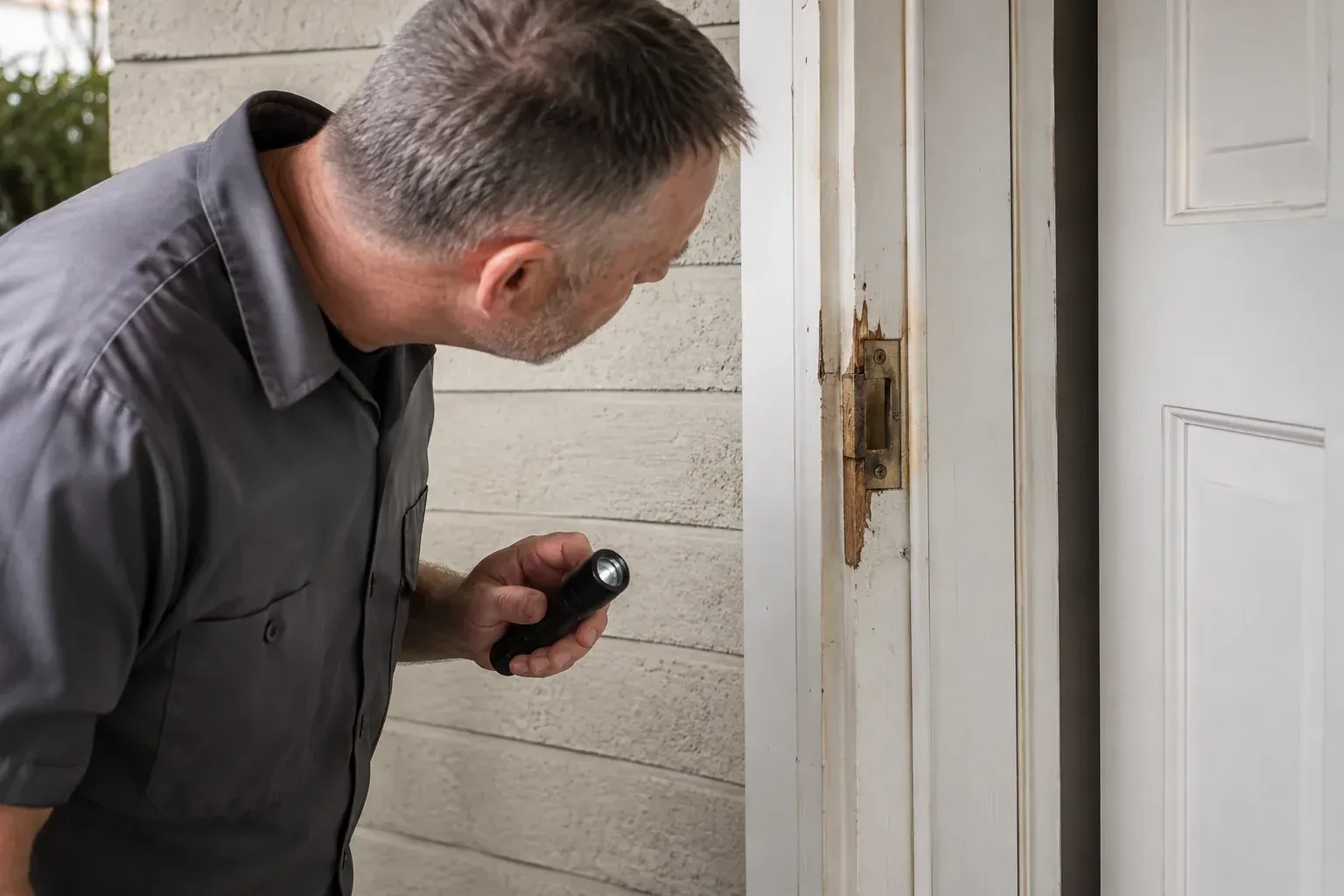
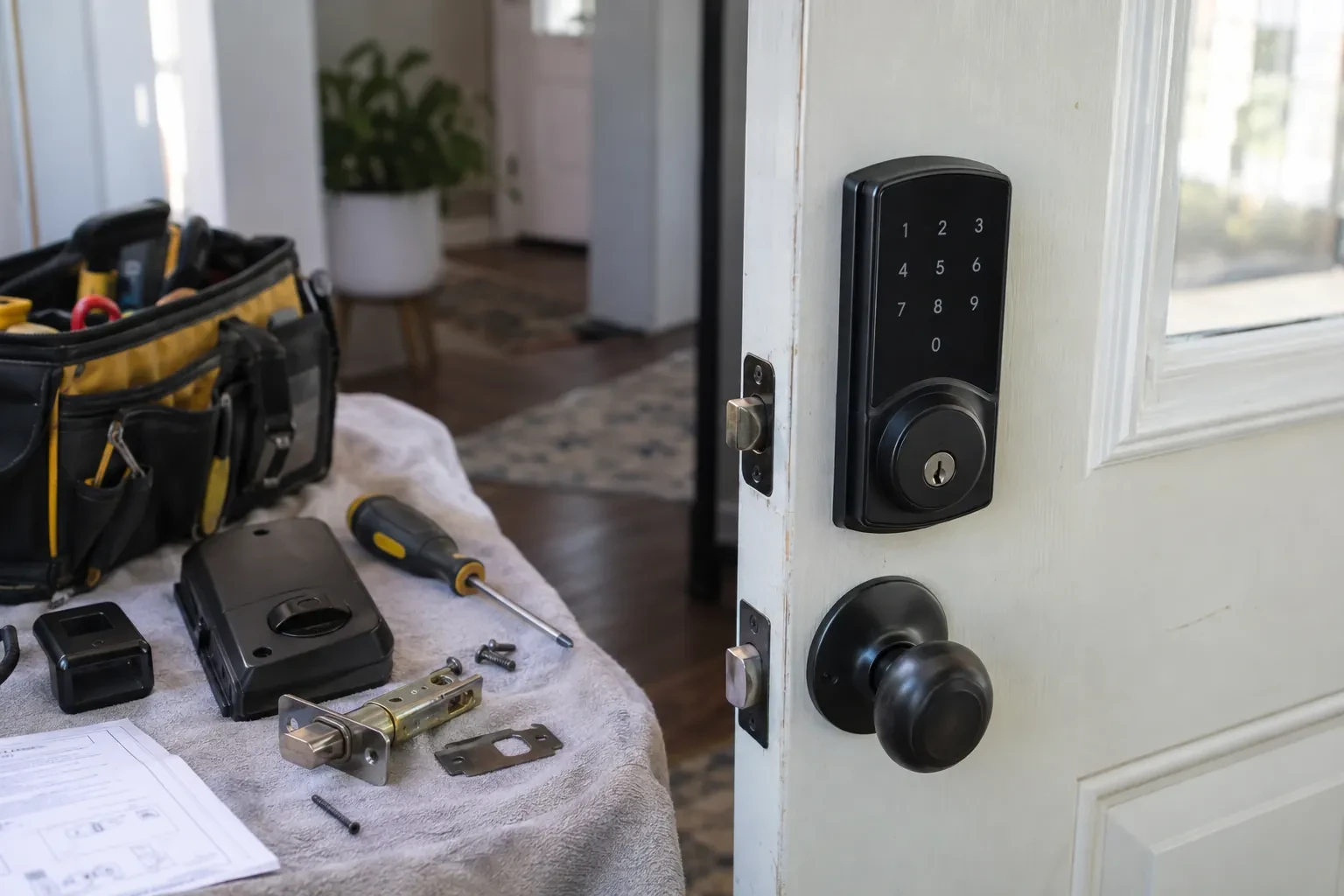
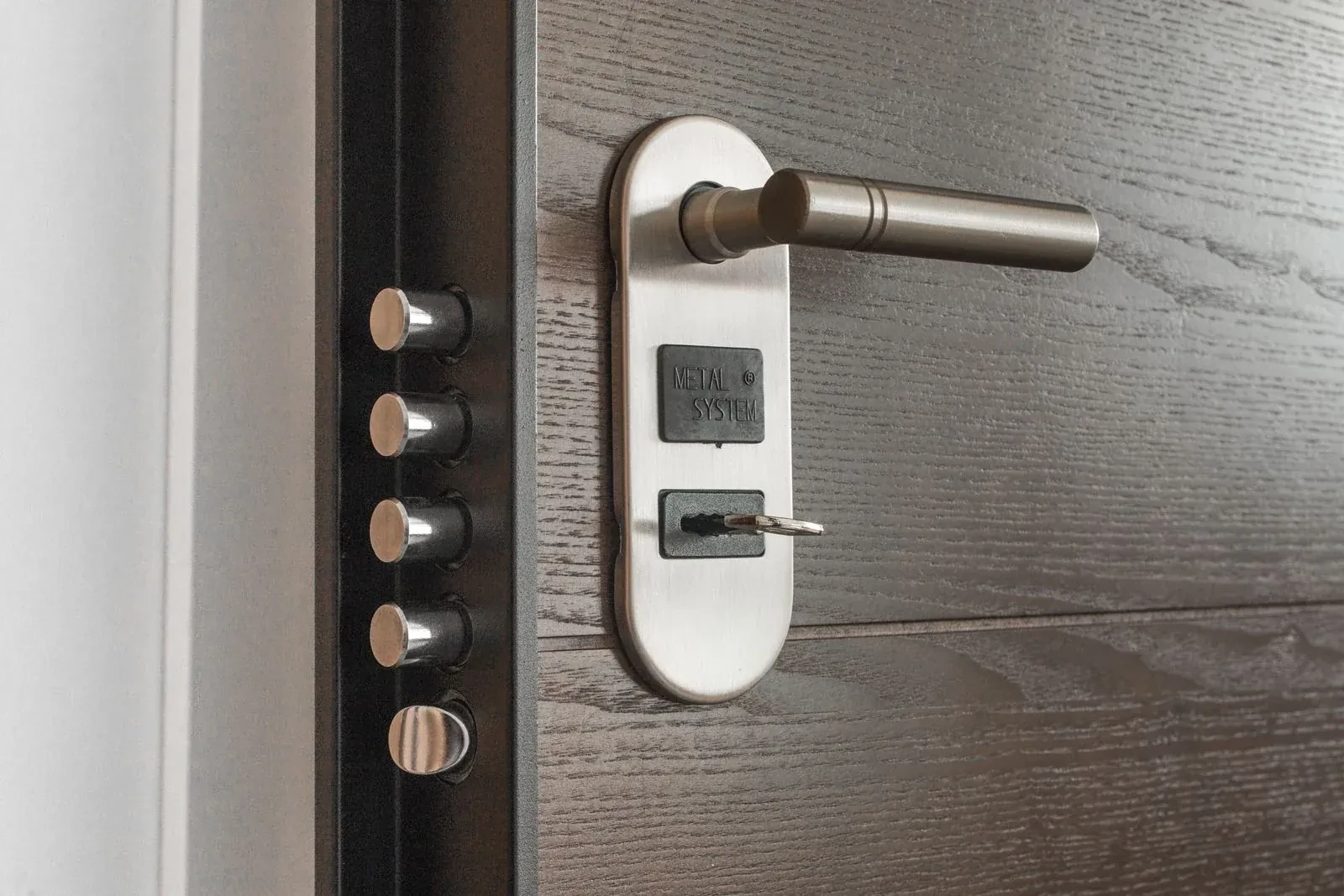
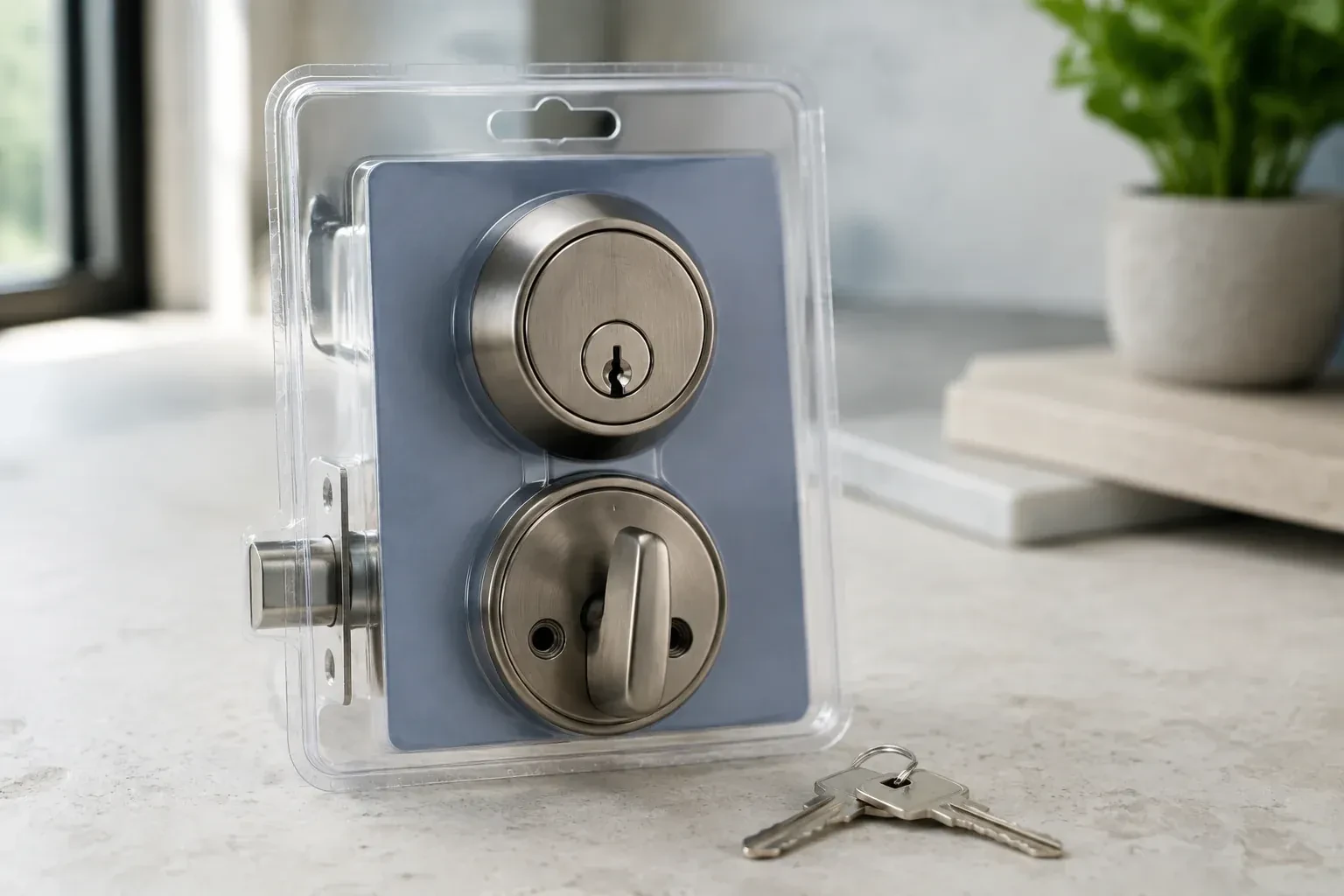
High security upgrades are a steady part of our work in Markham. Whether a break-in nearby has made you look at your strike plate, too many keys have gone out over the years, or a stockroom needs a controlled key, we assess the whole door, fit rated cylinders and reinforced strikes, and set up keys that cannot be copied without your authorisation.
18years in business
24/7open every day
Explained before any tool comes out. You will hear what we found, what we suggest and why, before anything is changed. If you want a minute to think, take it.
Choices, not a single answer. Most problems have more than one fix. We lay out the practical options and the trade-offs, then let you choose the one that fits your home and budget.
A tidy doorstep. Shavings swept, packaging taken away, the old hardware offered to you or disposed of. The only sign we were there is a lock that works.
The services offered in Markham answer the questions a door eventually asks. Who else has a key? Why does the bolt drag? Would a stronger cylinder be worth it? Can staff leave without a key? How do I open the safe my father left? Each answer is on the pages below.
About 19% of homes in Markham were built in 1980 or earlier, according to the 2021 Census.
Newer homes
During construction many people hold a key: framers, finishers, painters, the sales office. Where homes are new, rekeying the exterior doors to a fresh key is the tidy way to close that chapter, and it takes a single visit.
Single-detached houses make up about 56% of homes in Markham (2021 Census).
In an area with both houses and attached homes, the work varies by the door. A detached house wants all its exterior doors on one key; a suite door wants a cylinder that suits a metal frame and respects building rules. A locksmith carries parts for both.
Someone smashed the little window beside the door, reached in and turned the thumb-turn. The lock itself is fine, but there is glass on the mat, a hole in the sidelight and a deadbolt anyone can reach.
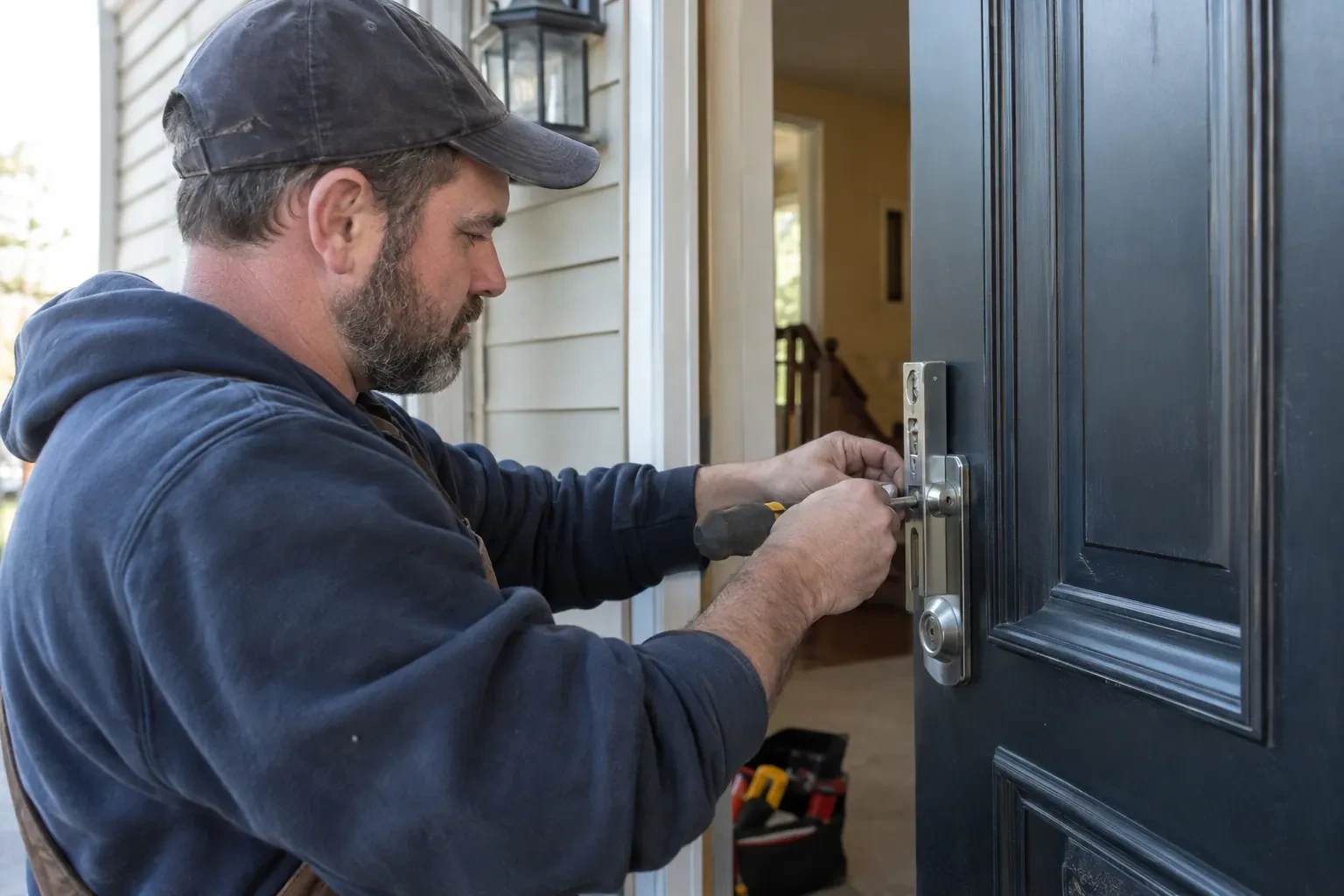
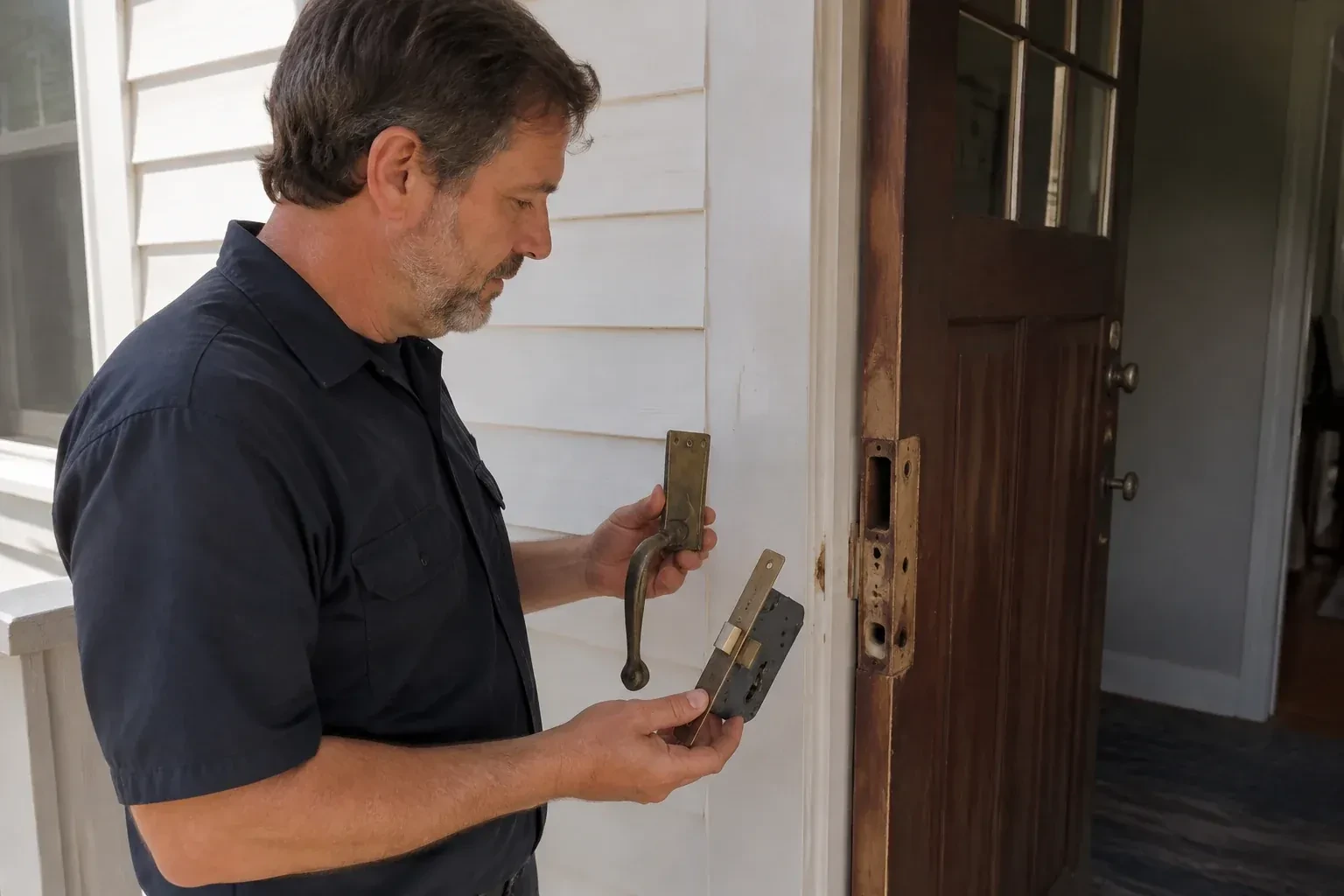
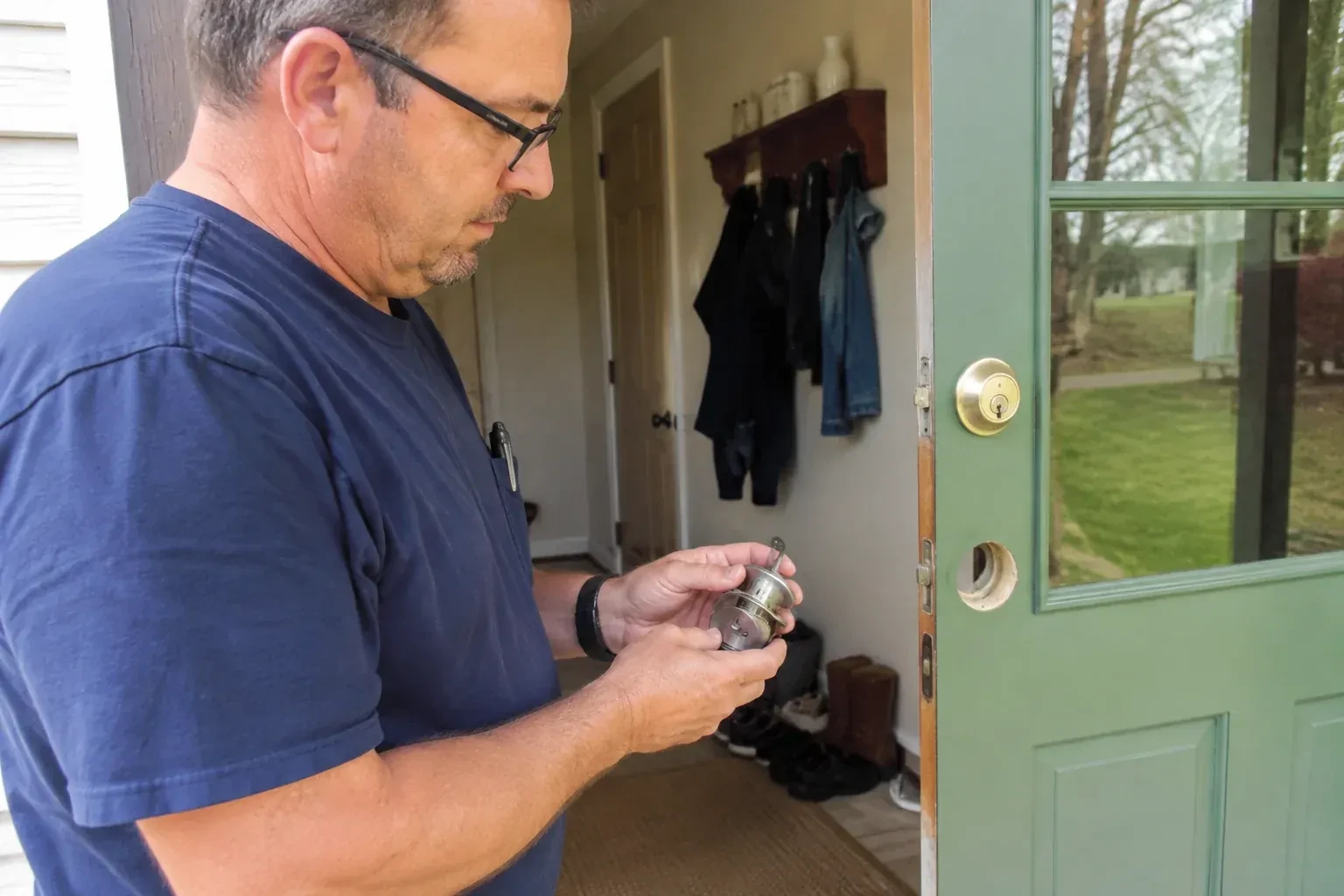
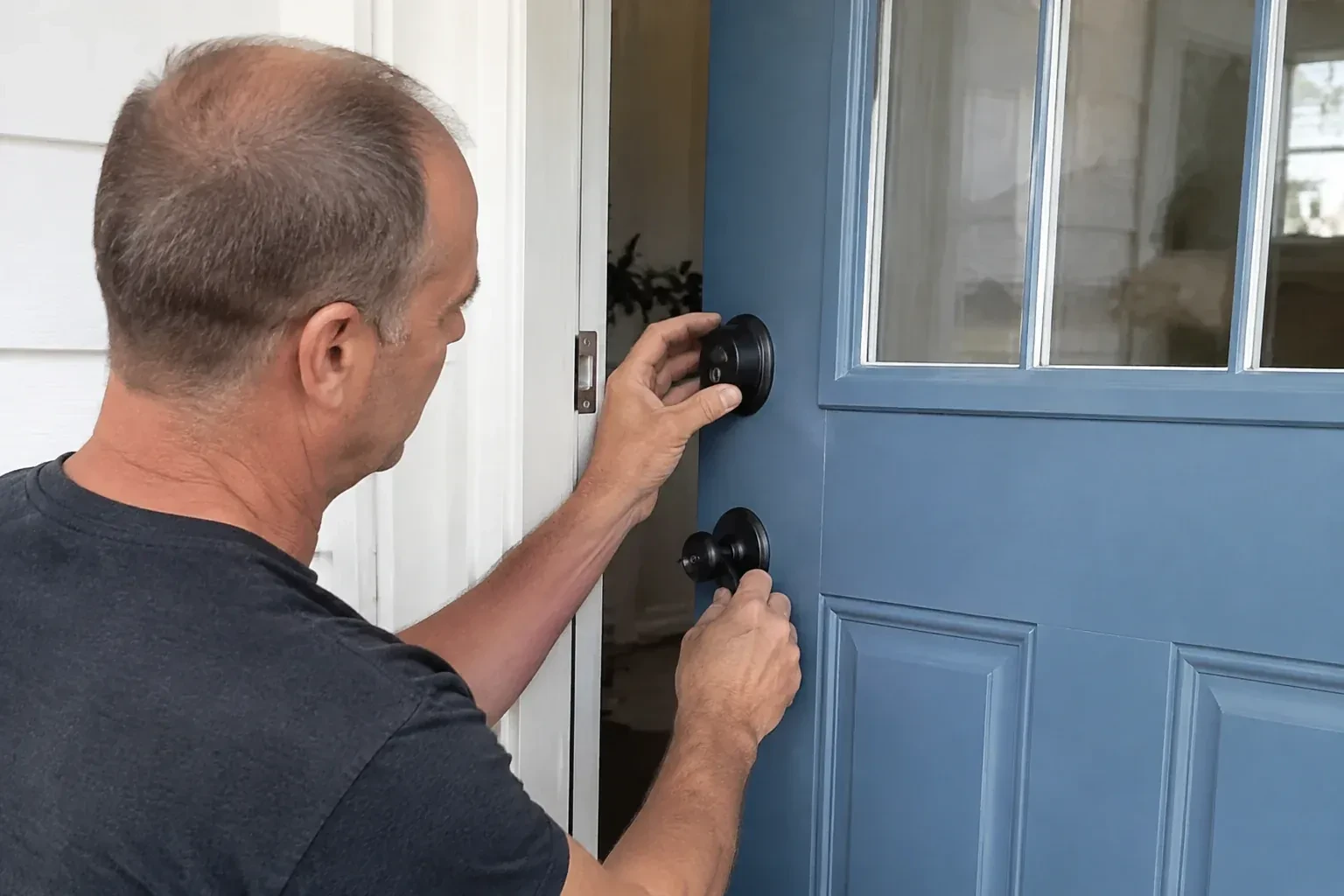
Someone painted the door years ago without removing the hardware. The faceplate, the strike and the little thumb-turn are all under several coats, the deadbolt scrapes when it moves, and the knob is stiff enough to leave marks on your hand.
A neighbour mentions, in passing, that the key from three tenants ago still lets him into the building's front door. Nobody changed it after he moved out, and now the property manager wants to know exactly how many keys are still floating around out there.
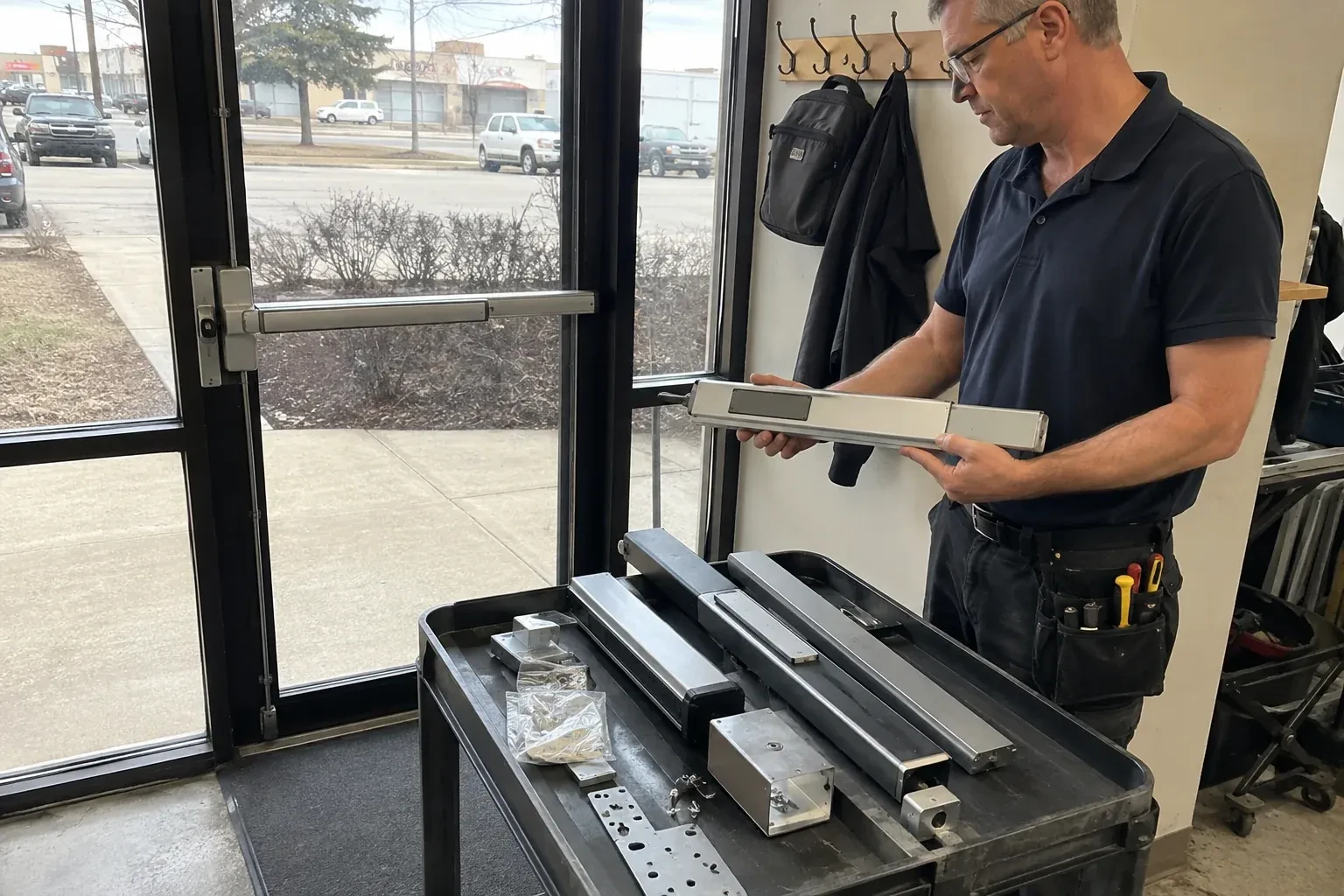
The new access-control reader at the staff entrance works fine going in, but nobody has sorted out the door's exit side, and right now a card reader and a pushbar exist as two separate ideas.
Your toddler is buckled in the back seat, the doors locked when you shut yours, and your keys are on the front seat beside your phone. It is hot, the child is starting to fuss, and you need help this minute, not a discussion.
The paperwork for the used car changed hands last week, and the previous owner mentioned, almost as an afterthought, that a second key never turned up. One worn blade on a single ring is now the entire access system for the vehicle.
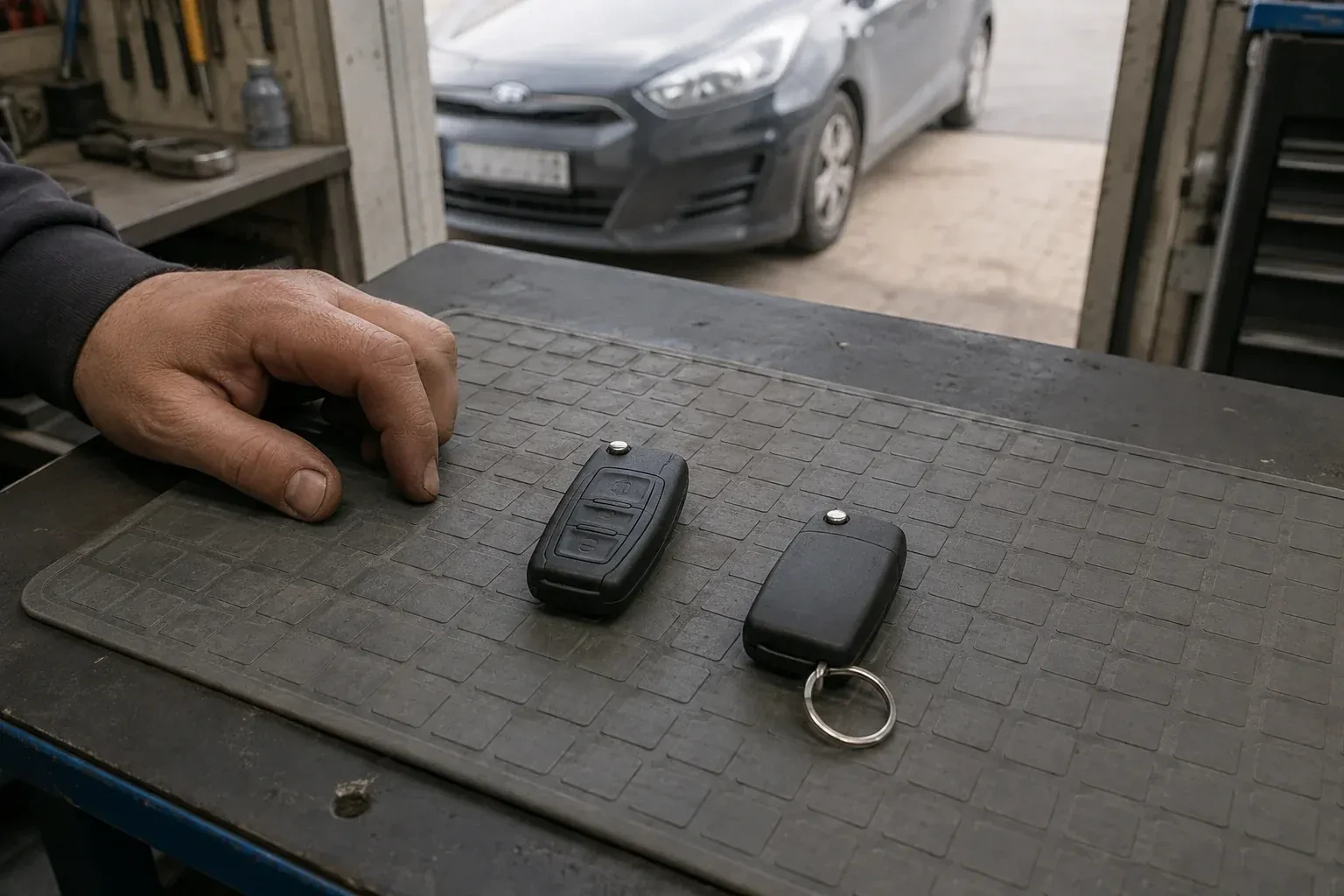
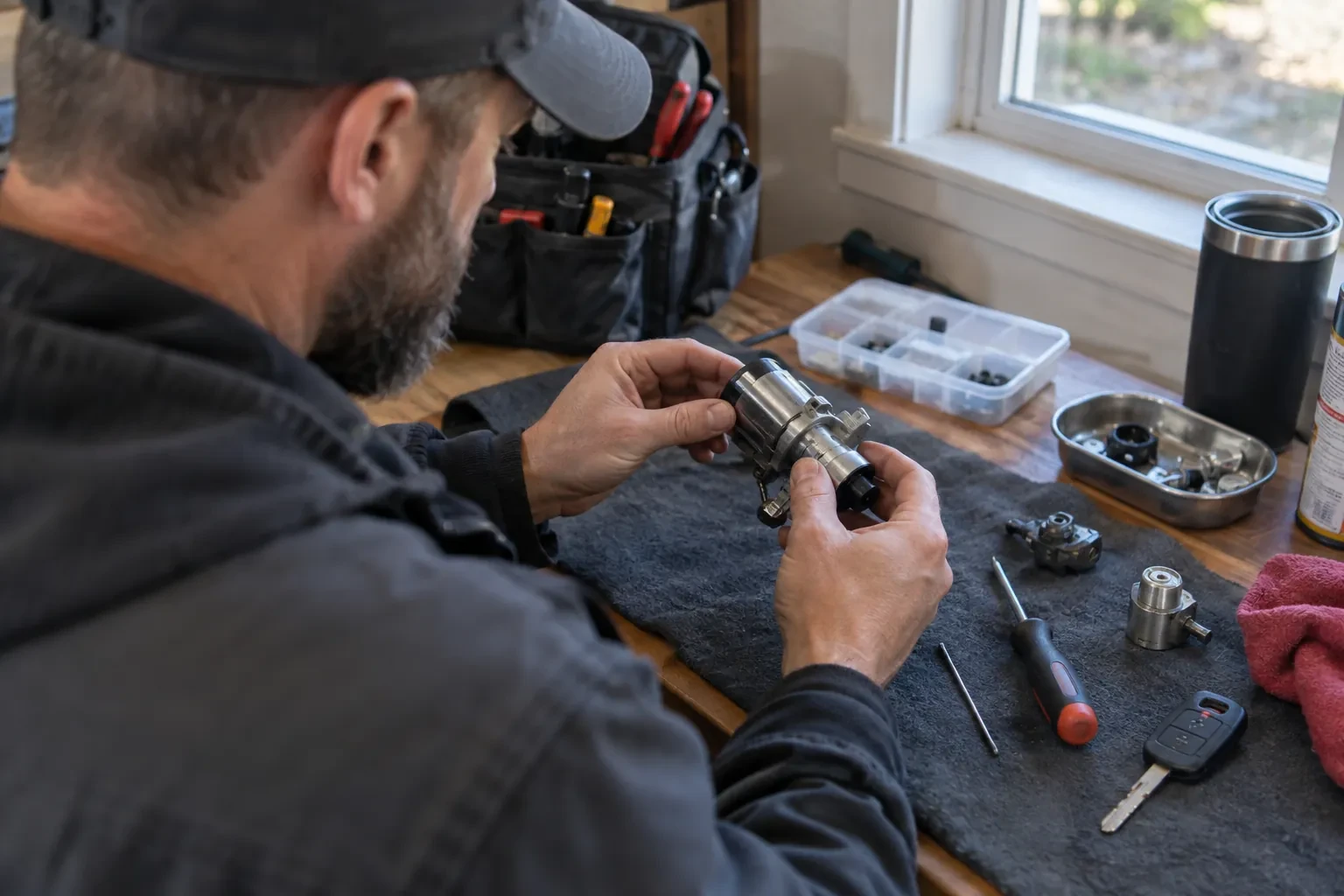
A cracked case or a spin through the wash left the fob unresponsive, and opening it up reveals a slightly corroded board where the buttons used to sit. The mechanical blade still turns the lock on its own, but the wireless side of the fob has gone silent.
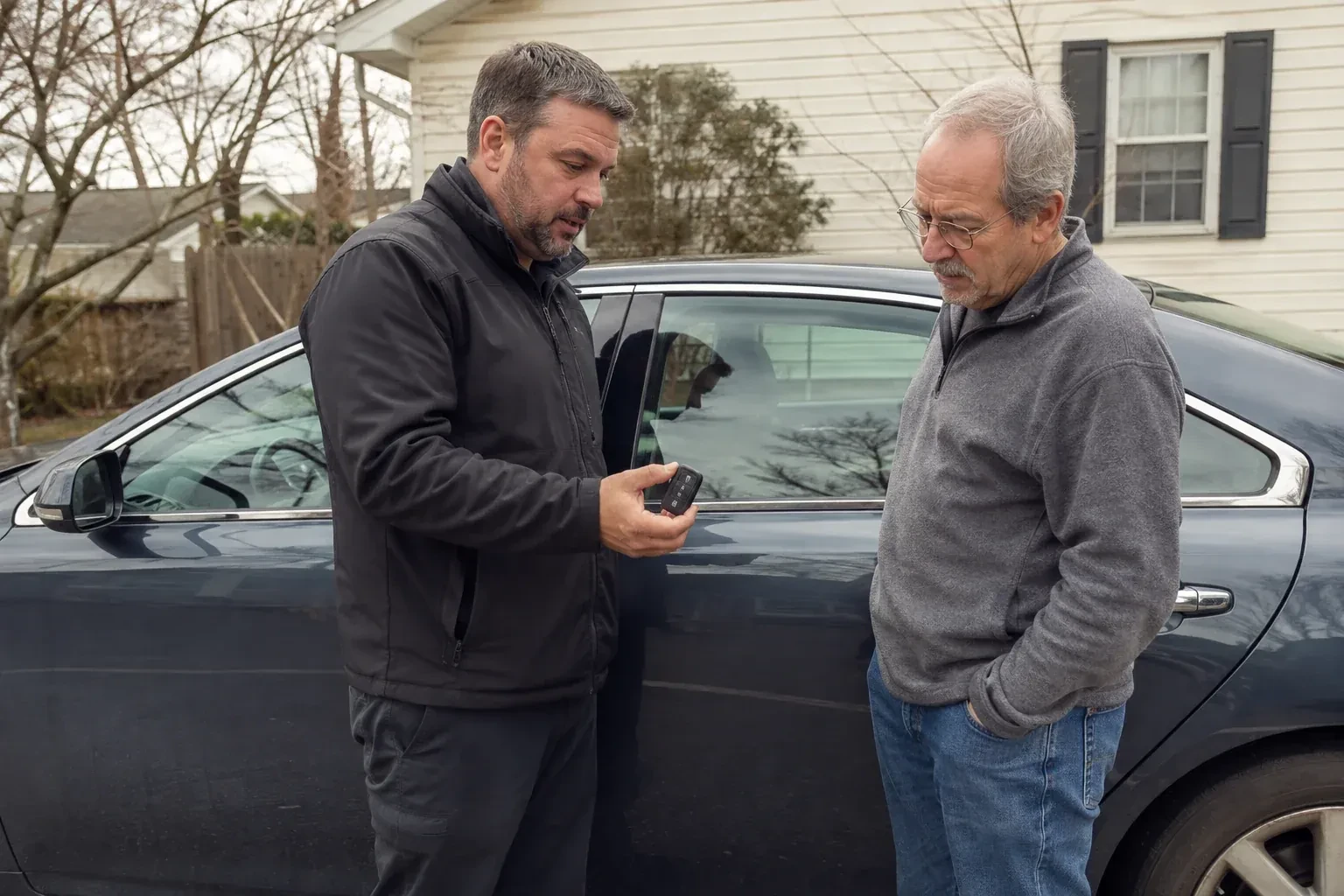
The remote fob has gone silent, the doors won't unlock with a button press, and the little emergency blade tucked inside it has not been used since the day the car was bought. Nobody remembers exactly where the metal edge is supposed to go once it's out.
A copy cut at a hardware kiosk turns the ignition on some mornings and skips it on others, occasionally sticking halfway and needing a wiggle that the original key never required.
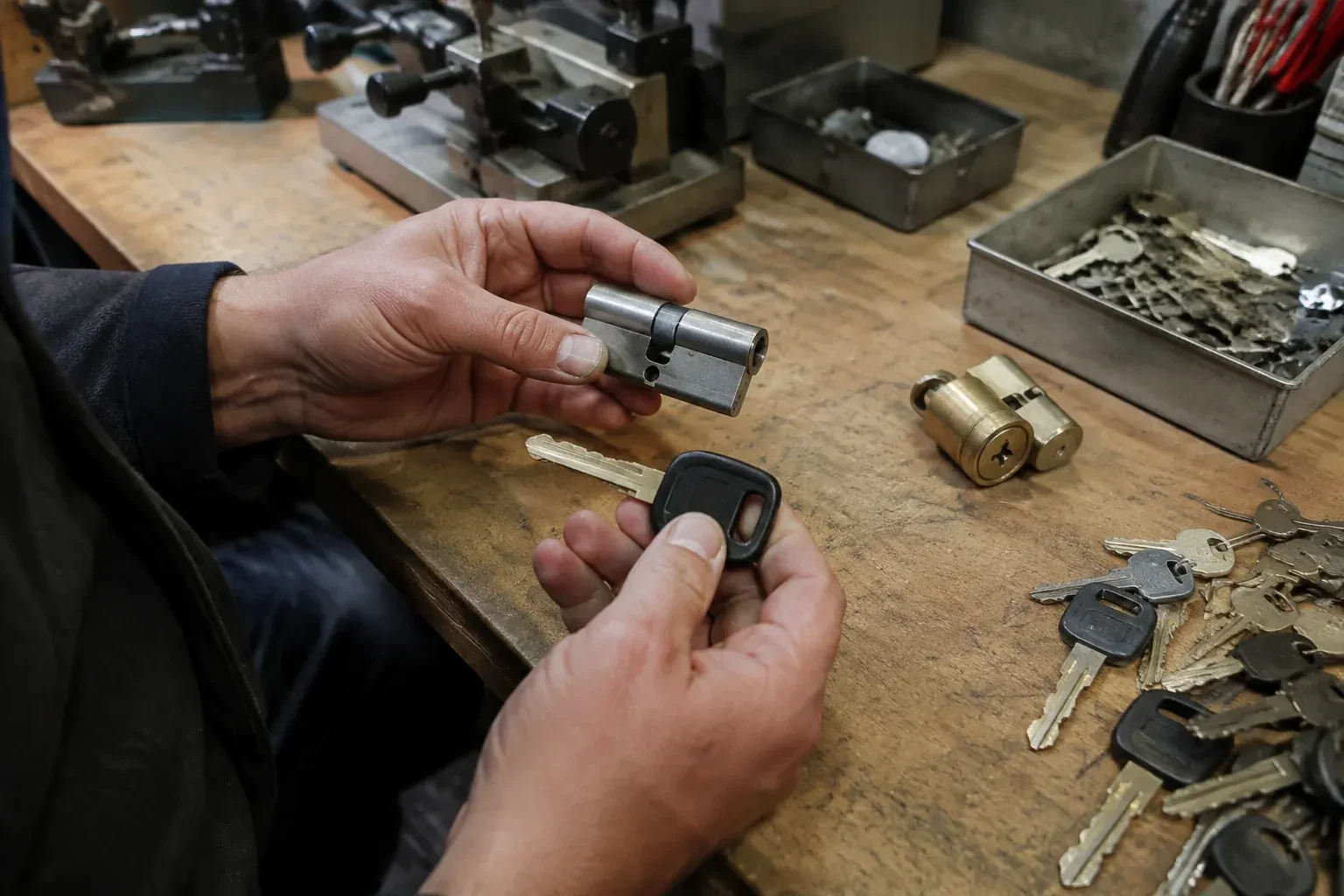
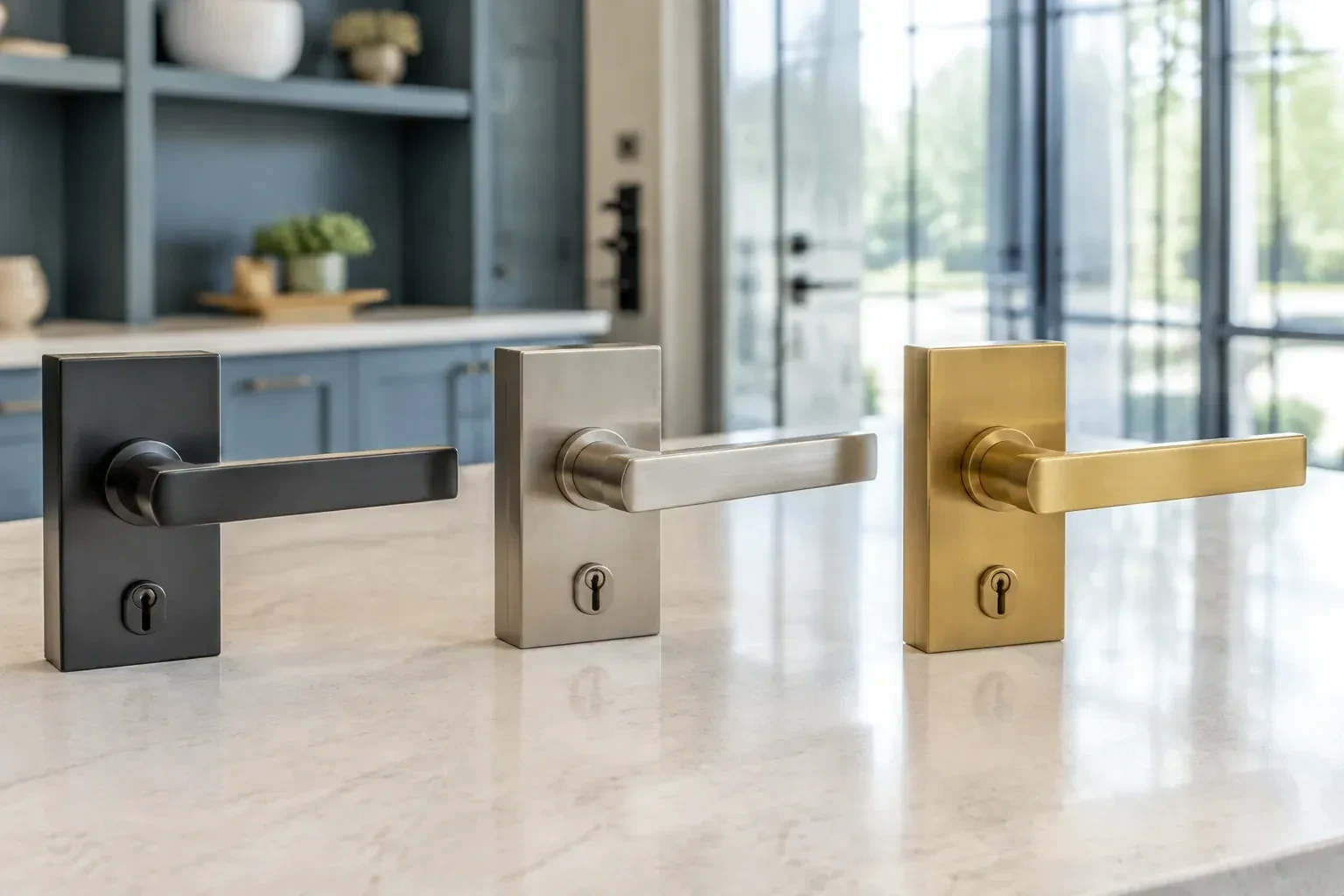
For homes, high security usually means a graded deadbolt, a patented cylinder and long screws into the frame. For businesses it adds laboratory-rated cylinders, heavy lock bodies and a key register. Both start with a conversation about what the door protects.
Clinics and pharmacies, schools and daycare rooms, offices with confidential files: these premises need doors that lock reliably and also release instantly from inside. Commercial locksmithing balances the two, with hardware chosen for each opening.
WhyOccasionally a case really is finished, with a cracked body, a bolt worn to a sliver or a hub broken in two, and the answer is a replacement that respects the door.
A neighbour mentions, in passing, that the key from three tenants ago still lets him into the building's front door.
WhyHardware bolted to a gate or an exterior building door lives outside every day of the year, which is a different job from a lock tucked behind a storm door.
The new access-control reader at the staff entrance works fine going in, but nobody has sorted out the door's exit side, and right now a card reader and a pushbar exist as two separate ideas.
WhyVehicles have changed, and so have the ways of opening them.
The paperwork for the used car changed hands last week, and the previous owner mentioned, almost as an afterthought, that a second key never turned up.
WhyA vehicle used by more than one person, such as a shared family car, a small business van or a vehicle looked after by a caretaker, works better with a key for each regular driver rather than one ring changing hands.
A cracked case or a spin through the wash left the fob unresponsive, and opening it up reveals a slightly corroded board where the buttons used to sit.
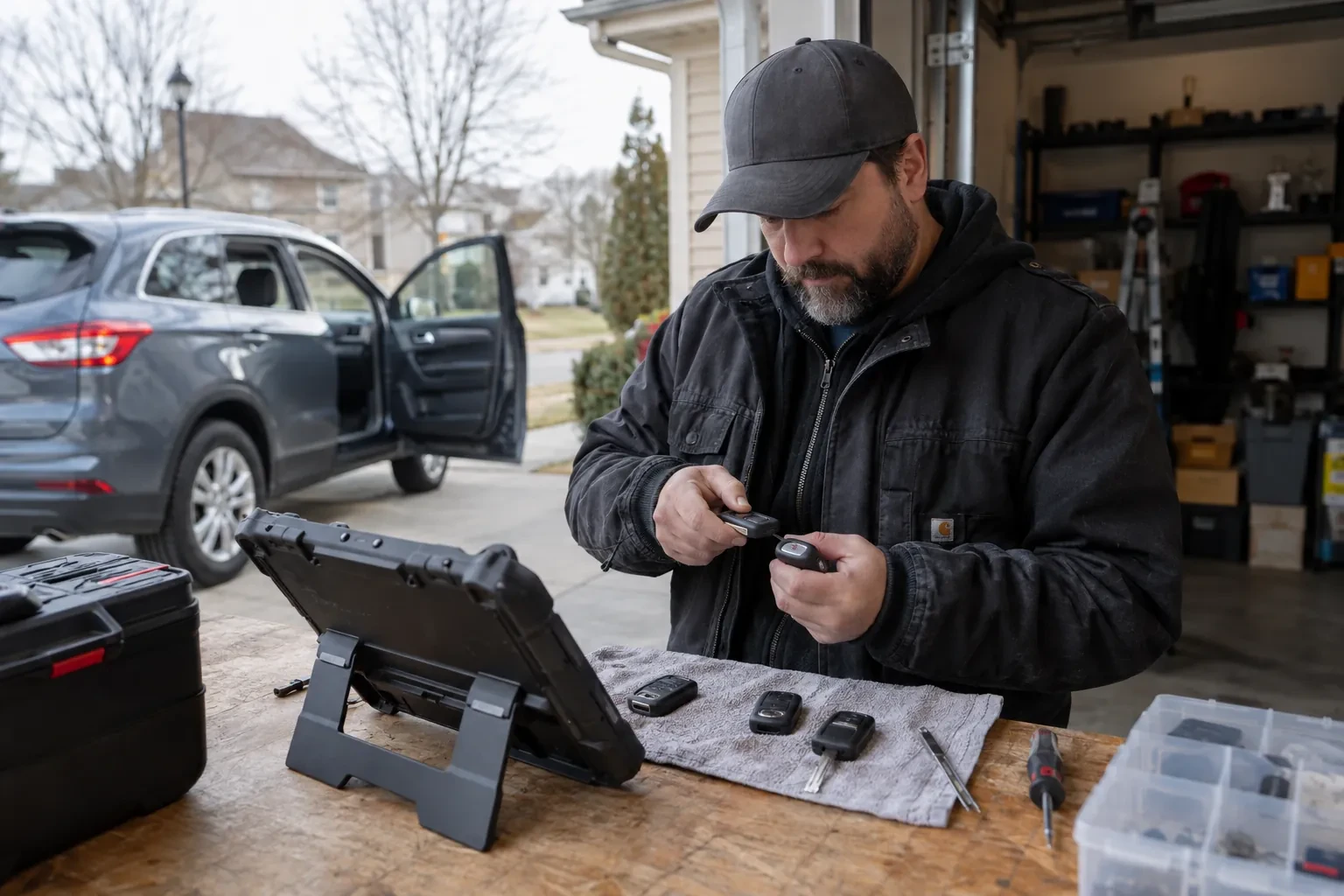
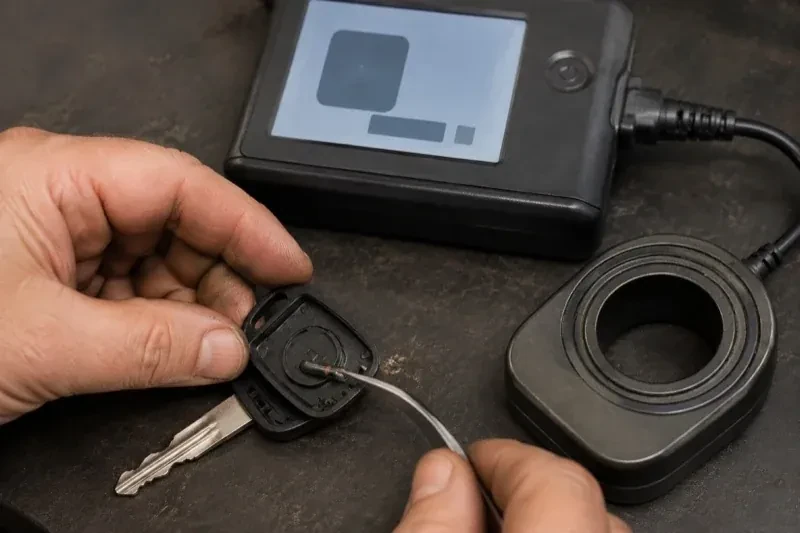
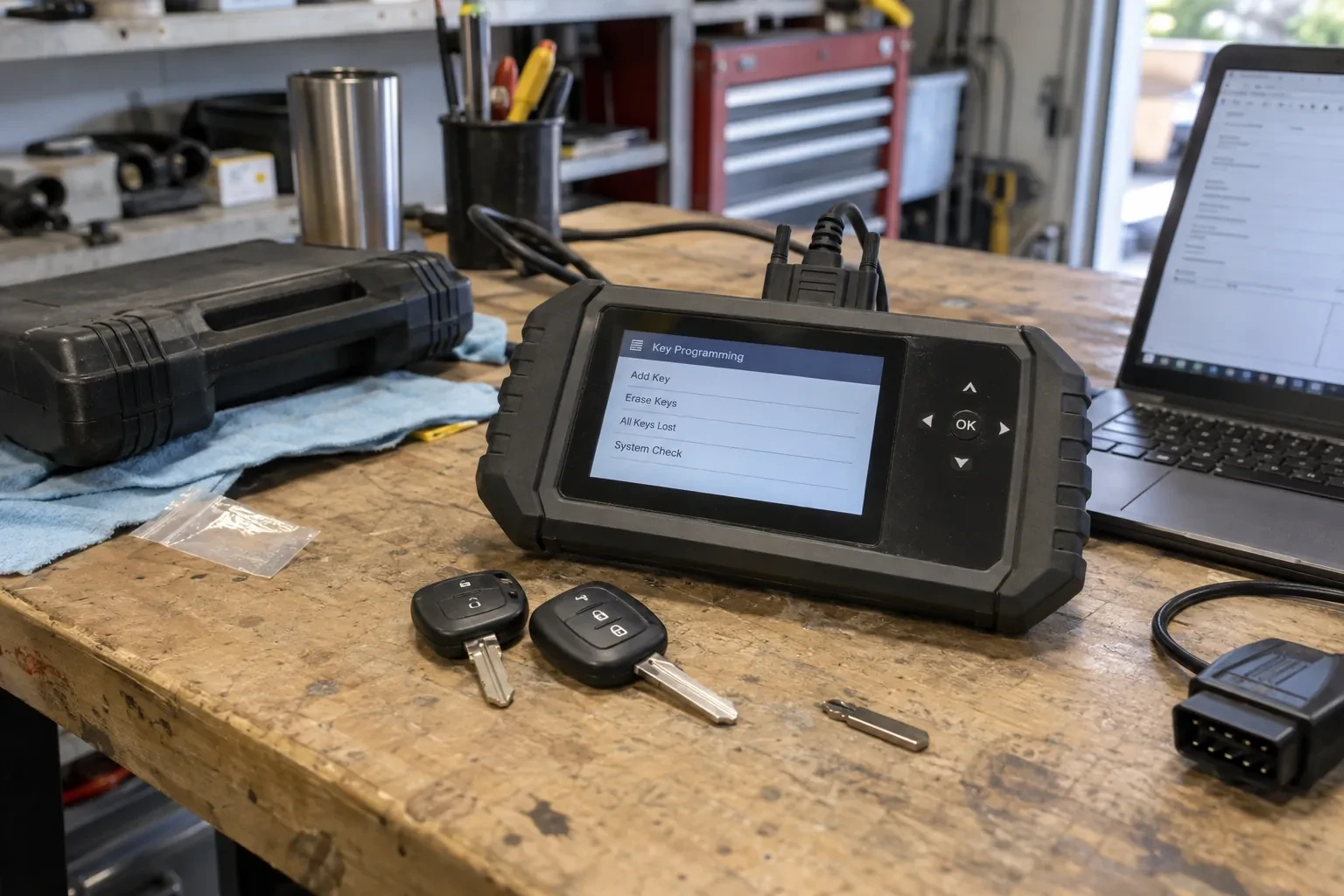
WhyUnderneath the plastic case, a fob is a small radio and, on most modern vehicles, a chip the immobilizer reads before allowing the engine to start.
The remote fob has gone silent, the doors won't unlock with a button press, and the little emergency blade tucked inside it has not been used since the day the car was bought.
WhyWhen every key for a vehicle is genuinely gone, there is nothing left to vouch for a new one, so the visit starts by re-establishing secure access to the immobilizer's own module, sometimes through the vehicle's manufacturer network.
A copy cut at a hardware kiosk turns the ignition on some mornings and skips it on others, occasionally sticking halfway and needing a wiggle that the original key never required.
WhyNewer machines add an electronic layer to a mechanical lock: a chip inside the key carries a coded signal that the ignition module checks before letting the engine run, so a correctly shaped blade that lacks the right chip will turn the switch without starting anything.
How a visit goes
Describe the property, the hardware and what has changed, and the visit starts from what you have seen.
1
2
3
01
A look inside the keyway
We check how deep the fragment sits and whether the cylinder was already worn or dry. That tells us how to draw the piece out without pushing it further.
02
Drawing the piece out
With extraction tools and patience the broken blade comes out whole. We clean and lubricate the cylinder so the next key goes in smoothly.
03
Cutting a fresh key
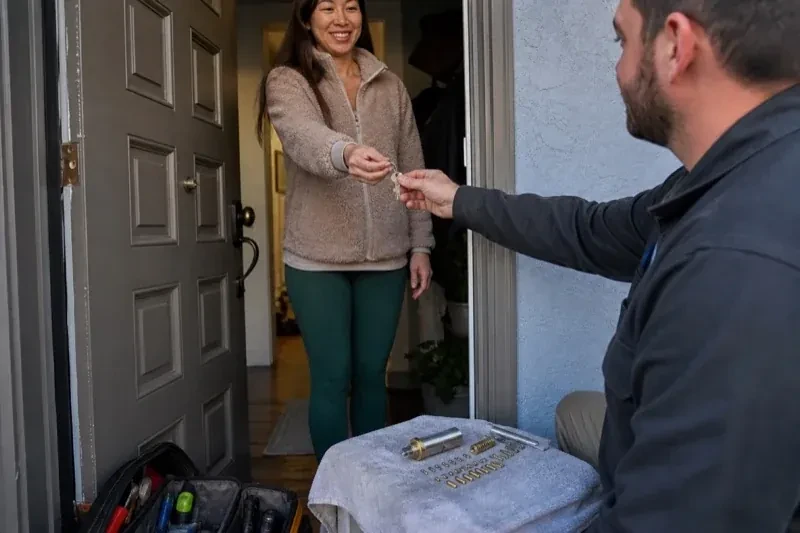
A key that snapped was usually tired. We cut a new one from the two halves or from the lock itself, test it and suggest retiring any other worn copies.
Mostly not. A boxed strike sits flush in the jamb, long screws hide behind hinge and strike plates, and a repaired jamb is filled and dressed so paint or stain covers it. A wrap-around door edge reinforcer is the one part that shows, as a slim steel band at the lock, and it can be finished to match the hardware. New deadbolts are matched to the trim on your other doors where you want them to blend in.
Can you make a key for a lock that has none?
Yes. A bit key is cut to the lock rather than copied from another key: the locksmith chooses a blank of the right size and files the bit until it clears the wards and lifts the levers inside your case, testing as they go. A pin-tumbler cylinder on a later lock is decoded or rekeyed and keys cut to it. Bring any loose keys that came with the house, since one may be close enough to serve as a starting pattern.
My key snapped off in the gate lock. What now?
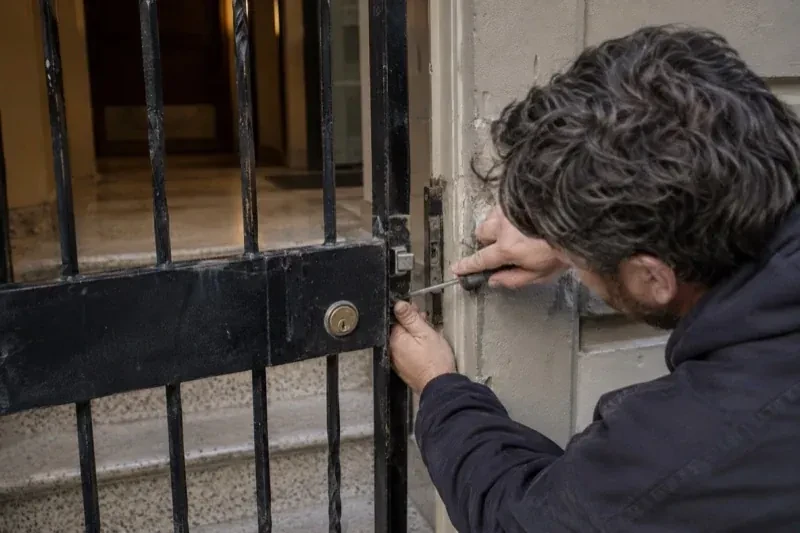
The broken piece is removed with extraction tools shaped to grip and draw it out, rather than forcing it further in, and the door or gate is then opened using the remaining portion or by working the cylinder directly. Afterward the locksmith checks why the key broke, since a healthy cylinder rarely snaps a key on its own; a stiff or corroded plug is a common cause outdoors. A fresh key is cut from the code or a clean original rather than a worn copy.
How high should the crossbar or touchpad be mounted?
Exit-device makers publish a mounting range for their own models, and in practice a crossbar or touchpad sits no higher than about 1200 mm above the finished floor. The locksmith sets the hardware inside the maker's range and below that ceiling, allowing for anyone in the space who needs a lower reach, a wheelchair user or a shorter staff member among them.
I am on the shoulder of the highway. Is it safe for you to work there?
It can be, with the routine stranded drivers are given: hazard lights on, out of the driving lanes, and nobody standing on the traffic side. The locksmith parks behind the car as a shield, works from the side away from traffic, and asks you to wait somewhere safe. If the shoulder is too narrow or the traffic too heavy, moving the car a short way to the next exit or lot by tow may be the better order of things.
How should I store the spare once I have it?
Somewhere other than inside the vehicle, since a spare kept in the glovebox solves little if it is the vehicle itself that becomes inaccessible. A bag that travels separately, a drawer at home, or a trusted family member all work. A passive proximity spare also benefits from a signal-blocking pouch during storage, since that kind of fob keeps broadcasting even sitting untouched in a drawer; a standard button-operated remote does not need the same pouch.
Is fixing a lost key different from just adding a spare?
Yes. Adding a spare while every existing fob still works only involves registering the new one. A lost key involves that same registration plus removing the missing fob's authorization following that vehicle's own procedure, since leaving it active means whoever has it can still use it; some vehicles also relearn the fobs you keep, and a mechanical blade in the lost fob is ruled out by rekeying the matching lock. The two situations share a first step but not a last one.
Will adding a new key affect the keys I already have?
Adding a key is meant to leave every existing key exactly as it was; the new identity is written alongside the others rather than replacing anything. The locksmith checks that the older keys still work as part of the same visit, precisely so an oversight does not go unnoticed. Only a key you specifically ask to have cleared, such as one that was lost, stops working.
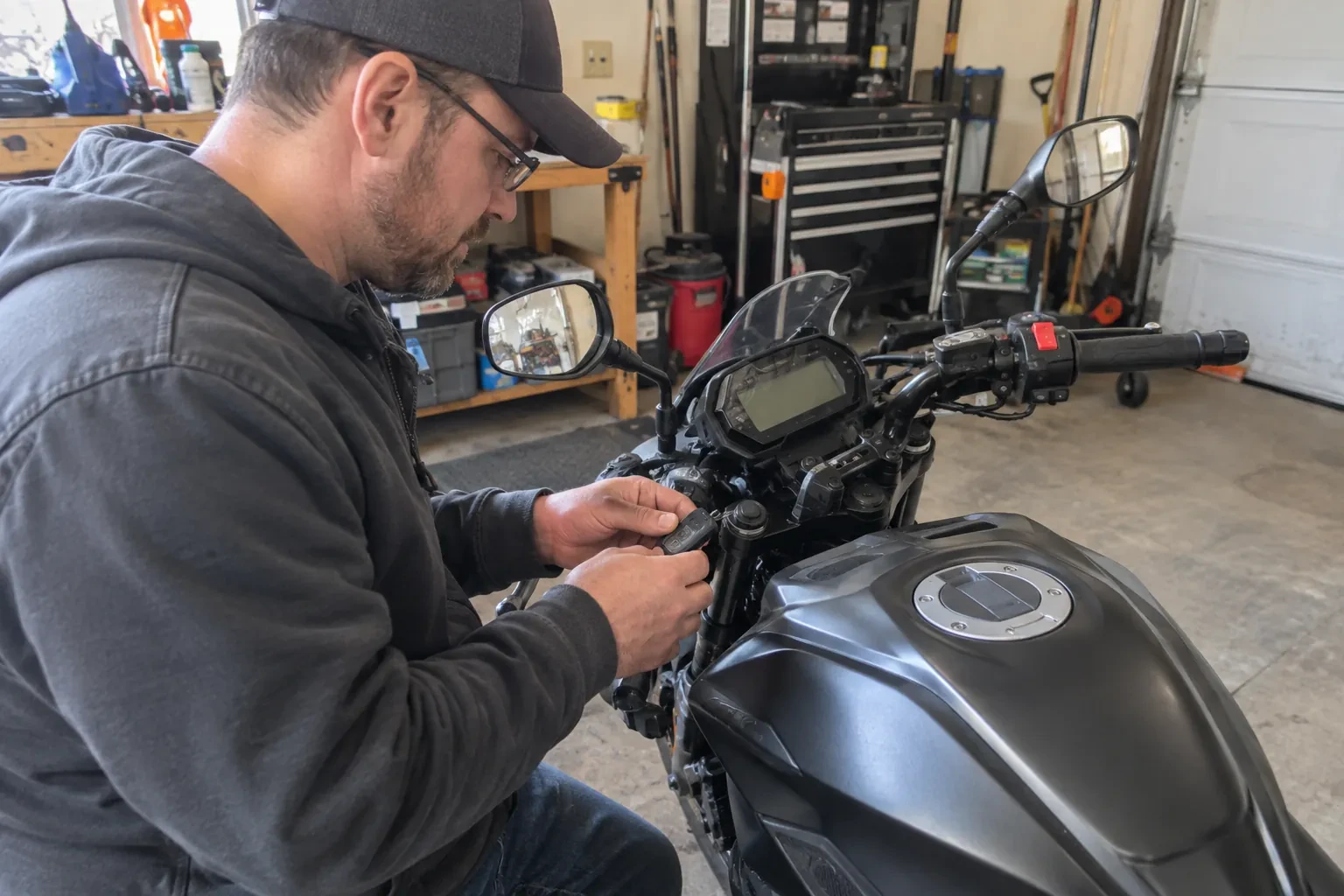
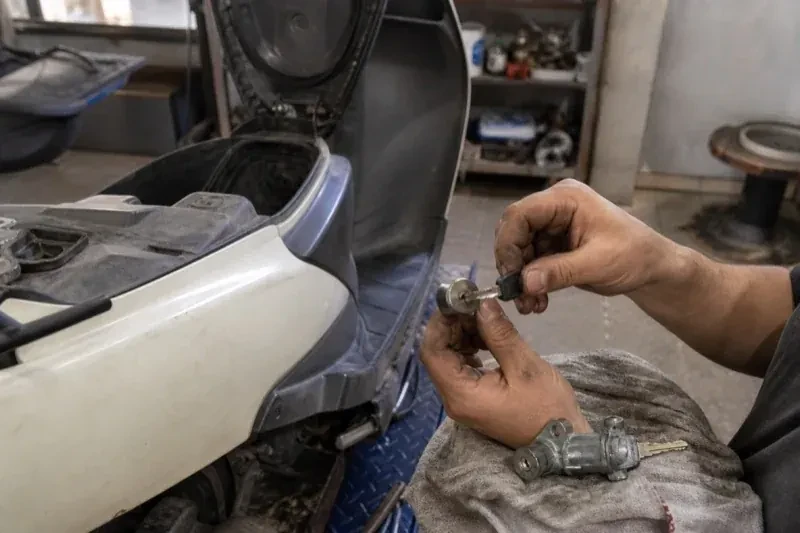
I only have the key, not the bike here. Can you still cut one from it?
Yes, a key on its own can usually be read and duplicated without the machine present, since the cuts on the blade carry the information the locksmith needs. What cannot be confirmed without the bike is whether an immobiliser is fitted or whether other locks are keyed the same way, so bringing the machine, or at least a photo of the ignition and dash, helps decide whether anything beyond a straightforward copy is needed.
Request a visit
For a condo or apartment in Markham we work within the building's rules. The suite door is yours and gets whatever cylinder, strike or closer suits the way you live. Common doors belong to the building, and we coordinate with management before touching them. You get a secure unit without a letter from the board.