Commercial · Cachet
Commercial Rekeying in Cachet
The manager's key ring went missing somewhere between the bank and the car, and the master on it opened every door in the building.
In plain words
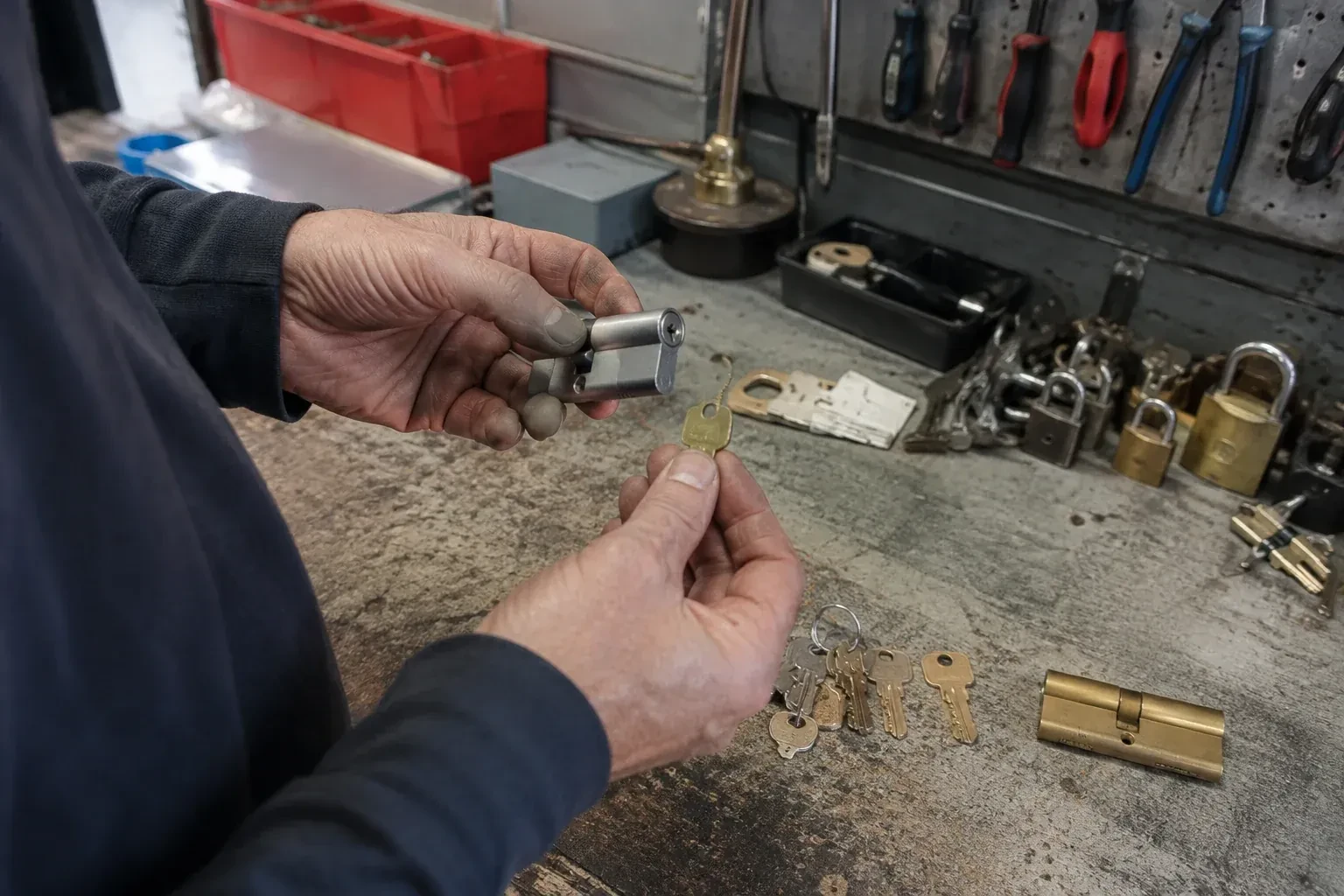
Commercial rekeying changes the pins inside a business's existing lock cylinders so that a new key operates them and every earlier key stops working, while the hardware itself stays on the door. The locksmith works from a list of the openings the business controls and the people who need to pass through each one, sets the cylinders to fresh combinations, cuts keys to match and records which key opens which door. Because nothing is replaced unless it is worn, a whole premises can be brought back under control in one scheduled visit, with the doors locking and unlocking exactly as before but answering only to keys you have counted.
How the visit goesA key turned up in the parking lot with the shop's name on its fob. It came back to you, which is lucky, but it means keys are leaving the building on rings you have never seen, and the shop's locks have not changed since opening day.
Commercial Rekeying
How the visit goes
Cores and restricted keys already on site
Some businesses already have more key control than they realize. Figure-eight shaped cores in the levers point to an interchangeable core system, which means a control key somewhere removes the core without unscrewing anything; finding out who holds that control key, or whether it left with a former manager, shapes the whole job. Keys with an unusual profile or a stamped number may belong to a restricted keyway whose blanks are only supplied against a signed letter of authorization, and the locksmith asks who the signatories are. Knowing what is already in place lets the new plan build on it rather than replace it, and flags any control that has quietly lapsed.
Storefront and mortise cylinders
Aluminum storefront doors carry a threaded mortise cylinder held by a small set screw in the door edge. The locksmith loosens the screw, spins the cylinder out, repins it, and threads it back to the same depth so the cam engages the deadbolt or hook bolt behind it and nothing else. Mortise locks in older office doors work on the same principle with a heavier lock body. On both, the depth and cam type matter as much as the pinning: a cylinder a turn too far in or a cam of the wrong shape will feel right in the hand but fail to throw the bolt, so each is cycled open and closed.
How copies get made from now on
If the business moved to a restricted keyway, the way keys are copied has changed for good. Hardware stores and kiosks do not stock the blanks, which makes running off a spare on a lunch break far harder to arrange. New keys are ordered from the locksmith by one of the people named on the authorization letter, who signs for them, and the register grows by exactly that many. On a standard keyway, the same discipline is kept by habit: the manager orders keys, the register records them and a key that turns up unlisted prompts a question. Either way the count on paper and the count in the world stay the same, which is what key control means.
Commercial Rekeying
In the van
Standard and restricted key blanks
Code key machine
Master pins
Interchangeable cores and control key
Key gauge and decoder
Commercial Rekeying
What affects the quote
Mix of lock types
A key-in-lever cylinder, a storefront mortise cylinder, a back-door rim cylinder and a padlock take different handling, though several full-size formats can share one pin kit for the same key system; a premises with a wide mix of cylinder types and brands still takes longer than one with one.
Upgrades chosen on the day
Some businesses use the visit to move to interchangeable cores, add a lockbox for the alarm company or fit a heavier cylinder on the cash room. Each is a separate line you can accept or leave.
Restricted keyway
Moving to a patented, restricted keyway means new cylinders or cores rather than a repin of the old ones, and the blanks themselves carry a higher price than standard keys.
What to have ready
- Which staff need to open which doors on a normal day?
- Do you have a current list of who holds keys?
- When is the premises quiet or empty enough for the work?
Commercial Rekeying: questions
QuestionsDoes stamping keys 'do not duplicate' stop people copying them?
Not reliably. The stamp is a request, and any key on a standard blank can be copied by anyone with the blank and a machine. What does work is controlling the blank itself through a restricted keyway, or controlling access to the lock through interchangeable cores and a tight register. Stamping still has a place: a serial code on each key, instead of the business name, lets you track it without telling a finder where it fits.
Is a restricted keyway worth it for a business?
A restricted keyway uses blanks that only the locksmith or authorized source can obtain, released against whatever that key-control program requires, a signed letter, card, signature record or factory authorization naming who may order keys. Hardware stores and kiosks have no blanks, so copies are far harder to get without your say-so. It costs more per key than a standard keyway and is most valuable where keys pass through many hands, such as retail with part-time staff, shared premises or anywhere the count of copies has drifted before.
What information should I have ready before the locksmith arrives?
A list of the doors and other locks you want included, a copy of the lease or the property manager's contact, every existing key you can find, and a rough idea of who needs to open what. Note which doors, if any, are interchangeable cores and where the control key is. Knowing your quiet hours and who opens up in the morning helps the locksmith plan the order of work and the key handover.
Related services
- Access Control InstallationSomething went missing from the storeroom over a weekend, and when you ask who was in the building, the honest answer is anyone with a key.
- Panic & Exit HardwareThe fire inspector's note is blunt: the banquet hall's second exit still turns on a deadbolt, and the crowd it is rated to hold needs a door that opens under one motion, no key involved.
- Commercial-Grade Lock ReplacementThe key to the office entrance turns with almost no resistance now, and some mornings the deadbolt does not fully retract until someone jiggles the handle and tries the key again.