Commercial · Buttonville
Commercial Rekeying in Buttonville
The manager's key ring went missing somewhere between the bank and the car, and the master on it opened every door in the building.
In plain words
Changing the locks answers today's question; key control keeps it answered. During a commercial rekey the new keys are stamped with a serial code rather than the business name or address, so a dropped key tells its finder nothing. Each key is logged against the person who receives it, and the old keys are collected and cut up on the spot. For premises that want copies kept out of hardware stores, the cylinders can be set up on a restricted keyway, with blanks released only against a signed authorization. What you end up with is a set of locks whose keys you can account for years later.
How the visit goesThe drawer behind the counter holds a tangle of keys with tape labels: front old, side, Dave. Some open things, some open nothing, and the hardware-store copies mean the true count drifted long ago past anything written down.
Commercial Rekeying
How the visit goes

The state of the cylinders and the doors
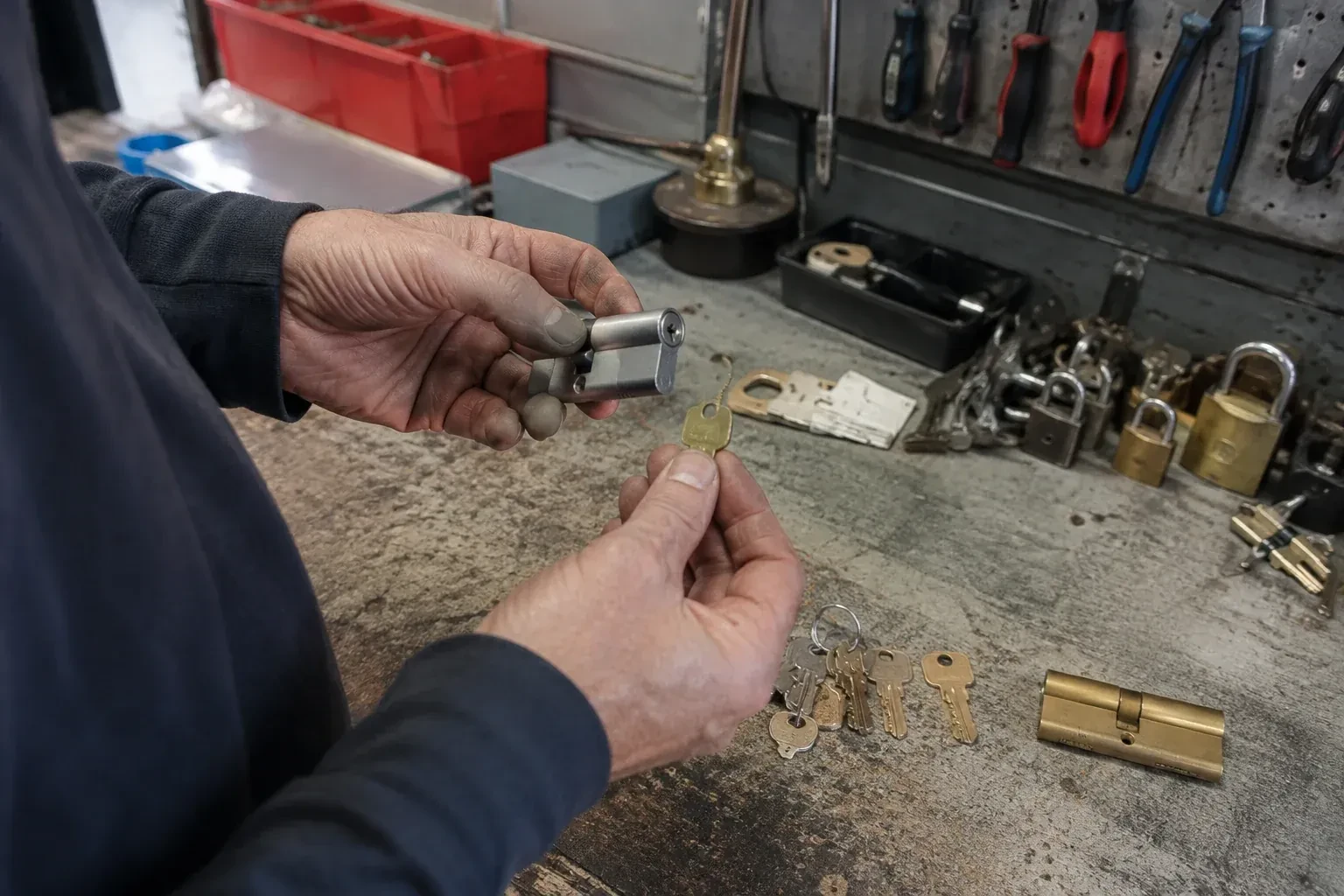
A cylinder about to be repinned is examined the way a mechanic looks over a part before rebuilding it. The plug should turn smoothly with the right key, the pins should spring back cleanly, and the face should be free of the green bloom that salt spray leaves on storefront hardware after a few winters. The locksmith also checks how the door closes: a strike that no longer lines up, a closer that slams, or a deadlatch that fails to catch will keep a freshly rekeyed door from locking properly. Most cylinders pass and are repinned; a worn or corroded one is pointed out so you can choose a replacement for that opening.
Pinning the master and change keys
When the plan includes a master, each cylinder is pinned to accept two keys: its own change key and the master above it. Thin master pins sit in the pin stacks so the plug can turn at both the change key's height and the master's; master keying can also create extra, unintended combinations, so the locksmith charts the system to keep those from lining up with someone else's key, and the manager's key opens its whole group and nothing beyond it. A well-built system leaves unused combinations in reserve, so when the business adds a door or a department next year the new cylinder joins the plan without disturbing the keys already in people's pockets.
A routine for the next departure
Turnover stops being a security event once there is a procedure for it. When someone leaves, their key is collected against the register and ticked off; if it cannot be produced, the chart shows exactly which cylinders that key opened, and only those are dealt with. Businesses that chose interchangeable cores can go further: the manager takes the control key from the safe, swaps the affected core for a spare in less time than a coffee break, and the locksmith repins the removed core at leisure for the next time. Either way the response is measured and specific, and the front door is never left answering to a key that walked out with a former employee.
Commercial Rekeying
In the van
Standard and restricted key blanks
Code key machine
Master pins
Interchangeable cores and control key
Key gauge and decoder
Commercial Rekeying
What affects the quote
Upgrades chosen on the day
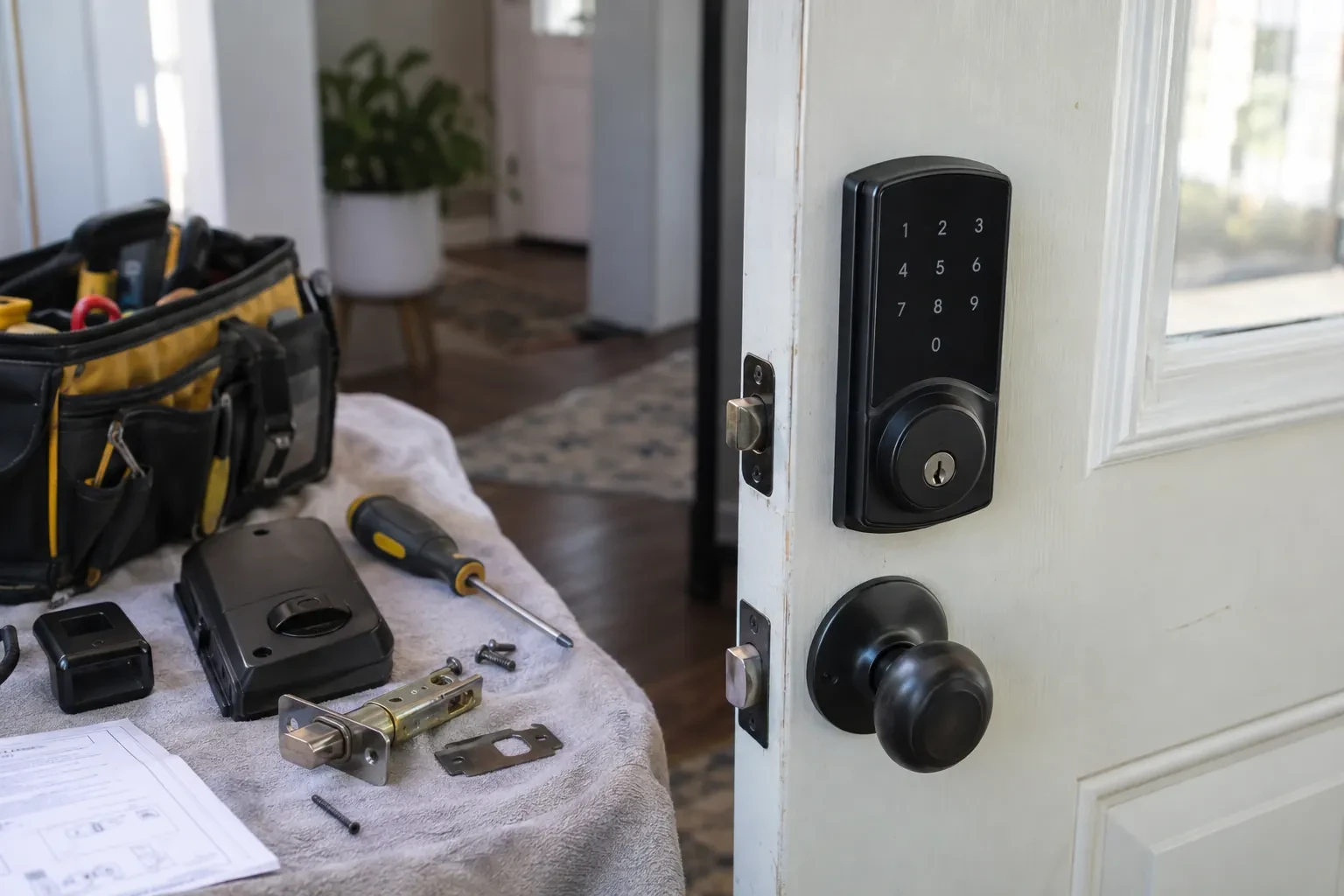
Some businesses use the visit to move to interchangeable cores, add a lockbox for the alarm company or fit a heavier cylinder on the cash room. Each is a separate line you can accept or leave.
After-hours or split visits
Work done after closing, before opening or split across two visits to suit trading hours costs the same amount as a single daytime block. The exact figure is confirmed on site once the number of cylinders and the keying plan are known.
Mix of lock types
A key-in-lever cylinder, a storefront mortise cylinder, a back-door rim cylinder and a padlock take different handling, though several full-size formats can share one pin kit for the same key system; a premises with a wide mix of cylinder types and brands still takes longer than one with one.
What to have ready
- Do you have a current list of who holds keys?
- Do you want one key for everything, or separate groups with a master?
- Are any of the locks interchangeable cores, and where is the control key?
Commercial Rekeying: questions
QuestionsDoes stamping keys 'do not duplicate' stop people copying them?
Not reliably. The stamp is a request, and any key on a standard blank can be copied by anyone with the blank and a machine. What does work is controlling the blank itself through a restricted keyway, or controlling access to the lock through interchangeable cores and a tight register. Stamping still has a place: a serial code on each key, instead of the business name, lets you track it without telling a finder where it fits.
Is a restricted keyway worth it for a business?
A restricted keyway uses blanks that only the locksmith or authorized source can obtain, released against whatever that key-control program requires, a signed letter, card, signature record or factory authorization naming who may order keys. Hardware stores and kiosks have no blanks, so copies are far harder to get without your say-so. It costs more per key than a standard keyway and is most valuable where keys pass through many hands, such as retail with part-time staff, shared premises or anywhere the count of copies has drifted before.
What information should I have ready before the locksmith arrives?
A list of the doors and other locks you want included, a copy of the lease or the property manager's contact, every existing key you can find, and a rough idea of who needs to open what. Note which doors, if any, are interchangeable cores and where the control key is. Knowing your quiet hours and who opens up in the morning helps the locksmith plan the order of work and the key handover.
Related services
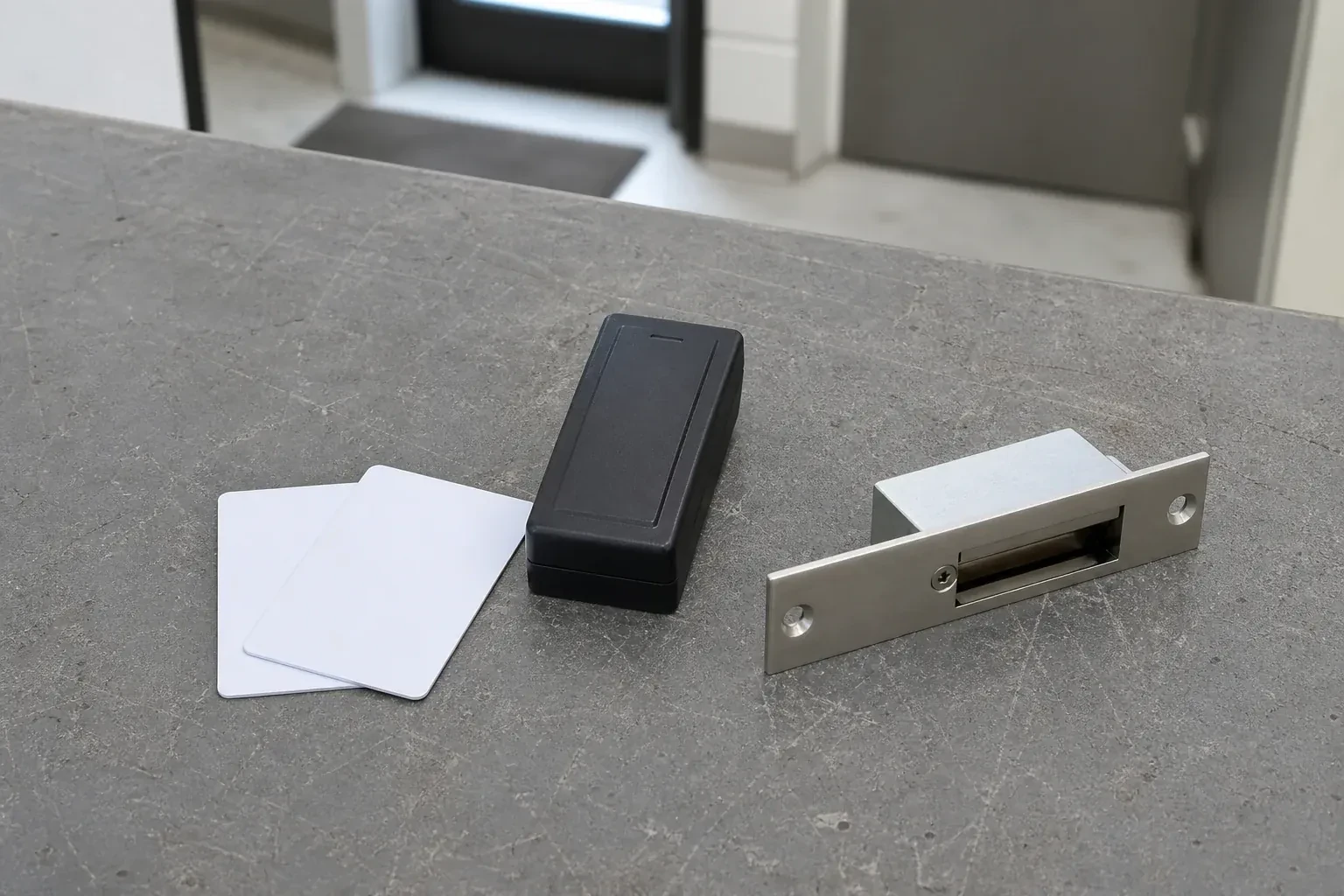
- Access Control InstallationSomething went missing from the storeroom over a weekend, and when you ask who was in the building, the honest answer is anyone with a key.
- Panic & Exit HardwareThe fire inspector's note is blunt: the banquet hall's second exit still turns on a deadbolt, and the crowd it is rated to hold needs a door that opens under one motion, no key involved.
- Commercial-Grade Lock ReplacementThe key to the office entrance turns with almost no resistance now, and some mornings the deadbolt does not fully retract until someone jiggles the handle and tries the key again.