Lockouts · Brown's Corners
Lost Keys — Same-Visit Rekey in Brown's Corners
The lawyer's envelope held two keys for the new house.
In plain words
If you rent, losing a key is handled in three steps rather than one. Tell your landlord first, since a lock change on a rented unit goes smoother when both sides know about it and both end up with a working key. Then the locksmith rekeys the suite door, and any other cylinder that key fitted, with both parties knowing. Finally new keys are cut for you and for the landlord's set, so the arrangement that existed before the loss is restored on a fresh combination. Landlords generally welcome the call; their hardware stays in place and their own key set is refreshed too.
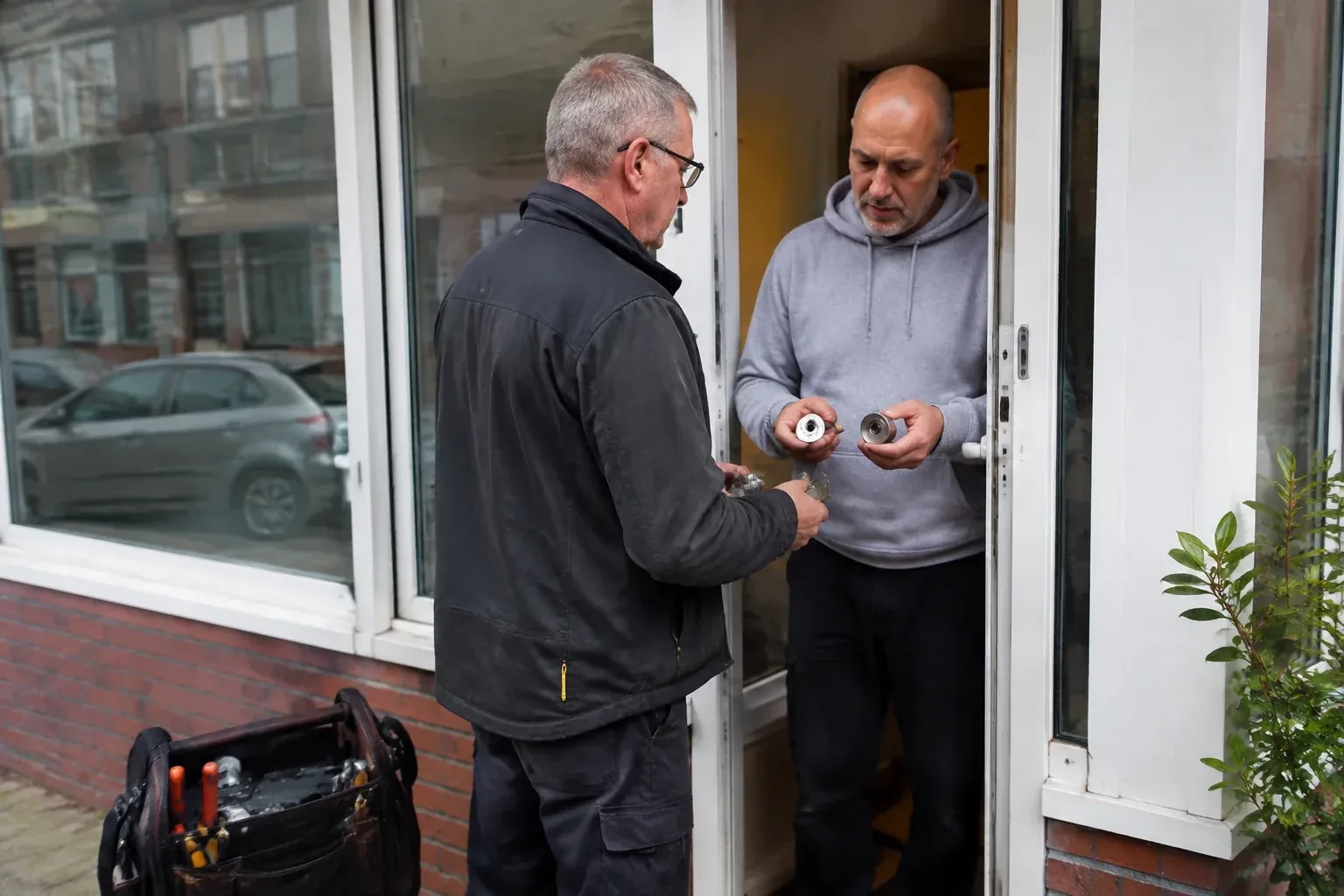
How the visit goesThe keys fell out of a gym bag somewhere between the arena and the parking lot. The ring has a tag from the building with the unit number on it. Whoever finds it has an address and a key that fits.
Lost Keys — Same-Visit Rekey
How the visit goes
Rekey or replace, cylinder by cylinder
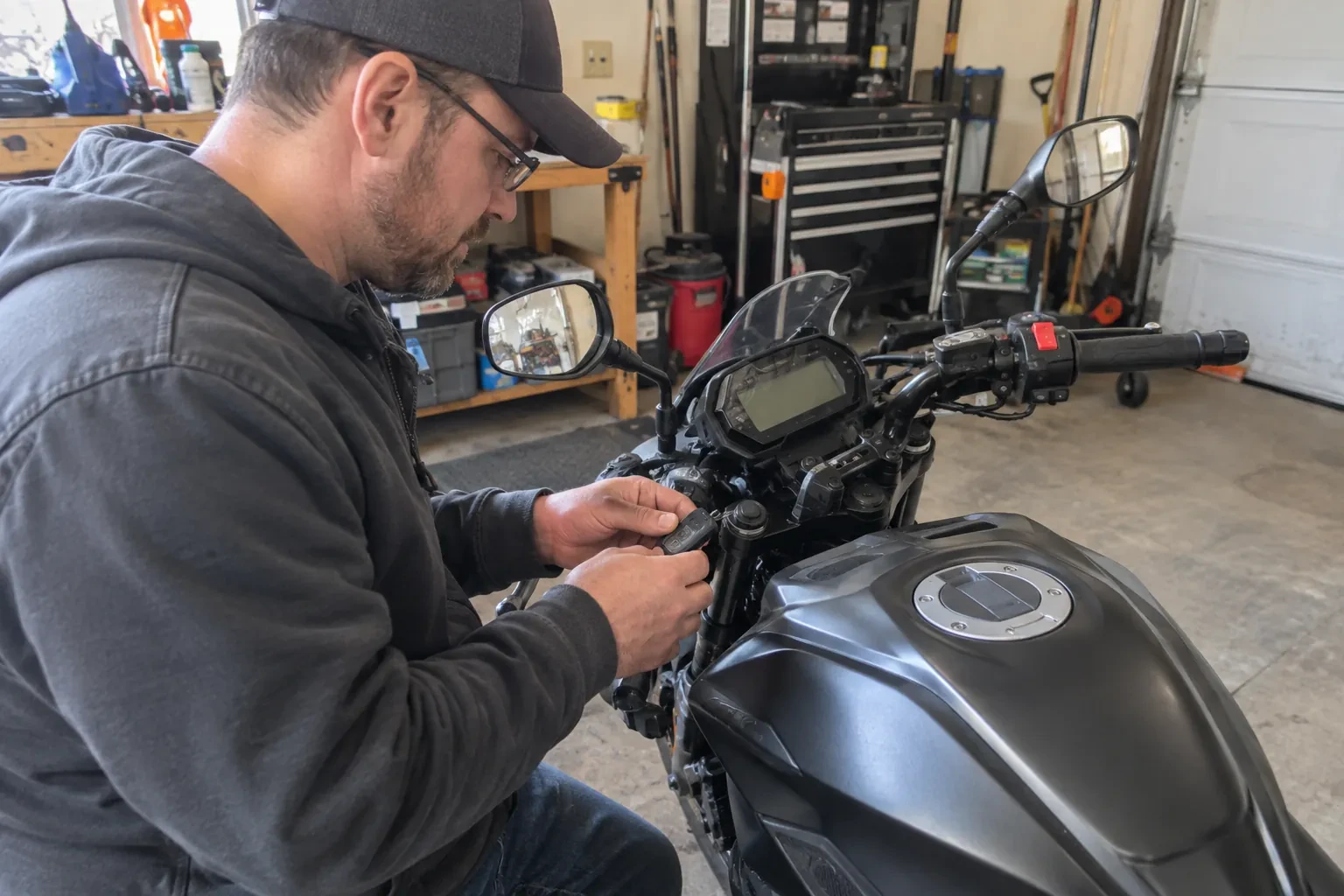
Rekeying suits hardware in sound condition, and most cylinders on a house qualify. The locksmith flags the exceptions while the list is being made: a plug worn oval by decades of use, a cylinder packed with salt and grit from a side door that faces the driveway, a knob lock so light it offers little resistance, or a keyway that no longer has blanks available. For those, a replacement cylinder or a complete new deadbolt keyed to match the rest is proposed as its own item, so you decide door by door. The aim is that every cylinder leaving the visit on a new key is one that will keep turning well for years.
Handling a restricted or high-security keyway
Restricted and patented keyways rekey in much the same way, with more parts and a little more care. A high-security cylinder's own elements, a sidebar's finger pins, a rotating element or another system-specific part, are reset to the new key's profile alongside the ordinary pins, and the finished plug is checked before refitting. Key blanks for these systems are issued through whatever authorised channel that system uses, a letter, a registered account, a dealer agreement, or sometimes a key card; bring whatever credential you were given. The reward is that copies of the new key can only be made through that same channel, one of the stronger kinds of key control a household can have.
When to think about rekeying again
Rekeying is a repeatable act, and after this visit you know what triggers it. Moving into a new home, because previous occupants and their helpers may hold copies. A contractor or tenant leaving without handing a key back. A separation or a change of roommates. A ring lost with anything that names your address. Manufacturers list exactly these moments, and a household that treats them as routine stays in control of its doors for decades with the same hardware. The locks on the door today can be repinned many more times; only the small pins and the keys change each time.
Lost Keys — Same-Visit Rekey
In the van
Key tags and a key register
Rekeyable-cylinder reset tool
Dry graphite or PTFE lubricant
Code key machine
Pin tweezers and shims
Lost Keys — Same-Visit Rekey
What affects the quote
Homeowner-rekeyable cylinders without a working key
Resetting a homeowner-rekeyable cylinder when its key is gone uses that system's own reset fixture, where the installed lock supports one, and a few extra minutes per cylinder, which shows as a small line on the quote.
Travel to the property
Every call-out includes the drive. A house across town and a rural property at the end of a concession road involve different time on the road, and the quote reflects the trip.
Outbuildings, gates and padlocks
Sheds, gates and detached garages often carry padlocks or light cylinders. Bringing them onto the house key may mean a new padlock of a matching keyway, quoted as a part.
What to have ready
- Do you currently have a way inside, or are you locked out as well?
- How many people will need a key afterwards?
- Do you know roughly how many copies of the old key exist?
Lost Keys — Same-Visit Rekey: questions
QuestionsHow long does a whole-house rekey take?
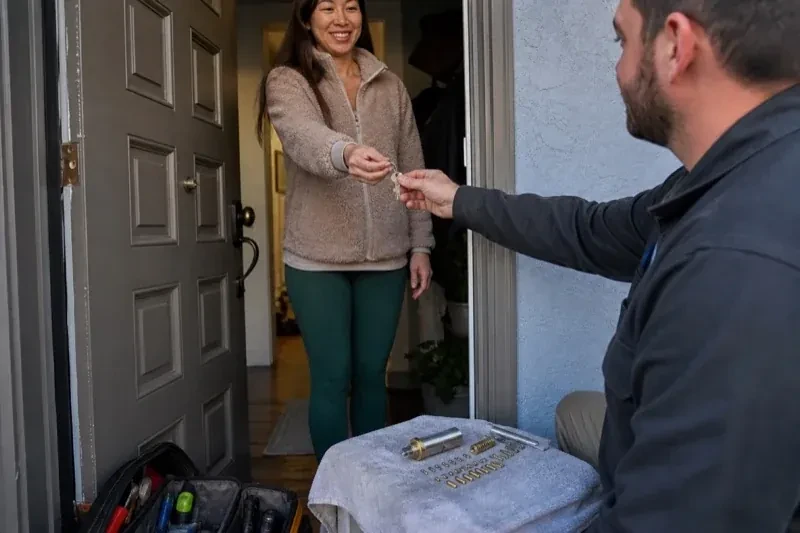
Plan on an hour or two for a typical house with three or four cylinders, including the walk-through, identification, pinning, cutting and testing. Each additional cylinder adds a little, as does swapping a cylinder to bring a mismatched door onto the same key, resetting a homeowner-rekeyable lock or clearing a garage opener. The locksmith gives a realistic window on the phone once the list of doors is known.
What should I do before the locksmith arrives?
Walk the property and note every door the missing key opened, including the garage, shed and gate. Gather any keys you still have, since a working key helps in reading each cylinder. Have identification and, for tenants, something showing the tenancy. Decide roughly how many keys you want and whether you would like all doors on one key. If a garage remote or building fob was lost too, mention it when you book.
Can all my doors work on one key afterwards?
Usually, yes. Cylinders that share a keyway family accept the same blank, so they can be pinned to one combination during the rekey. The front door, back door, garage entry and a gate padlock of the same family become a single key. Where a door uses a different family, the locksmith can swap its cylinder for a compatible one in the same visit, or you can choose to keep two keys for that door.