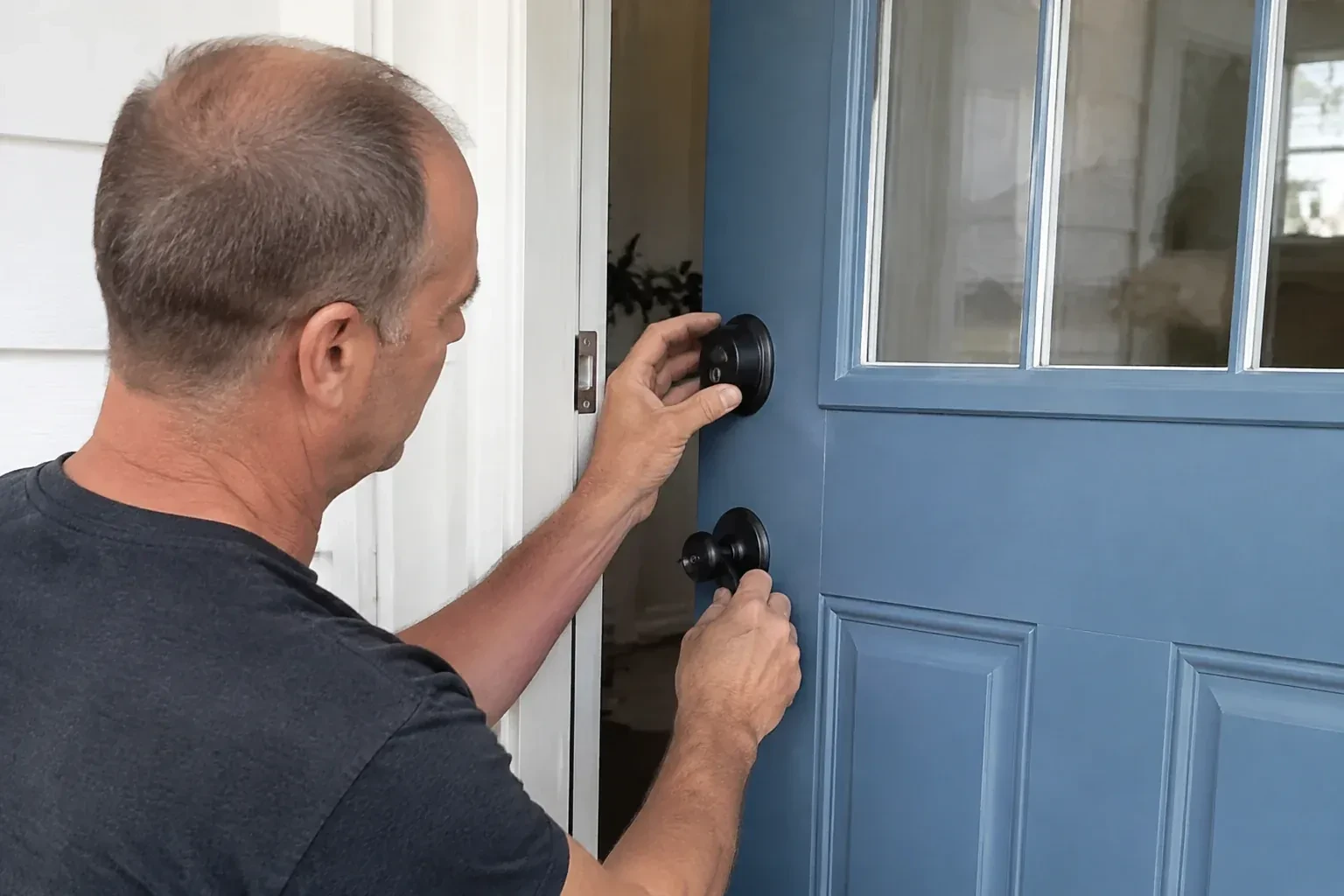
Change or rekey · Markham
Vintage Mortise Lock Service in Markham
The old skeleton key still fits the keyhole, but it now needs a jiggle, a lean on the door and a little luck before the bolt moves.
In plain words
Occasionally a case really is finished, with a cracked body, a bolt worn to a sliver or a hub broken in two, and the answer is a replacement that respects the door. Reproduction mortise cases are made in common vintage sizes and backsets, and a modern case with a pin-tumbler cylinder can fit many old pockets with little woodwork once its faceplate and hub also line up. The locksmith measures the case, backset, faceplate and trim spacing before ordering, aiming for the new case to drop in with your original knobs and escutcheons going back on. From the hallway, the door looks untouched; it just works.
How the visit goesSomeone painted the door years ago without removing the hardware. The faceplate, the strike and the little thumb-turn are all under several coats, the deadbolt scrapes when it moves, and the knob is stiff enough to leave marks on your hand.
Vintage Mortise Lock Service
How the visit goes
Reading the faceplate
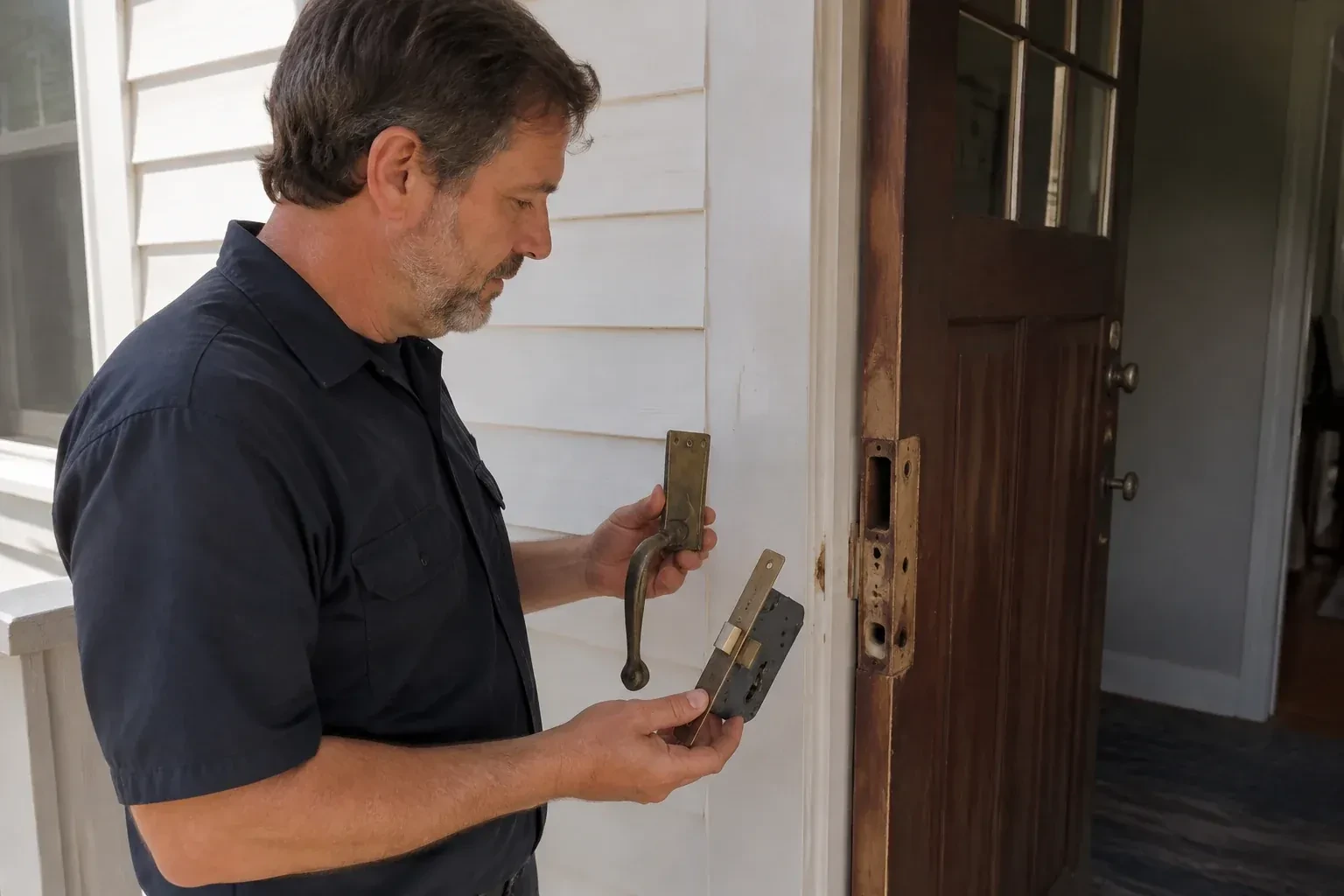
Standing at the open door, the locksmith looks at the narrow brass or steel plate in the door edge. Its height, the spacing of its screws, any maker's stamp, and whether it shows one bolt or two tell a good deal about what is inside: a latch-only case for an interior door, a latch and deadbolt case for an entry, or a privacy function with a turn button. The distance from the door edge to the centre of the knob, the backset, is measured, along with the spindle size. These figures decide which springs, followers and, if it comes to that, which replacement case will fit, so they are written down before the lock is disturbed.
Taking the lock out without marking the door
Removal is done in a set order so nothing is forced. The knob set screws are backed off and the knobs and spindle drawn out, then the escutcheons are lifted away, their screw positions photographed for reassembly. On a cylinder lock, the small set screw in the faceplate is released and the cylinder is unthreaded from the case. The faceplate screws come out, and the case is eased from its pocket with a gentle rock, never a pry bar, because the wood at the edge of an old door is thin. Everything that comes off is bagged and labelled, and the pocket is looked at while it is empty.
Looking after the finish
The brass or bronze knobs and escutcheons on an old door have earned their patina, left alone unless you ask otherwise. Paint cleaned from a faceplate or strike leaves the bare metal as found, not polished bright. If you would rather see them shine, check the finish first: unlacquered brass takes a gentle polish well, kept off the keyhole and spindle; polishing a lacquered piece can scratch through it and start tarnish underneath. Lacquered reproduction parts resist tarnishing rather than darken to match; an unlacquered reproduction is built to age and blend in over a season or two. A light wipe when dusting is all the upkeep the trim needs; wet cleaners find their way into the case.
Vintage Mortise Lock Service
In the van
Light lock oil
Mortise cylinder and cam
Reproduction mortise case
Latch and hub springs
Warding files
Vintage Mortise Lock Service
What affects the quote
What is actually broken inside
A clean and new springs is the lightest job. A worn hub, a cracked lever or a part that has to be fabricated to match the original adds bench time, and the assessment names which applies before any of it starts.
Replacement case
A case that is cracked or worn through is replaced with a reproduction or modern mortise case sized to the pocket. The case itself, any trimming of the pocket and the refitting are itemised separately from a repair.
Paint and seized parts
Hardware buried under decades of paint takes time to free and clean without damage. A faceplate, strike and thumb-turn that have to be stripped back add to the visit and are noted in the quote.
What to have ready
- Can you send a photo of the plate in the door edge and one of the keyhole?
- How many doors need attention, and are any of them interior doors?
- Is the deadbolt keyed from the inside as well as the outside?
Vintage Mortise Lock Service: questions
QuestionsWhat information helps before you come out?
Whether the door takes a skeleton-style bit key or a flat key in a round cylinder, roughly when the house was built, what the knob and bolt are doing, and whether the trouble is worse with the door closed. A photo of the faceplate in the door edge and one of the keyhole side is worth a great deal. Mention how many doors are involved and how many keys you would like afterwards.
Can you make a key for a lock that has none?
Yes. A bit key is cut to the lock rather than copied from another key: the locksmith chooses a blank of the right size and files the bit until it clears the wards and lifts the levers inside your case, testing as they go. A pin-tumbler cylinder on a later lock is decoded or rekeyed and keys cut to it. Bring any loose keys that came with the house, since one may be close enough to serve as a starting pattern.
Can my interior doors be serviced too, and can one key work all of them?
Usually yes to the first, and to the second once the locksmith checks the locks. Interior mortise latches with privacy turn buttons are lighter versions of the entry lock and respond to the same clean and re-spring. Interior locks in a house were sometimes supplied to one bit key, and where the key sections, warding and levers actually match, the locksmith can restore that arrangement so a single key opens several bedroom and bathroom doors. It is a practical thing to have when a child locks a bathroom from inside.