Commercial · Victoria Square
Panic & Exit Hardware in Victoria Square
The fire inspector's note is blunt: the banquet hall's second exit still turns on a deadbolt, and the crowd it is rated to hold needs a door that opens under one motion, no key involved.
In plain words
A pair of doors is its own small project, and not every pair needs the same approach. Some rim-device pairs keep their mullion and latch each leaf independently with no set closing order. Where sequencing does matter, one leaf is chosen as the inactive leaf and closes first, guided by a coordinator so the active leaf's device can seat properly into the strike or into an astragal on the inactive leaf. Removing a centre mullion calls for a compatible replacement arrangement on each leaf, which can matter for wheelchair access or for moving equipment through.
How the visit goesThe crossbar on the loading-dock door barely returns anymore. Someone has to lean into it with a shoulder, and twice this month it has stuck half-latched, propped by whatever was nearest.
Panic & Exit Hardware
How the visit goes
Reading the door itself
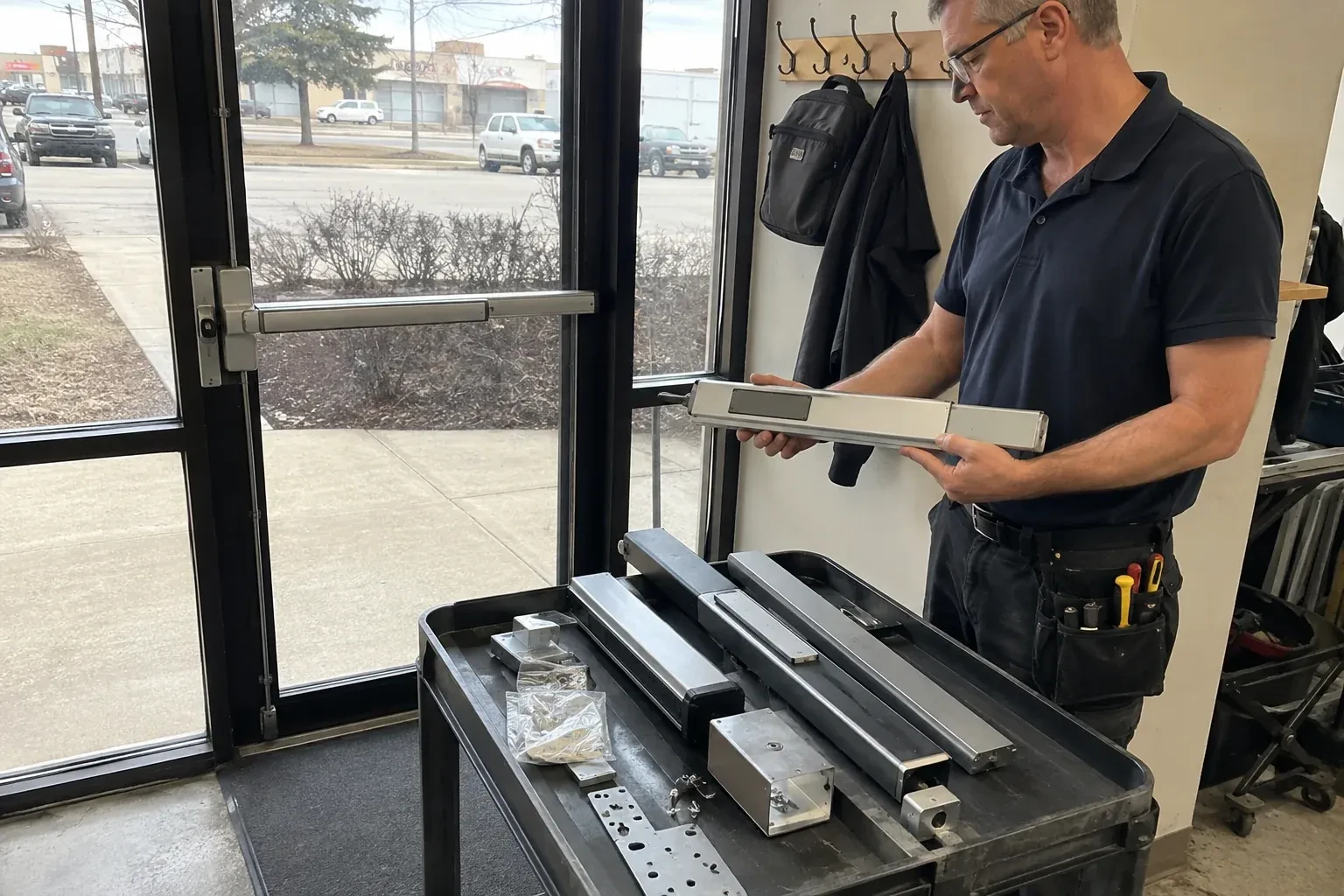
Every opening gets the same close look: whether it is fire-rated, which way it swings, how wide it is, and what preparation, if any, already exists in the door and frame from earlier hardware. A hollow-metal fire door takes a different device than a wood door in a non-rated partition, and a narrow-stile aluminum storefront door narrows the choice of device further still. Reading this correctly before anything is ordered is what keeps the installation from turning into a second visit once the wrong device arrives and does not fit the preparation already in the door.
Choosing the device for the opening
With the assessment done, the locksmith matches a device family to the door: a rim exit device for most single doors, a mortise device where a heavier-duty case suits the opening, or a vertical-rod device where latching is needed at both the top and bottom of the frame. Fire-rated openings take fire exit hardware specifically listed for that duty, never a standard panic device pressed into a role it was not built for, and listed rim fire-exit hardware covers a wide range of those openings on its own. The chosen device is matched to the door's width, handing and existing preparation before it is ordered.
Room to grow into the next change
If the space changes use again, adds seating, or the occupant load creeps upward with a future renovation, the hardware fitted now is already suited to a use that requires it, rather than something that will need revisiting the moment the room grows busier. Keeping a note of the occupant load the current hardware was specified for means a future change can be checked against that number before it becomes an inspector's finding rather than a planned upgrade.
Panic & Exit Hardware
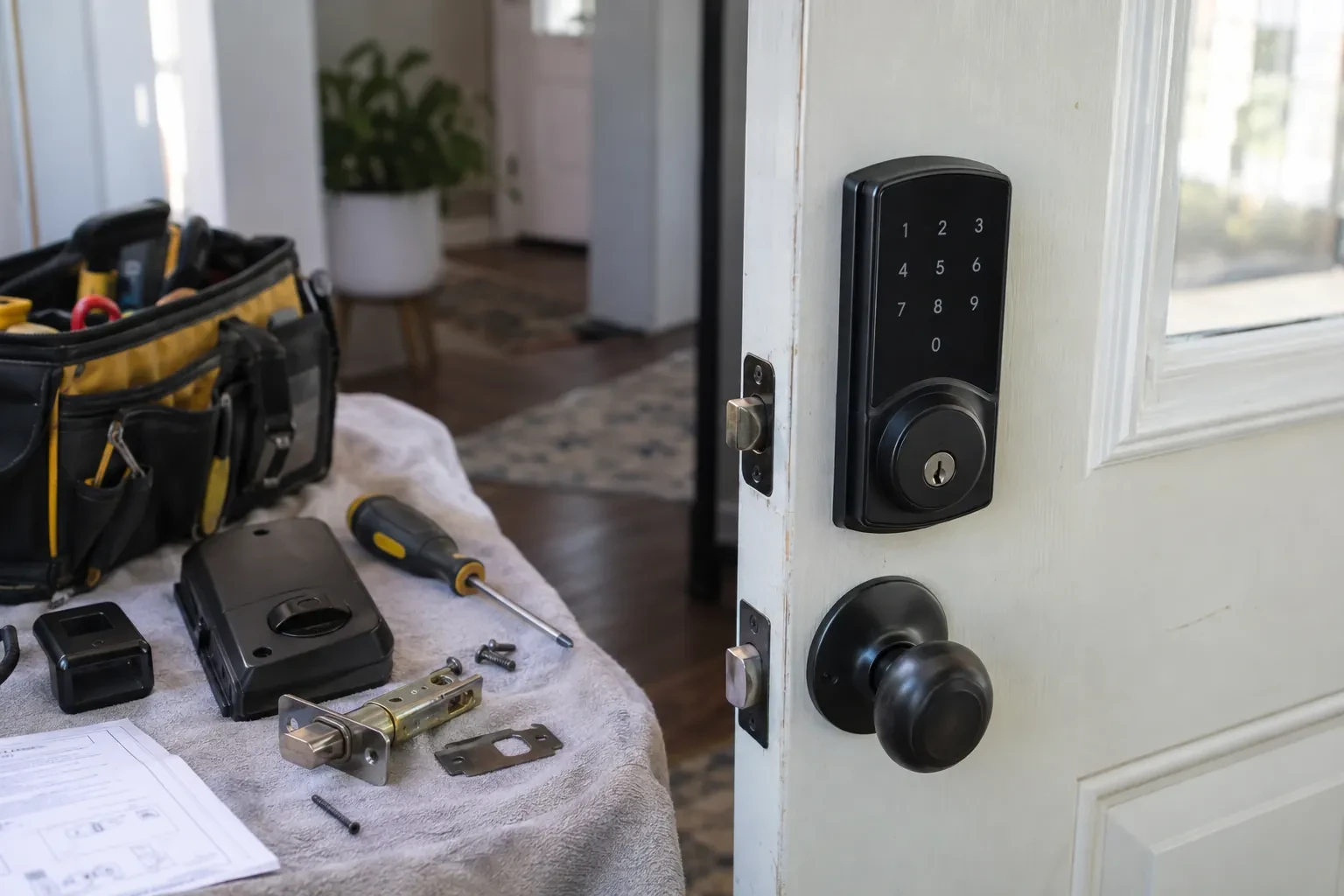
In the van
Dogging key or keyed cylinder
Rated exit device
Force gauge
Coordinator for door pairs
Outside trim (pull, lever or cylinder)
Panic & Exit Hardware
What affects the quote
Access to the opening
A ground-floor commercial door is straightforward to reach. An opening behind scaffolding, up a stairwell with no elevator, or in a space still under active construction takes longer to work at.
Door and frame condition
A door that has sagged, a frame that has shifted, or a strike pocket that no longer lines up needs correcting before hardware is fitted, which adds its own line to the quote.
Electrified functions added
A request-to-exit switch or electric latch retraction adds wiring, a power source and coordination with the building's other systems, while a standalone alarm module can run on its own battery; each is priced alongside the mechanical installation itself.
What to have ready
- Does any door already have a hasp, padlock or extra deadbolt fitted?
- Which doors are involved, and are any of them fire-rated?
- Has a fire inspector or building official already flagged a specific door?
Panic & Exit Hardware: questions
QuestionsHow is occupant load actually counted for this decision?
Occupant load is calculated from the floor area and the intended use of the room, using published factors for that occupancy type, rather than a headcount taken on a busy night. A building official or a locksmith familiar with the calculation can work through it for a specific room, and the result is what decides whether the exit doors serving that room need a releasing device.
How high should the crossbar or touchpad be mounted?
Exit-device makers publish a mounting range for their own models, and in practice a crossbar or touchpad sits no higher than about 1200 mm above the finished floor. The locksmith sets the hardware inside the maker's range and below that ceiling, allowing for anyone in the space who needs a lower reach, a wheelchair user or a shorter staff member among them.
Who is responsible for keeping the hardware compliant?
The building owner or the party the owner assigns, often a facilities manager, is responsible for keeping exit hardware in working order and for the fire door assembly testing that goes with it. A locksmith installs and services the hardware and can keep records on the owner's behalf, but the ongoing duty to maintain the assembly sits with whoever holds the building.
Related services
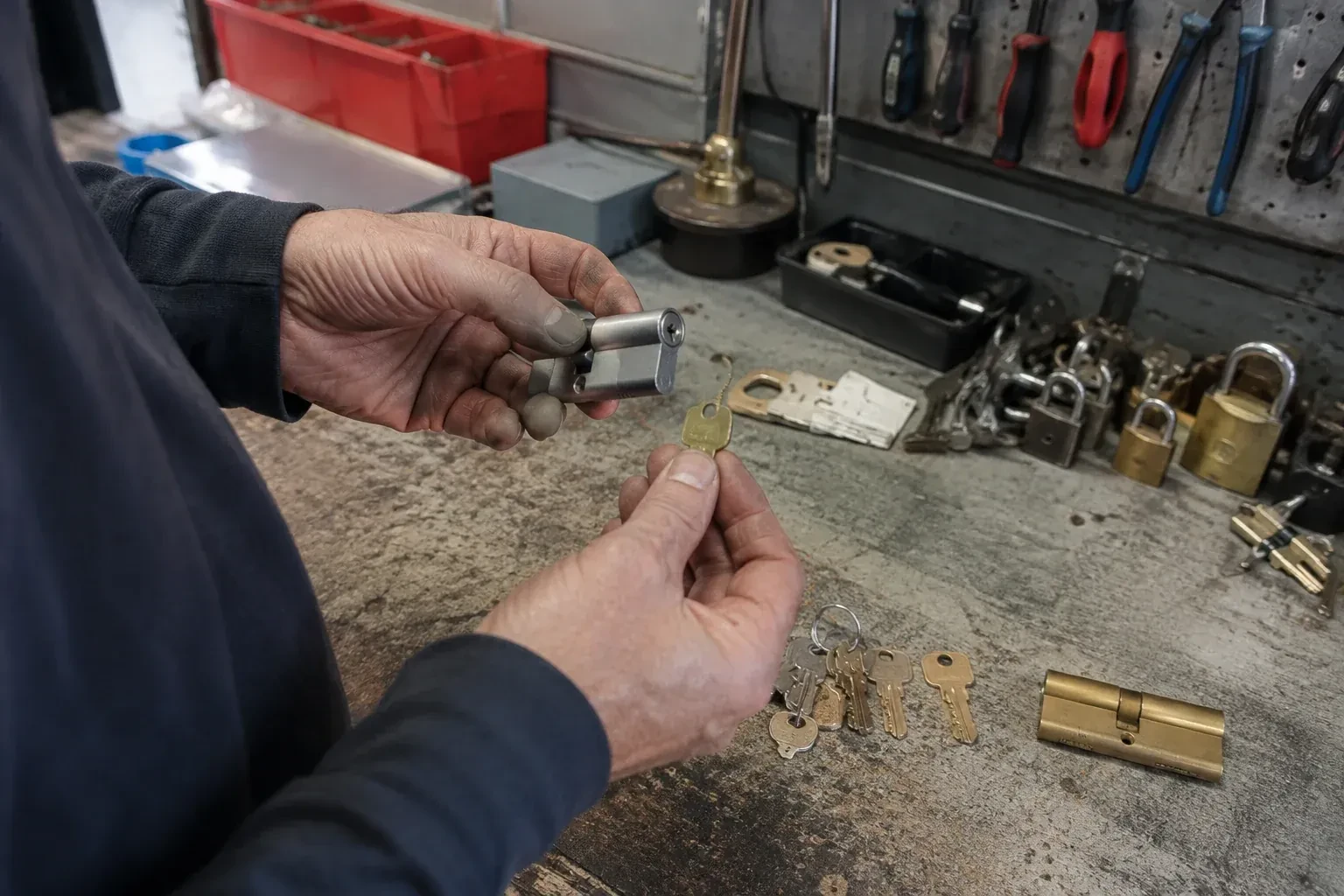
- Master Key System DesignA new hire at the shop gets handed whatever spare key happens to be in the drawer, and it turns out to open the stockroom, the back office and the safe room all at once.
- Access Control InstallationSomething went missing from the storeroom over a weekend, and when you ask who was in the building, the honest answer is anyone with a key.
- Commercial-Grade Lock ReplacementThe key to the office entrance turns with almost no resistance now, and some mornings the deadbolt does not fully retract until someone jiggles the handle and tries the key again.