Lockouts · Victoria Square
Business Lockout Service in Victoria Square
After last night's power flicker the card reader beside the clinic door shows nothing.
In plain words
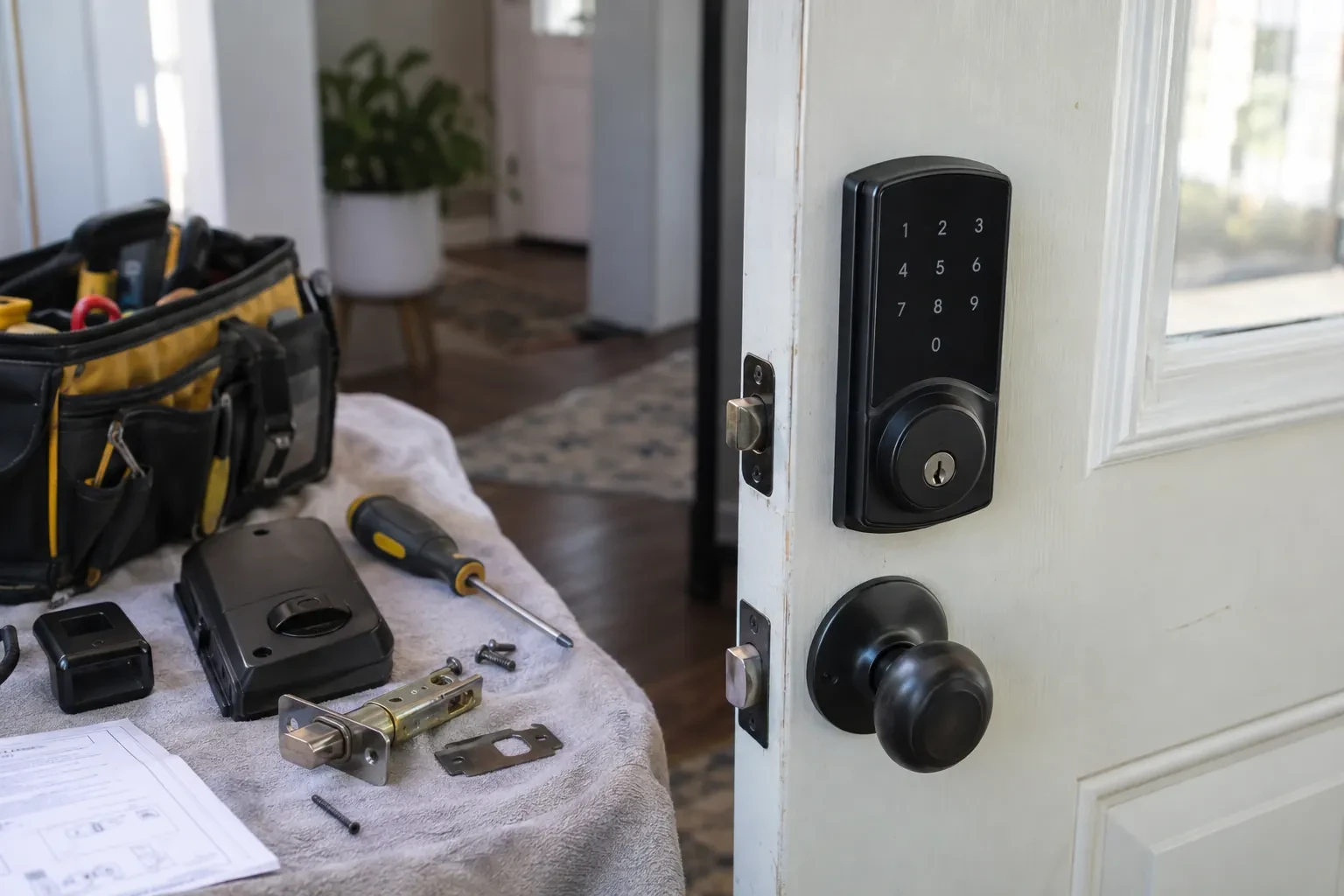
On a commercial door the lock is rarely alone. A door contact feeds the alarm panel, a card reader drives an electric strike or a magnetic lock, and a monitoring company is watching for an opening outside business hours. A business lockout therefore starts with a conversation about those systems: who can disarm the alarm, whether the monitoring station should be told to expect an entry, and whether the electrified hardware has a mechanical override. Handling that first means the door opens without a patrol being dispatched, the access system is left working as designed, and the reader can be reset once someone is inside.
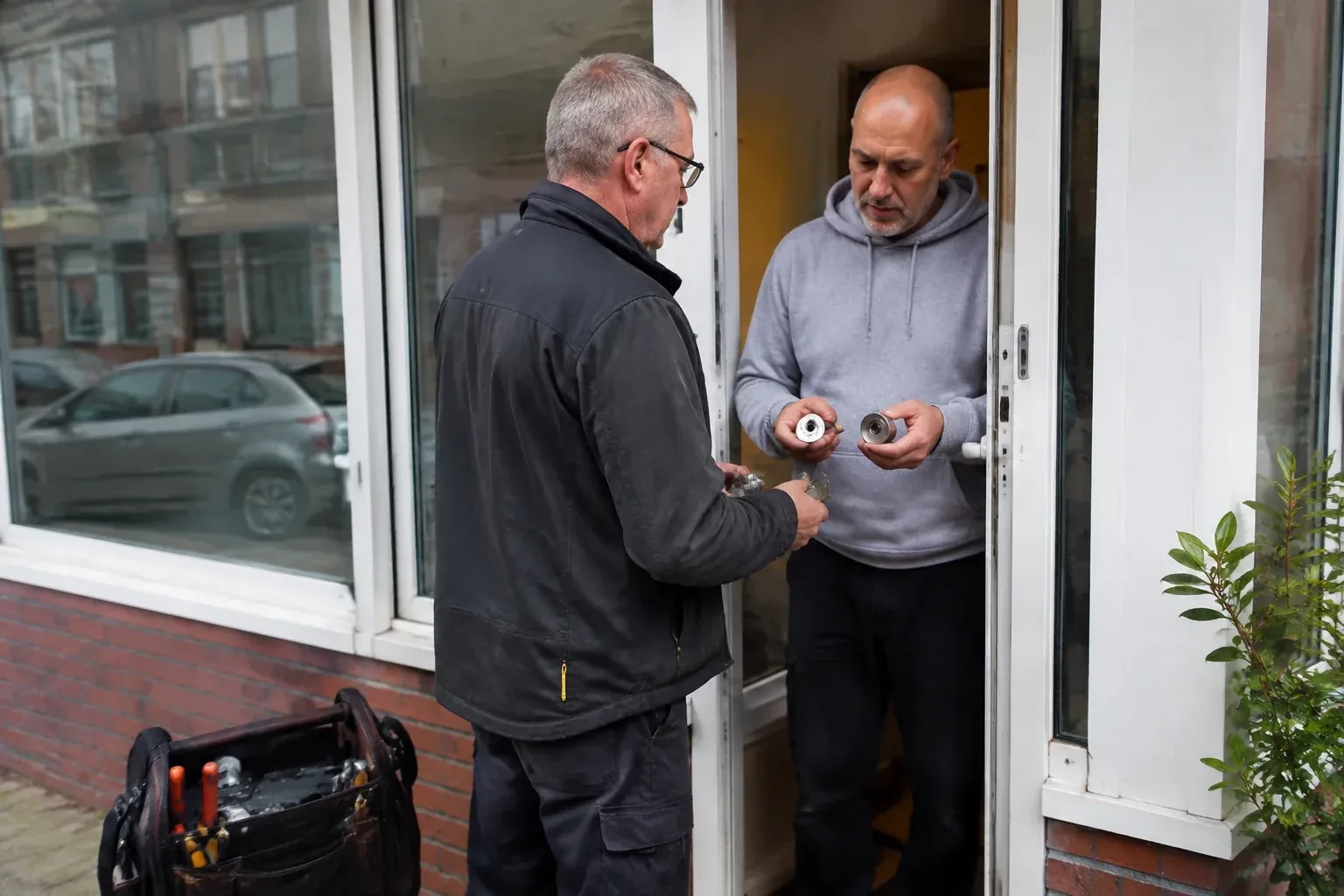
How the visit goesIt is ten to nine, three staff are on the sidewalk with their coffees, and the key that has opened the glass front door for six years will not turn. The cylinder feels gritty, the door is locked, and the first customer is already parking.
Business Lockout Service
How the visit goes
Alarm, reader and anything wired to the door
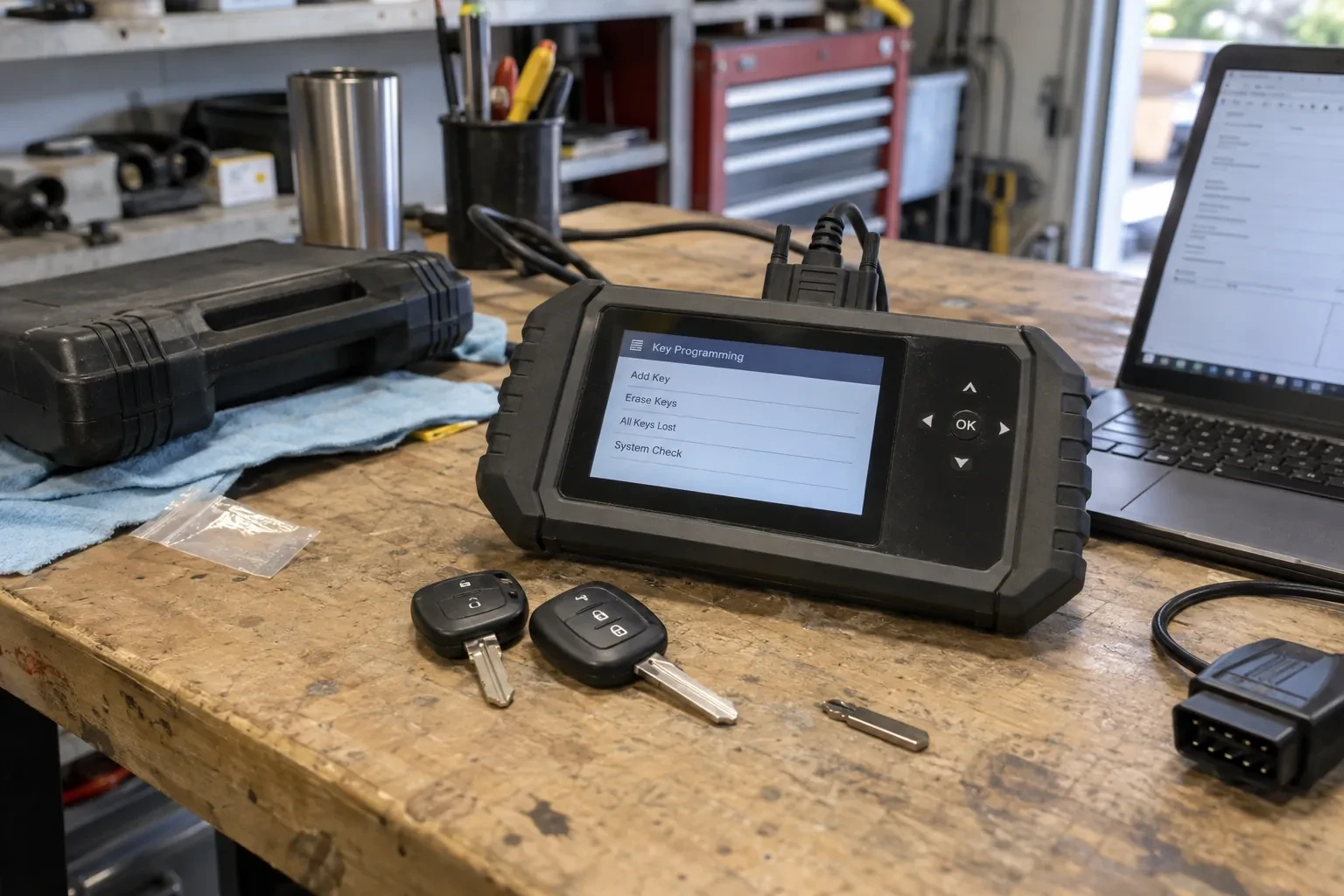
Before the door moves, the locksmith asks what will notice when it does. Is there an alarm with a contact on this door, who holds the code, and should the monitoring company be told to expect an entry? Is the door controlled by a card reader, keypad or intercom, and does it use an electric strike, fail-secure or fail-safe, or a magnetic lock, which releases? Is there a mechanical override cylinder and does anyone hold its key? Has the access-control provider got remote access to unlock it? These answers decide whether the opening is a phone call, a battery, an override key or conventional lock work, and they keep the security system intact afterwards.
Making an unreturned key useless
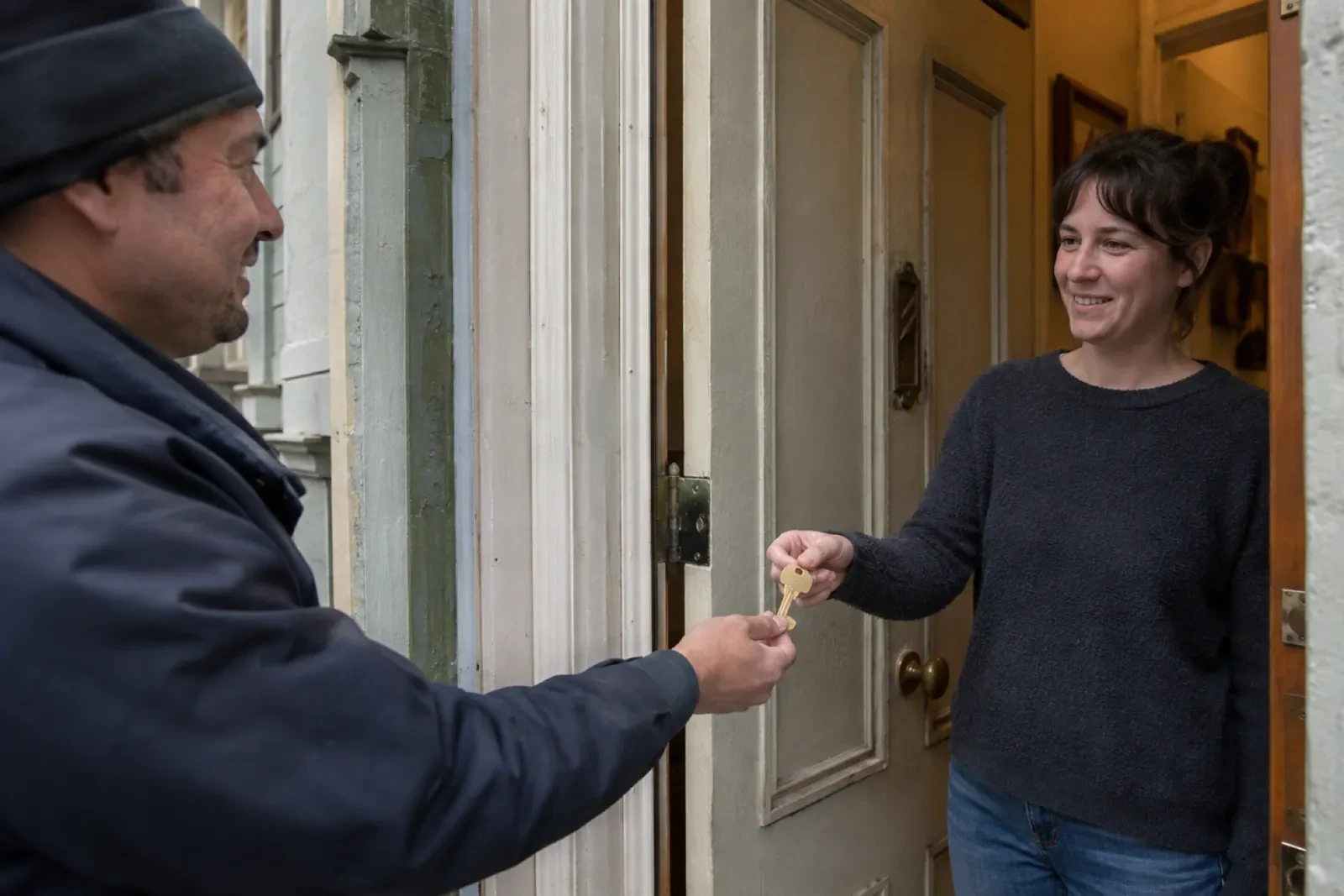
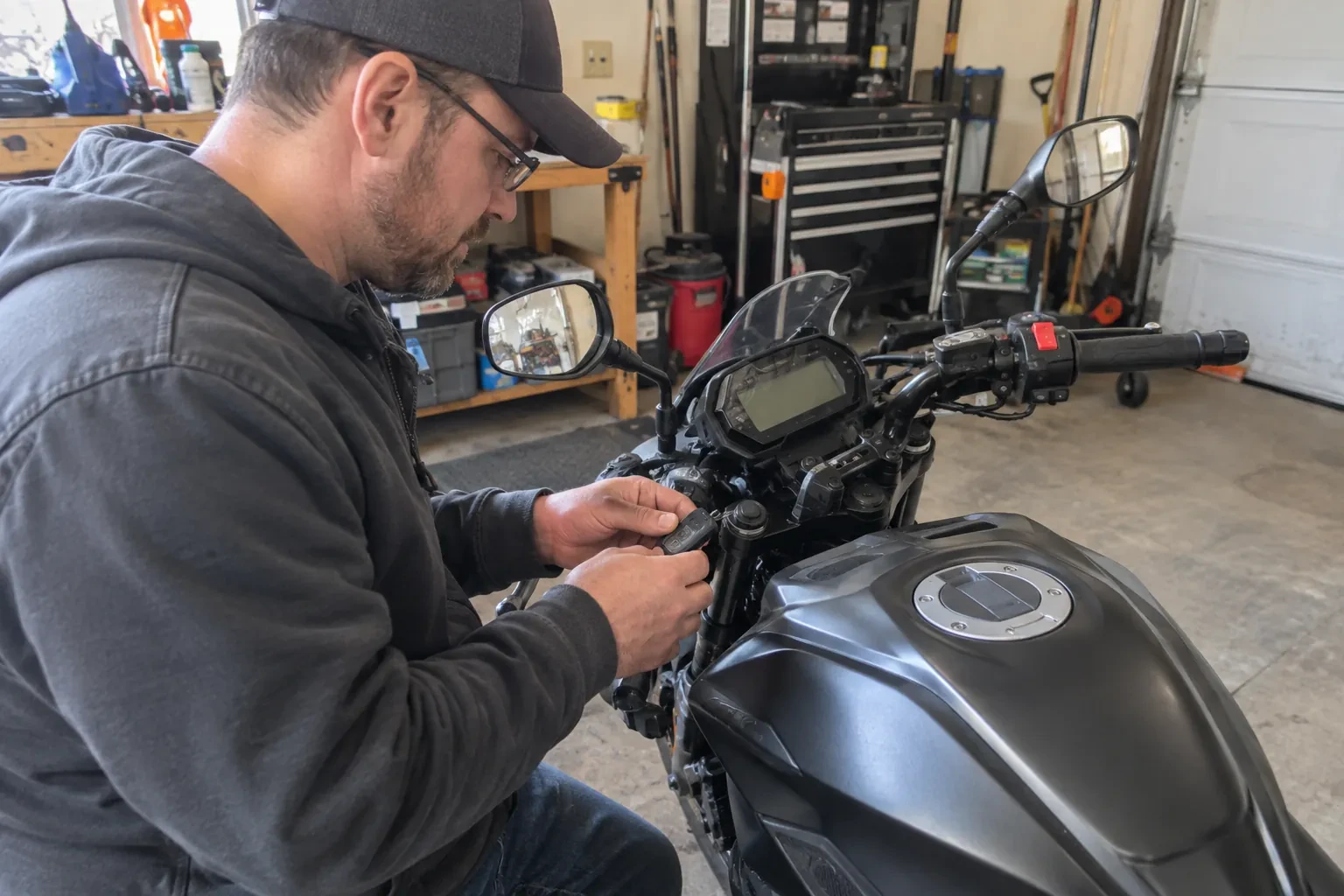
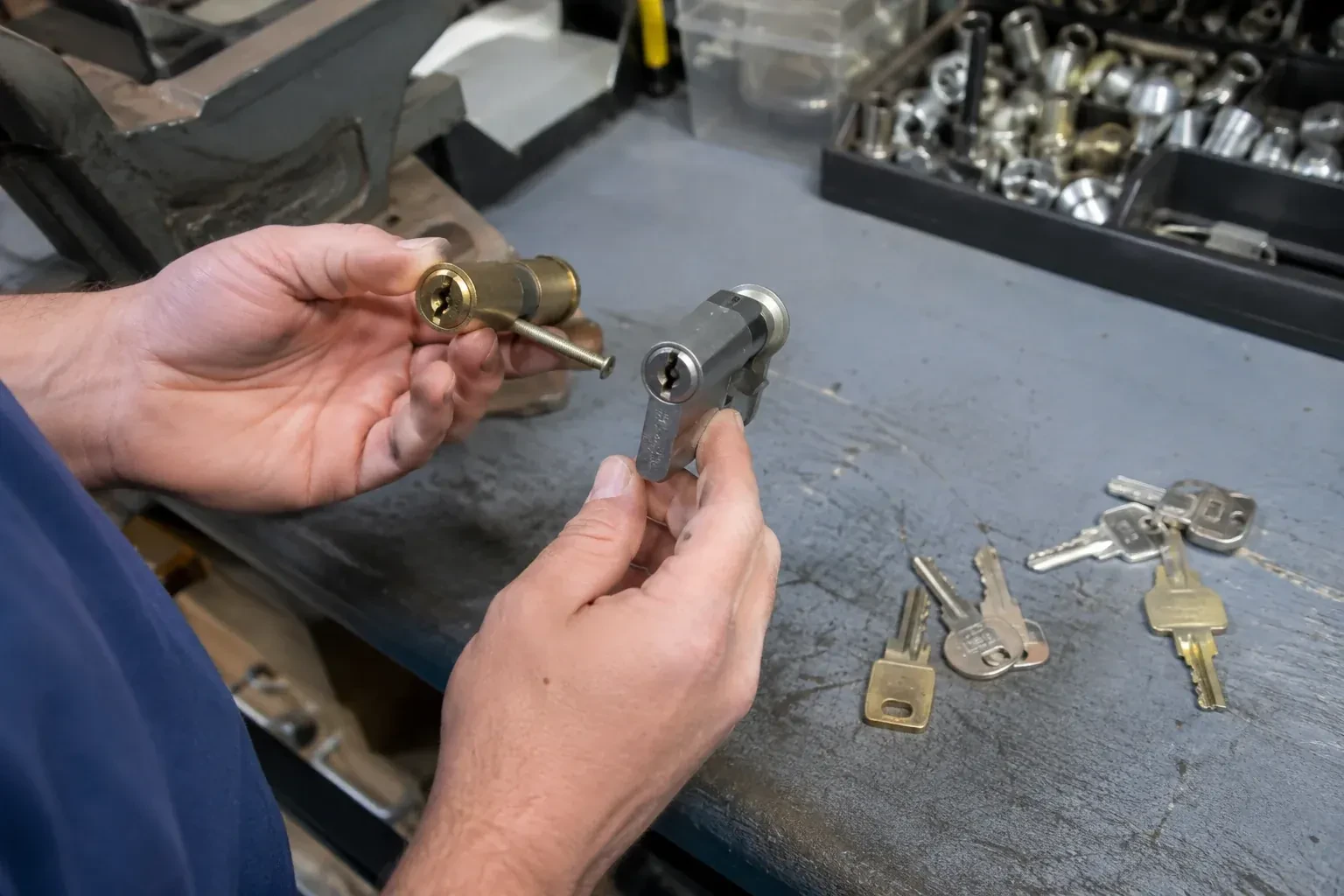
When a key is lost or unreturned, the second half of the visit is rekeying. Mortise and rim cylinders are removed, the plug slid out with a follower, and the bottom pins changed to a new combination so a fresh key operates them and the old one turns nothing. Where the building uses interchangeable cores, the core is swapped for one on a new combination. Cylinders that shared the old key are brought onto the new one, and if the door sits within a master key system the change is planned with the property manager so building keys keep working. New keys are cut, tested in every door and recorded against named holders.
A keyholder plan so one absence never closes you
Most business lockouts trace back to a single keyholder, and the visit is the natural moment to fix that. Two named people should be able to open the premises, with a third who can be reached. A combination lockbox in a discreet spot, its code known to the opening staff and changed when someone leaves, covers the day the keyholder is stuck in traffic. For electrified doors, a second administrator on the access system means a forgotten code is an inconvenience, not a closure. Writing the opening and closing routine on one page, with the alarm company's number and the locksmith's, turns the next surprise into a short phone call.
Business Lockout Service
In the van
Interchangeable cores pinned to system
Storefront deadlatch and hookbolt bypass tools
Broken key extractors
Key blanks and code cutter
Replacement mortise and rim cylinders
Business Lockout Service
What affects the quote
When the call comes in
A weekday morning, an evening after closing, a weekend or a statutory holiday all cost the same amount for a business lockout, and locksmiths are reachable at any hour. The figure is confirmed at the door once the locksmith has looked at the door and the hardware involved.
Padlocks, gates and interior doors
A shutter padlock, a compound gate and interior doors for the cash office, stockroom or server closet are lighter work than an exterior lock but each is its own line, and a padlock is often replaced rather than opened.
Distance and access to the door
Travel is part of every call-out, and so is reaching the door: a plaza unit at street level, a suite behind a locked lobby, or a loading dock at the back of an industrial park each take a different amount of the locksmith's time.
What to have ready
- Has the door been dragging, scraping the threshold or failing to latch at closing recently?
- Who on site can show identification and a document connecting them to the business?
- Is there an alarm on the door, and who holds the code and the monitoring password?
Business Lockout Service: questions
QuestionsWhat is a restricted keyway and is it worth having for a business?
A restricted or patented keyway is one whose blanks are supplied only through the manufacturer's authorised channels, so duplication is controlled rather than available at an ordinary counter, though the exact authorisation step varies by program and is not always a signed letter. For a company with staff turnover, cleaners and contractors, it means the keys in circulation are far easier to track. It can be introduced during a rekey, on the exterior doors only or across the whole premises, and works alongside a key register.
Will we get something in writing afterwards?
Yes. The visit closes with a written account of which door was opened and how, the condition the hardware was in, anything replaced, the number of keys cut and who received them. Landlords ask for it when locks on a unit change, insurers after a loss, and franchise head offices as a matter of course. Keep it with the lease; it also tells the next locksmith exactly what is on your doors.
My key turns all the way but the door stays locked. What has failed?
Usually the link between the cylinder and the bolt. On a storefront lock the cam behind the mortise cylinder can wear or slip out of position; on a lever or mortise lockset the tailpiece or a spring in the deadlatch gives up. Your key is fine and so are the pins, so once the door is opened the fix is a new cam, tailpiece or latch, and your existing keys carry on working.
Related services
- Broken Key ExtractionThat key had been bending a little for years, and you kept straightening it.
- Break-In Damage Lock RepairThe back door looks closed until you touch it.
- Seized & Jammed Lock OpeningThe old mortise lock on the front door of the house turns the key halfway and stops with a dull clunk.