Car keys · Victoria Square
Motorcycle & Scooter Keys in Victoria Square
A copy cut at a hardware kiosk turns the ignition on some mornings and skips it on others, occasionally sticking halfway and needing a wiggle that the original key never required.
In plain words
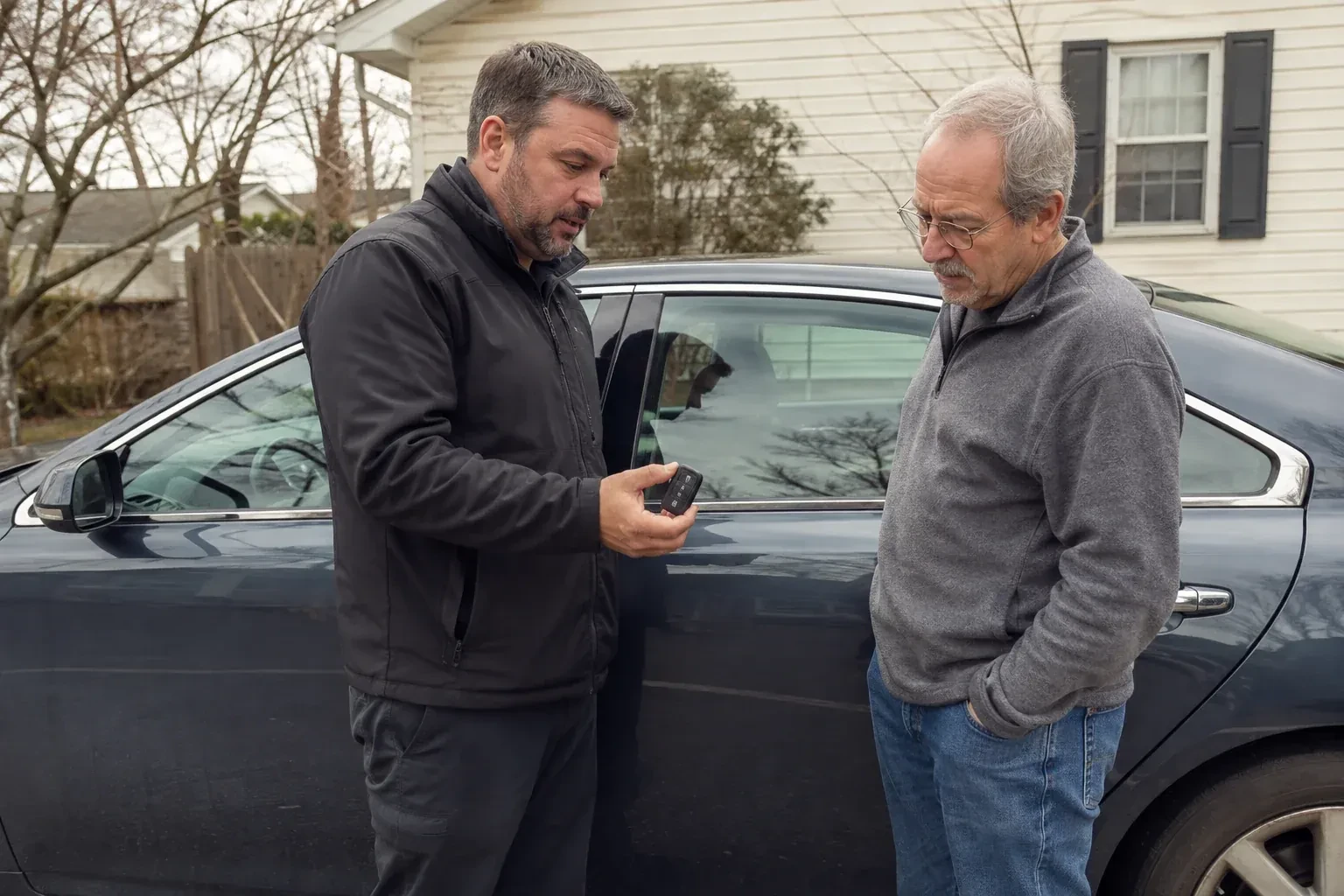
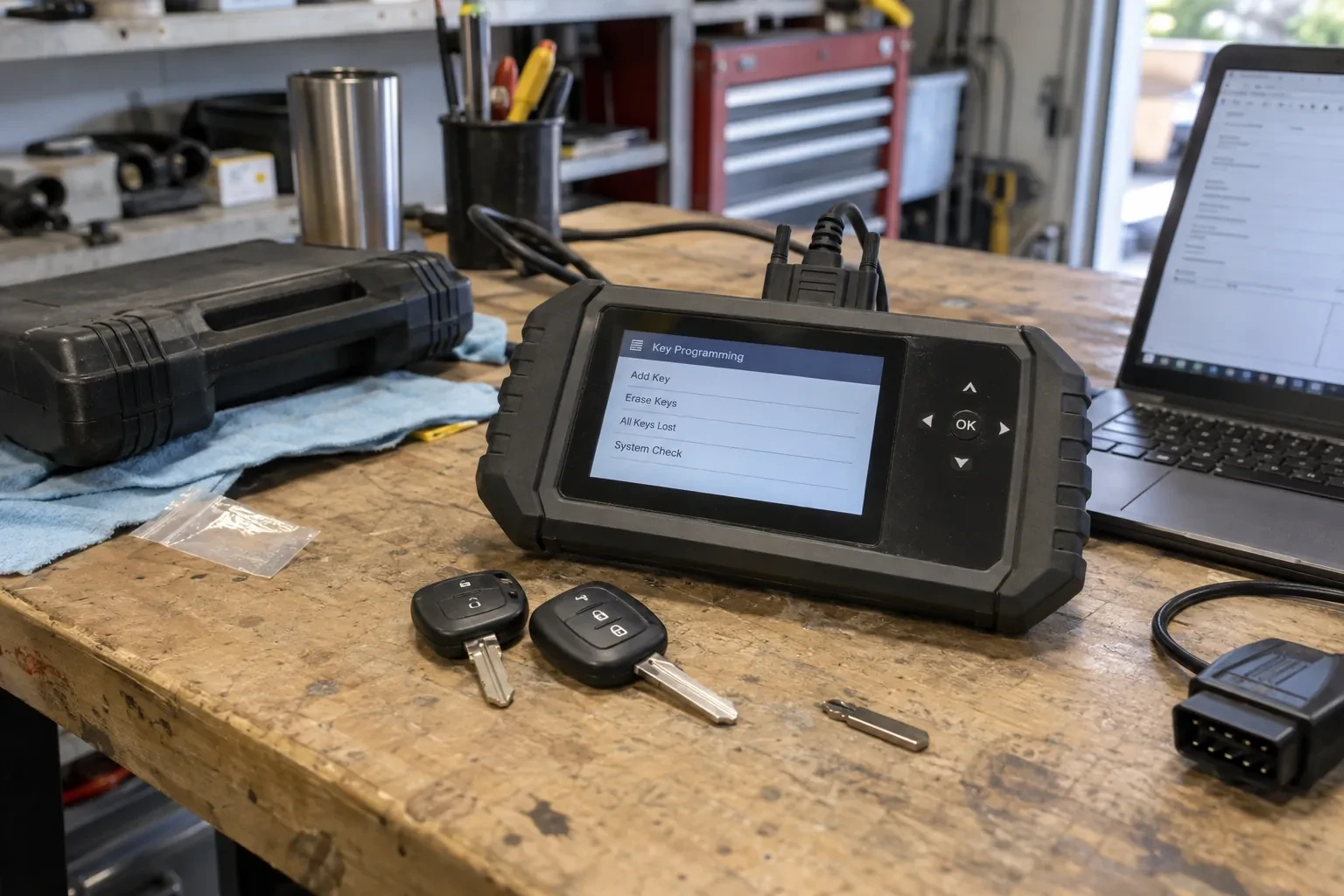
Newer machines add an electronic layer to a mechanical lock: a chip inside the key carries a coded signal that the ignition module checks before letting the engine run, so a correctly shaped blade that lacks the right chip will turn the switch without starting anything. Producing a working key for one of these machines means pairing a new transponder to the vehicle's electronics where that system supports it, using either an existing key as a reference or equipment built for it, though some systems need a dealer procedure or a code key only the manufacturer issues.
How the visit goesThe bike came home from its previous owner with a single worn key that starts the engine but does nothing for the seat latch or the fuel cap, both of which answer to keys nobody handed over.
Motorcycle & Scooter Keys
How the visit goes
Mapping every lock on the machine
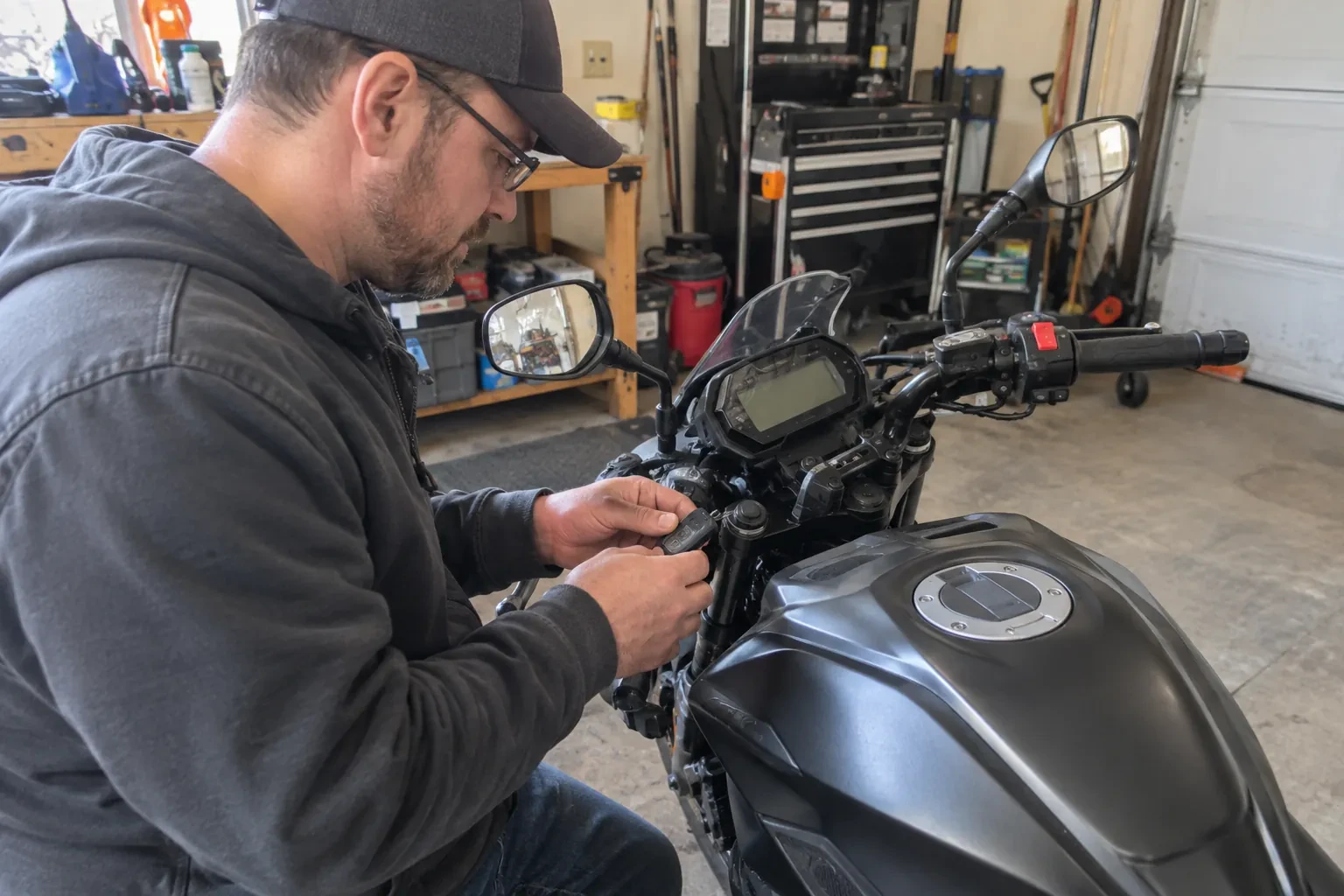
A motorcycle rarely has just one lock, so the locksmith walks around it noting the ignition and steering, the seat latch, a fuel cap on older models, and any storage compartment, top case or helmet lock fitted afterward. Each is checked against whichever key the owner has, since it is common for one or two of them to already share a cut while another was left on its own from the factory or a previous repair. Knowing the full list before starting means the finished key set covers every lock the owner actually wants, not just the one that prompted the call.
Bringing every lock onto one key
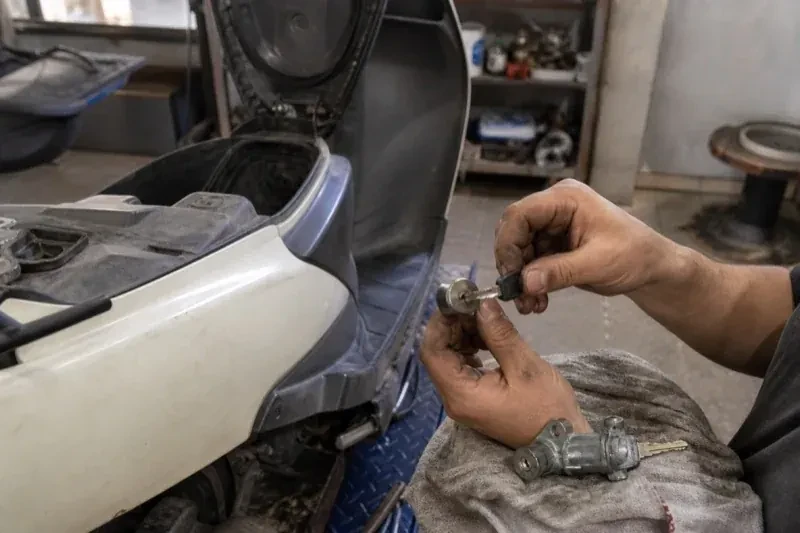
Where the cylinders are compatible and serviceable, bringing the seat, fuel cap and storage locks onto the ignition's key means opening each one in turn, removing its wafer pack, and fitting new wafers cut to the same combination as the freshly cut ignition key; some models instead need a matched replacement lock set. This is the same rekeying principle used on a house or car lock, applied to the smaller hardware found on a motorcycle. Each lock is tested with the new key on its own before the job is called finished, so the owner leaves with one key that genuinely operates every lock on the machine rather than one that has simply been told it should.
Getting through the next storage season
Heading into a season of outdoor storage, a lock that has just been cleaned and lubricated is in a better position to start the next season the same way it ended this one. A light coat of corrosion inhibitor on an exposed lock face, a cover that keeps direct weather off the ignition and seat area, and keeping the machine somewhere it is not standing in meltwater all help the same mechanism that was just serviced stay free through the months it sits unused. None of this takes long, but it is easy to skip until a stiff lock brings it back to mind.
Motorcycle & Scooter Keys
In the van
Torx and security bits
Wafer lock decoder
Transponder programming unit
Replacement ignition or steering lock
Penetrating fluid
Motorcycle & Scooter Keys
What affects the quote
Distance to the machine's location
Distance to wherever the machine is kept, whether a driveway across town or a more remote property, is part of every call, and travel time is reflected alongside the key work itself.
Weather affecting a seized lock
A lock seized by cold, ice or dried-out grease from a season of storage takes patient thawing and working before a key can be tested against it, which a winter call reflects.
Whether an immobiliser is fitted
A machine with an immobiliser needs its electronics paired as well as its lock cut, which adds equipment and testing beyond a purely mechanical key, and is reflected as its own step in the quote.
What to have ready
- Was the machine bought used, and how many keys came with it?
- Would you like every lock brought onto one key?
- Is the machine's VIN accessible on the frame or paperwork?
Motorcycle & Scooter Keys: questions
QuestionsWhat is the difference between decoding a lock and picking it?
Picking manipulates the wafers to open the lock without necessarily learning their depths, useful when the goal is just to turn the lock once. Decoding reads each wafer's actual depth, usually with a scope or a feeler-style tool, so that information can be turned into a cut key. For key service the lock is generally decoded rather than only picked, since the point is producing a working key, not just a single turn.
I only have the key, not the bike here. Can you still cut one from it?
Yes, a key on its own can usually be read and duplicated without the machine present, since the cuts on the blade carry the information the locksmith needs. What cannot be confirmed without the bike is whether an immobiliser is fitted or whether other locks are keyed the same way, so bringing the machine, or at least a photo of the ignition and dash, helps decide whether anything beyond a straightforward copy is needed.
My steering lock seized up over winter storage. Can that be fixed without a whole new lock?
Usually, yes. The cleaning method the lock's own maker directs, along with gentle, repeated working of the mechanism, frees many steering locks that have simply seized from disuse or corrosion, without needing to force the key or replace the lock. Only a lock that is cracked, badly rusted internally, or damaged by an earlier forced attempt tends to need full replacement rather than freeing and lubricating.
Related services
- Car Key ReplacementAfter fifteen years the blade has worn to a smooth sliver.
- Spare Car Key DuplicationThe paperwork for the used car changed hands last week, and the previous owner mentioned, almost as an afterthought, that a second key never turned up.
- Key Fob ProgrammingButtons on the fob still light up and the remote still clicks, but the vehicle refuses to start even with the fob sitting in the cupholder.