Car keys · German Mills
Transponder Key Programming in German Mills
Every key that ever opened the car is gone at once, one taken with a stolen bag, the spare misplaced months ago and never replaced.
In plain words
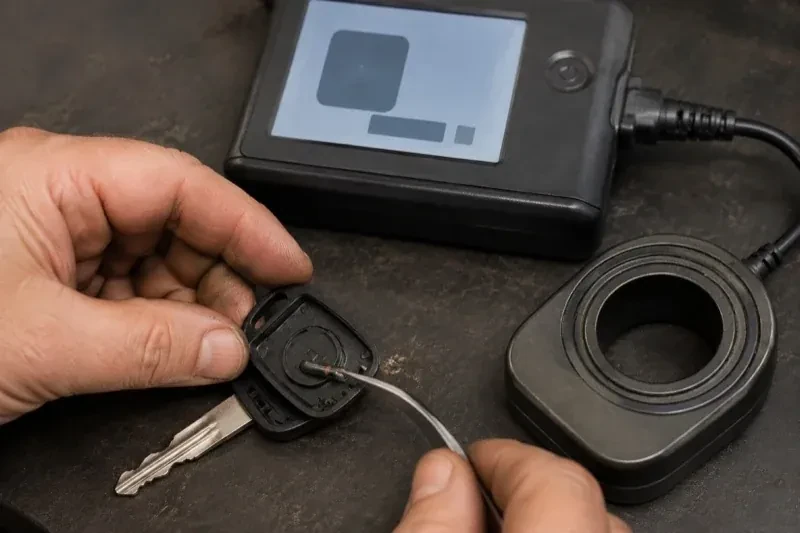
Not every transponder chip is built the same way. Early systems used a fixed code that repeated every time, while current vehicles increasingly use encrypted challenge-response chips that answer a different, unpredictable exchange with the immobilizer on every start. Identifying which generation a given vehicle uses tells the locksmith which programming approach and which chip family the new key needs, since a chip from the wrong family will not answer that system at all.
How the visit goesSince the remote starter was installed last month, the original key has started acting strangely, the car catches on the first turn some mornings and refuses outright on others. Nothing about the key itself changed, but whatever the installer touched under the dash seems to be arguing with it.
Transponder Key Programming
How the visit goes
Confirming who is asking
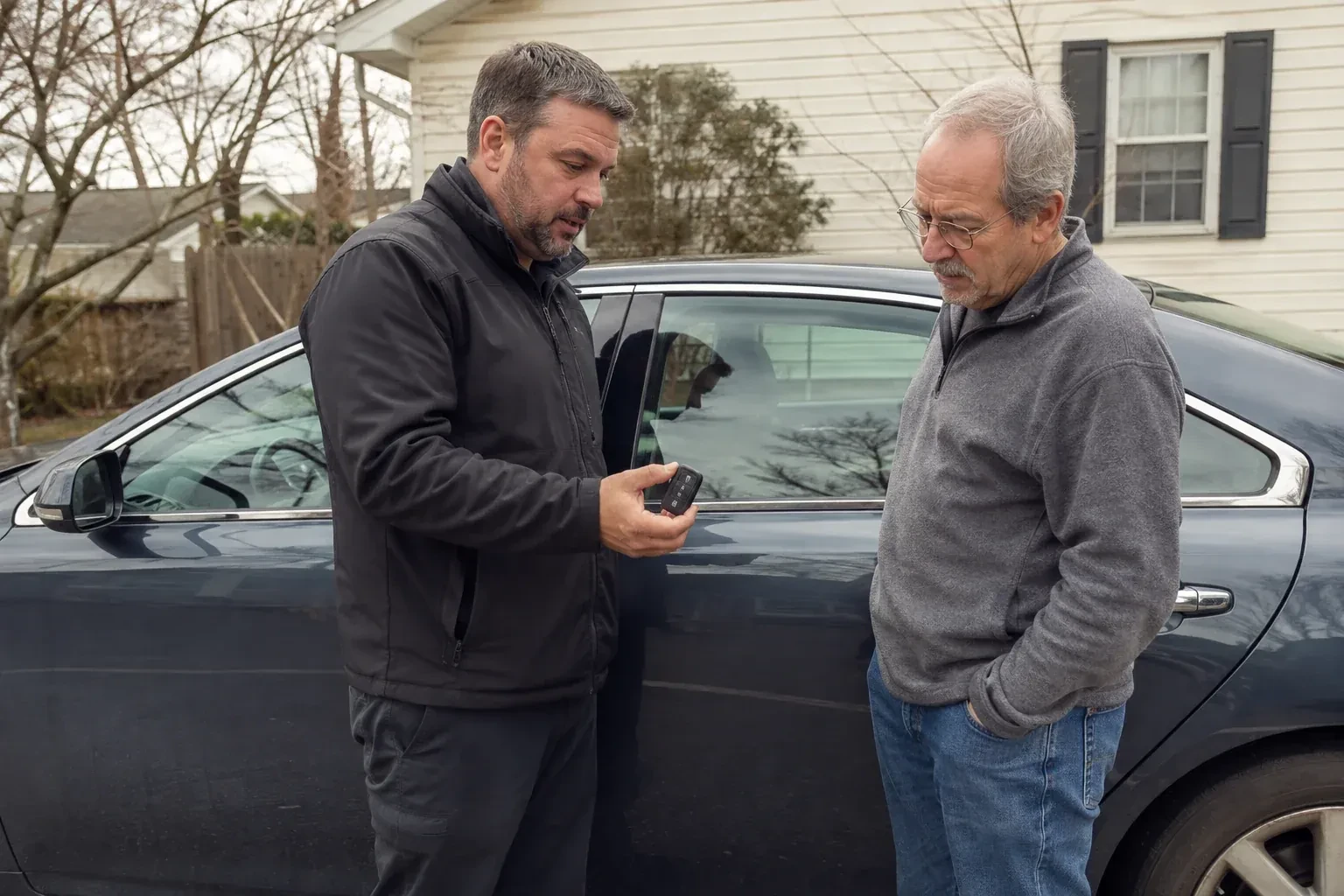
Before any chip is written, the locksmith confirms that the person requesting a key is connected to that vehicle. A vehicle permit or registration document with a matching name, or paperwork for a leased, financed, or company vehicle, settles this in moments. Photo identification is asked for alongside it. This step is treated as routine rather than an inconvenience, because the same check protects every vehicle owner who might one day be standing in the requester's place, and it decides nothing else about the visit until it is settled.
Cutting the blade first
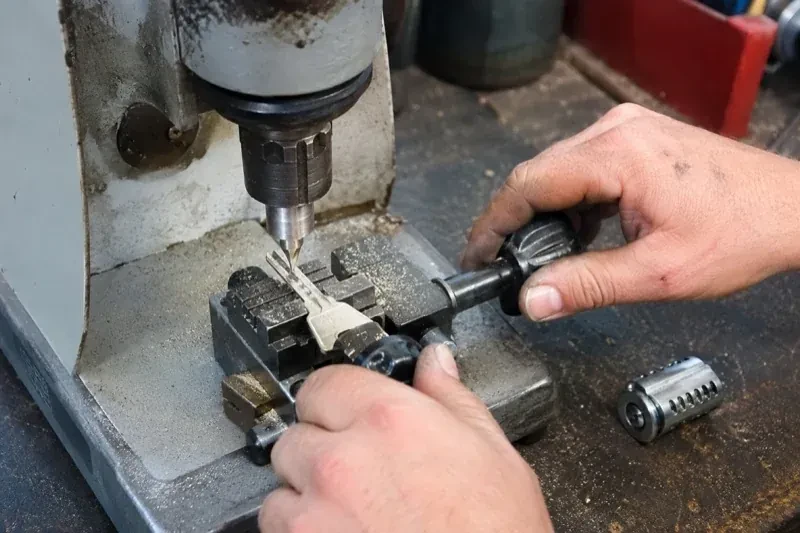
The mechanical side of the job comes first and is the more familiar half of it: the blade is cut to the lock's own pattern, either from a code on file or by duplicating a working key, and fitted into a blank carrying the correct chip. A perfectly cut blade still will not start a vehicle with an immobilizer on its own, which is the detail that catches out a counter kiosk. The two halves of the key are treated as separate tasks throughout, cut first, chip second.
Looking after the chip
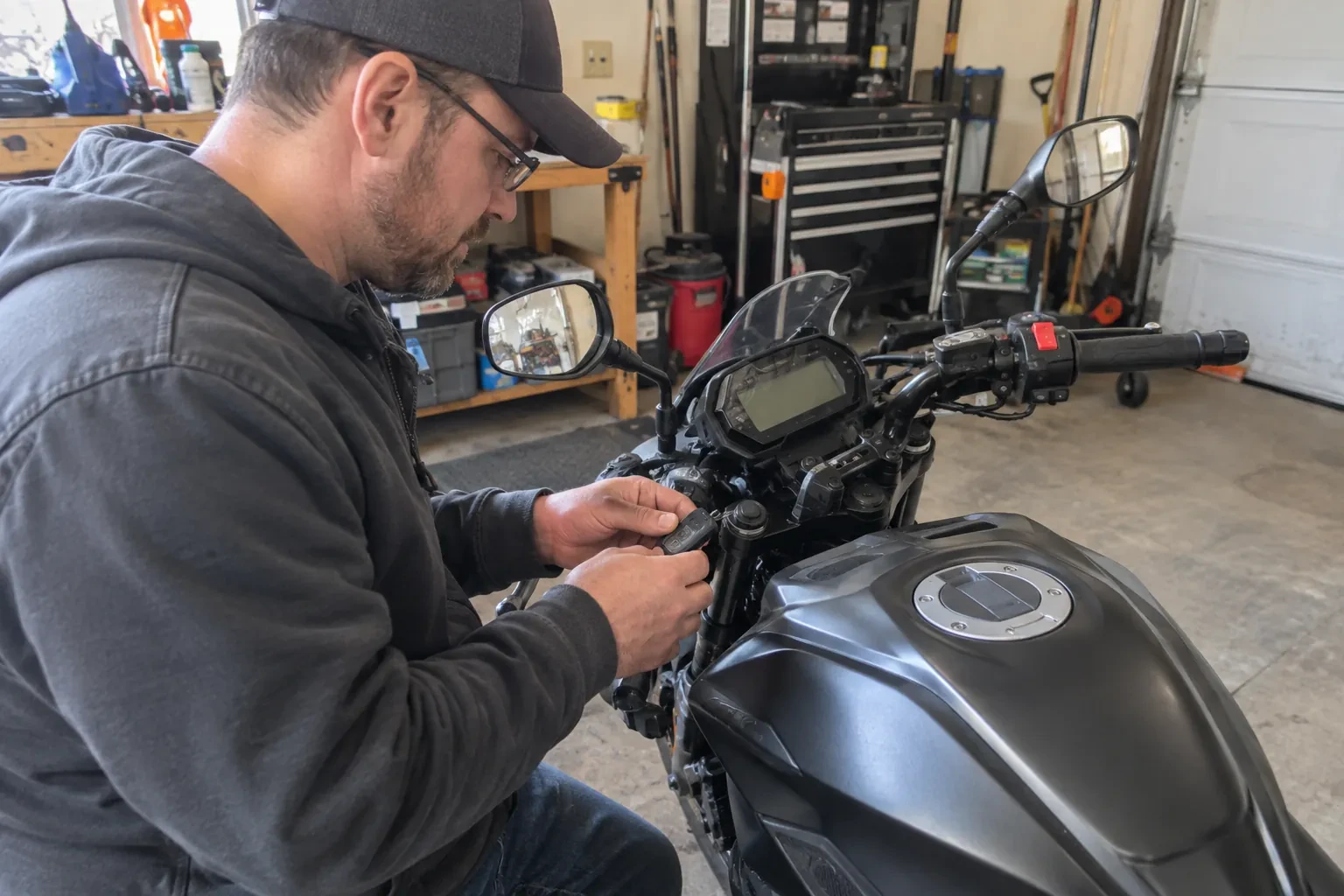
The chip inside a key head has no moving parts and asks for very little, but it does not tolerate being separated from the blade by force. A key that gets bent, snapped, or pried at with tools meant for a different job can lose its chip along with its shape, and a chip cut in half no longer answers anything. Carrying the key on a ring rather than loose in a pocket, and keeping it away from repeated hard impacts, is most of what looking after it involves.
Transponder Key Programming
In the van
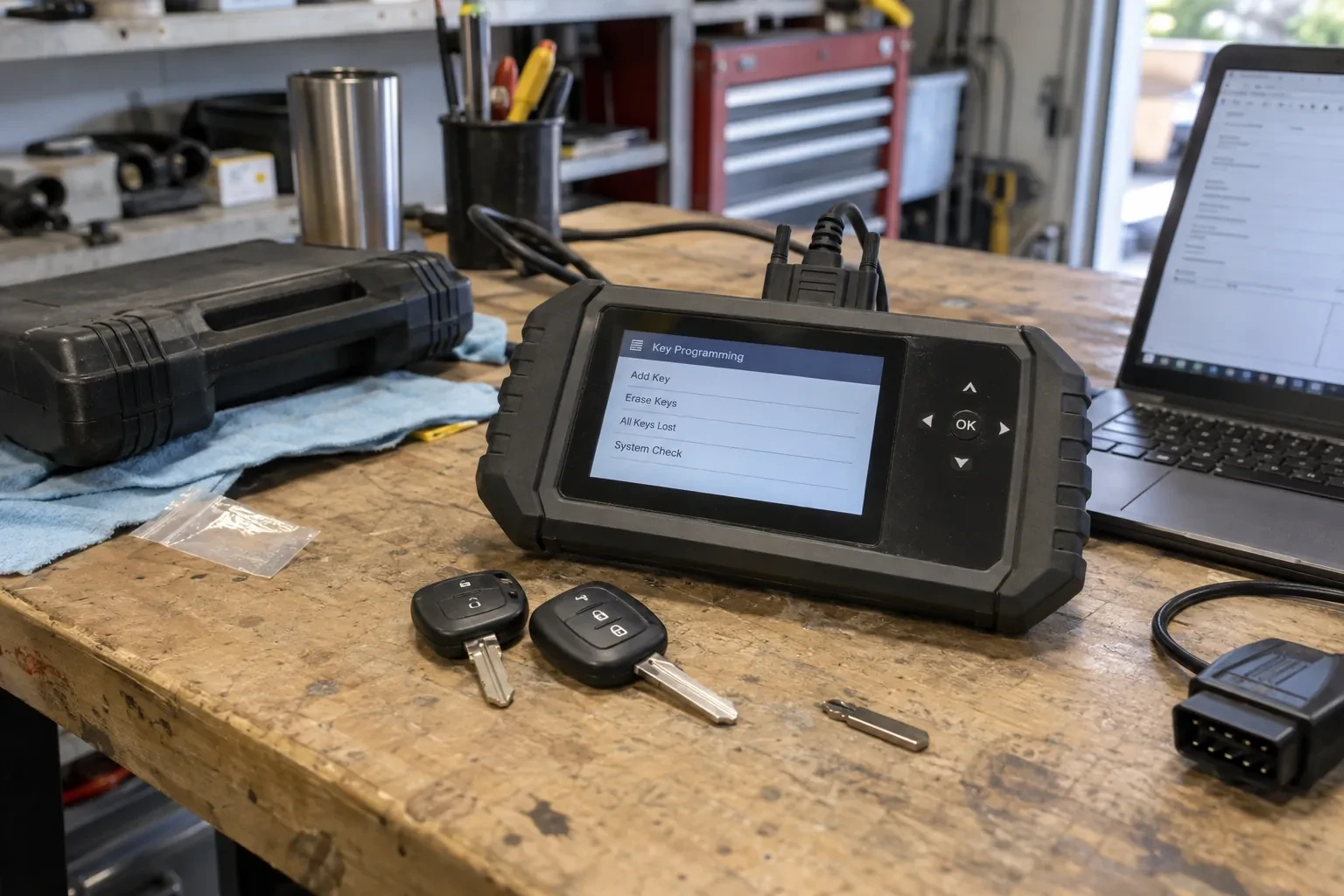
Replacement remote-head fob
Security-access module
Bench programming adapter
Diagnostic laptop or tablet
VIN reference tool
Transponder Key Programming
What affects the quote
Cutting method: by code or by duplication
Cutting from a manufacturer code tends to be more direct than duplicating from a worn or damaged working key, where extra care is needed to read the original cuts accurately before a blank is shaped to match.
Aftermarket alarms or remote starters already installed
A vehicle with an aftermarket alarm or remote starter wired into its ignition circuits may need extra time to confirm how that system interacts with the factory immobilizer before a new key is programmed.
Number of new keys requested
One replacement key is a smaller task than several keys for several drivers cut and programmed in the same visit, even though the underlying process for each additional key is largely the same.
What to have ready
- How many keys currently work?
- Is the dashboard security light flashing or staying lit?
- Is the key a basic blade, a remote-head, or push-button proximity?
Transponder Key Programming: questions
QuestionsIf I only want a spare, what happens to my current key?
Nothing changes about it. A spare is added alongside the existing key without clearing or altering anything already stored in the vehicle's memory. The only keys that get cleared are the ones you specifically identify as lost, stolen, or no longer wanted, and that is confirmed with you before any clearing happens.
Will adding a new key affect the keys I already have?
Adding a key is meant to leave every existing key exactly as it was; the new identity is written alongside the others rather than replacing anything. The locksmith checks that the older keys still work as part of the same visit, precisely so an oversight does not go unnoticed. Only a key you specifically ask to have cleared, such as one that was lost, stops working.
What's the difference between a transponder key and a key fob?
The transponder is the passive chip that talks to the immobilizer and lets the engine start; it needs no battery of its own. The fob is the separate, battery-powered piece that handles remote locking, unlocking and alarm functions. Many modern keys combine both in one housing, but they answer two different systems, which is why a fob with a dead battery can still start the car with its mechanical blade.
Related services
- Car Key ReplacementAfter fifteen years the blade has worn to a smooth sliver.
- Spare Car Key DuplicationThe paperwork for the used car changed hands last week, and the previous owner mentioned, almost as an afterthought, that a second key never turned up.
- Key Fob ProgrammingButtons on the fob still light up and the remote still clicks, but the vehicle refuses to start even with the fob sitting in the cupholder.