Lockouts · German Mills
Broken Key Extraction in German Mills
That key had been bending a little for years, and you kept straightening it.
In plain words
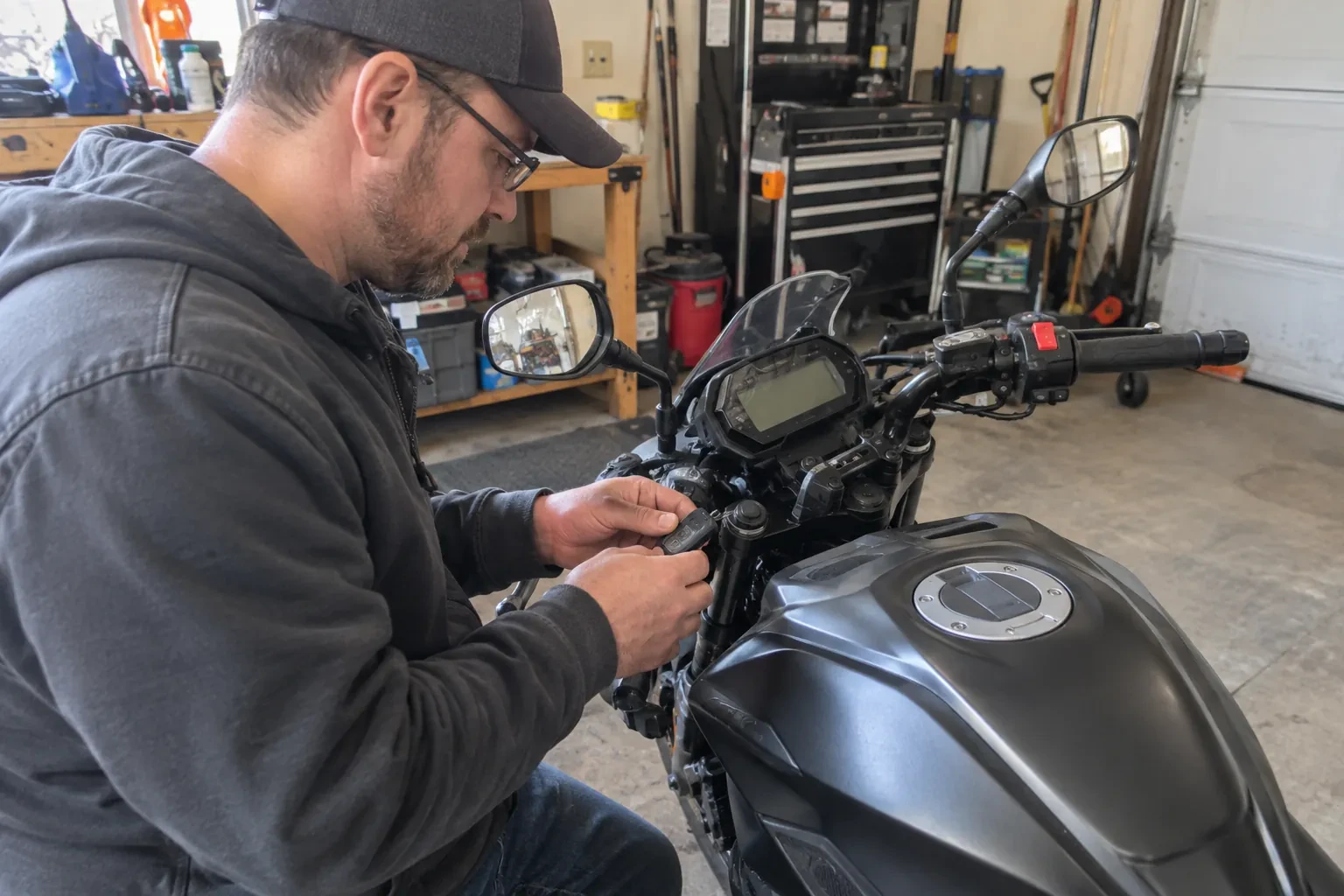
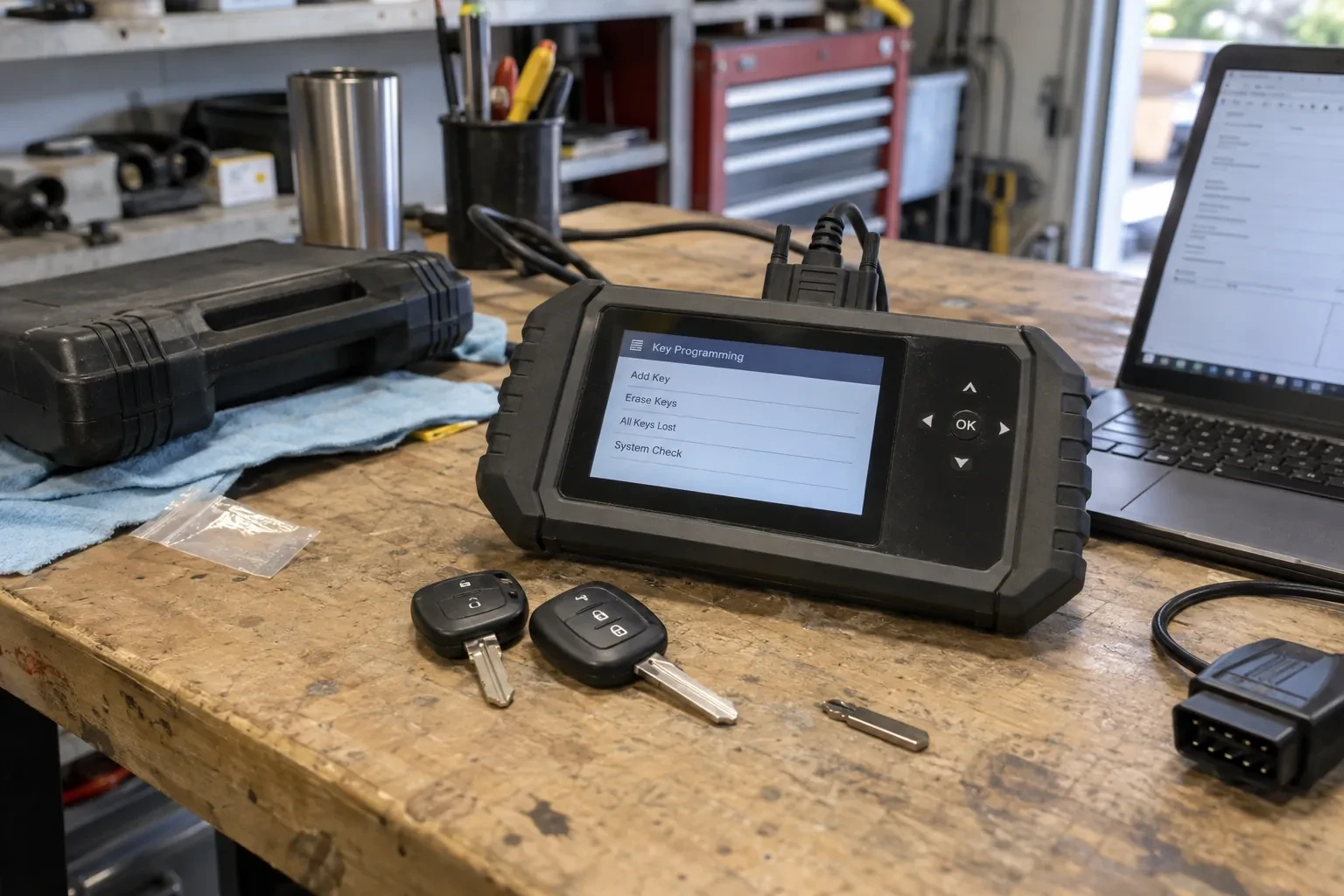
A car key that breaks in the door or the ignition is handled with the same extraction tools, with one difference. On most vehicles the plastic head of the key carries the transponder chip and the remote buttons, and that half is usually intact in your hand. Once the blade is drawn out of the lock, a new blade can often be cut and fitted to the existing head, so the chip keeps talking to the car without reprogramming. The ignition wafers are checked for disturbance and the steering lock is confirmed free. Proof of ownership is asked for before work begins.
How the visit goesYou were locking up on the way out when the key broke in the lock. Now the door is unlocked, a piece of key is jammed in the cylinder, and you were already running late for work.
Broken Key Extraction
How the visit goes
What has already been tried
Before choosing a tool the locksmith asks what has gone into the keyway since the break. Tweezers often push a fragment deeper; a screwdriver tip can bend pins; a drop of glue on the other half bonds to nothing useful and leaves a film that has to be dissolved before extractors will slide. A second key jammed on top of the first is a common find. None of this is anything to be embarrassed about; it just changes the plan, and knowing about it in advance means the right solvent, a plug follower or a spare cylinder is in the van before work starts.
Drawing it out with a hook extractor
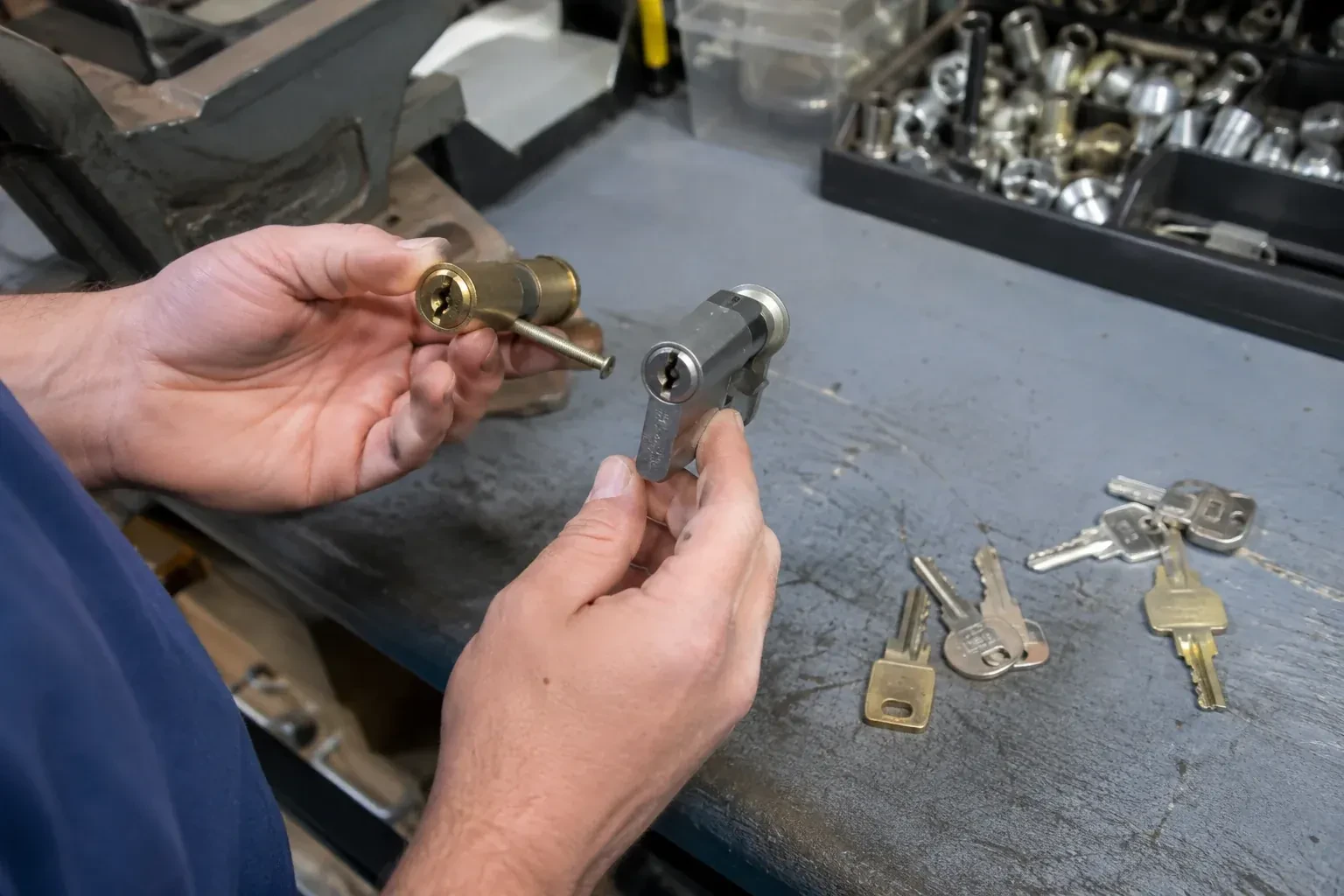
Every keyway has grooves, called wards, that run along its length above and below the blade. A hook extractor is a slim strip of spring steel thin enough to ride in one of those grooves beside the fragment. The locksmith slides it in past the broken piece, rotates it slightly so the barbed tip catches a cut in the blade, and draws it back out in a straight line. The pins are lifted clear as the piece passes them, exactly as they are when a key is withdrawn. It is a patient, felt process, and the cylinder is untouched by it.
A door that no longer fights the key
If the bolt had been dragging in its strike, that is corrected while the locksmith is there, because a bolt that binds turns every key into a lever. Dropped hinges get longer screws driven into the framing; a strike pocket that pinches the bolt is filed or shifted; a weatherstrip that was pushing the door off square is pared back. The test is simple: the thumb-turn should throw the bolt with one finger and no push on the door. Since wood swells in humid summers and shrinks in dry winter air, a seasonal glance at the screws keeps the key from taking the strain again.
Broken Key Extraction
In the van
Tension tool for resetting the plug
Replacement cylinder or deadbolt
Fine-jawed extractor pliers
Manufacturer-approved cylinder lubricant
Lock de-icer
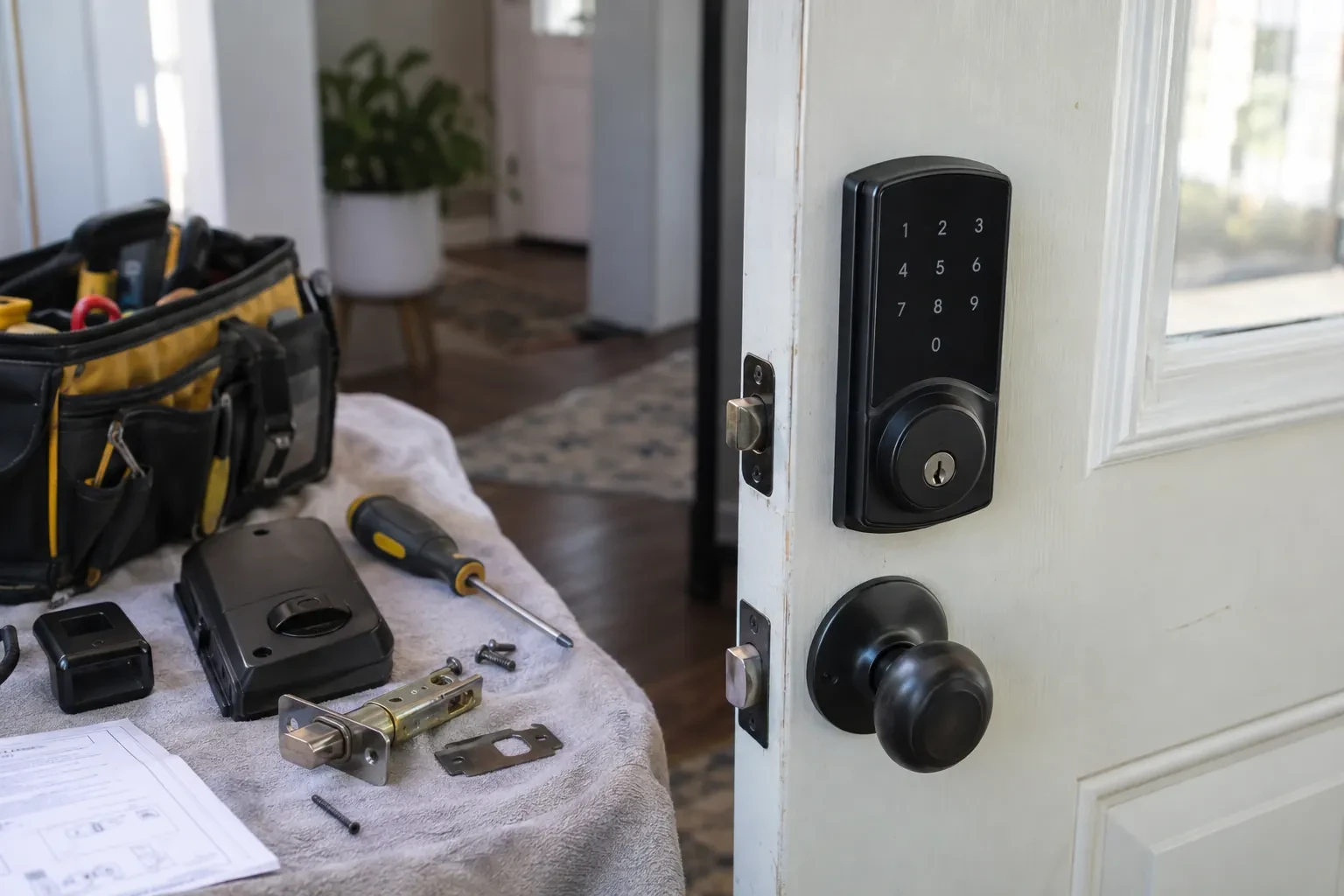
Broken Key Extraction
What affects the quote
Drilling and a replacement cylinder
On the rare occasion a cylinder must be sacrificed, the price includes the new cylinder or complete deadbolt plus fitting it, and that is agreed with you before the drill is picked up.
Rekeying other doors to match
If the cylinder ends up rekeyed or replaced, matching the other exterior locks to the new key is priced per cylinder, and simplest while the locksmith is already there.
Removing the cylinder to free it
A deep or bound fragment may need the cylinder taken off the door and the plug pushed out from behind on the bench. That disassembly and reassembly is quoted on its own.
What to have ready
- Is the door or vehicle locked or unlocked right now?
- Had the key been needing extra force or a wiggle lately?
- Do you have a spare key that works, or the key code tag from the lock?
Broken Key Extraction: questions
QuestionsHow long does the extraction usually take?
It depends on how the piece is sitting. A protruding fragment in a plug at rest can be out in moments. A deep piece behind lifted pins takes patient work with hooks and spirals. A glued or corroded fragment may mean removing the cylinder and freeing it from behind. Cutting and testing the new key, and any door adjustment, add their own time. The locksmith gives a sense of it after the first look.
Why did my key break at all?
Often fatigue, though not the only cause. A brass blade is weakest where the deepest cut leaves the least metal, and thousands of turns can slowly work a crack into that spot. Then one morning something asks more of it: a frozen cylinder, a bolt binding in a swollen door, grit in the keyway, or turning before the key was fully in. A bent, worn or poorly cut key can also fail on its own, with no such trigger. The lock is inspected afterwards to find which applied.
What proof do I need to show?
Photo identification and something that connects you to the lock. For a house or apartment that is a lease, a bill, addressed post, or confirmation from the property manager; for a business, your role there; for a vehicle, the registration or ownership papers with matching identification. If the documents are inside, say so on the phone and the check is completed once the door is open.
Related services
- Business Lockout ServiceAfter last night's power flicker the card reader beside the clinic door shows nothing.
- Break-In Damage Lock RepairThe back door looks closed until you touch it.
- Seized & Jammed Lock OpeningThe old mortise lock on the front door of the house turns the key halfway and stops with a dull clunk.