Lockouts · German Mills
Break-In Damage Lock Repair in German Mills
The back door looks closed until you touch it.
In plain words
A break-in repair happens alongside a police file and an insurance claim, and a good locksmith keeps both in mind. Before any hardware is moved the damage is photographed as found: door face, edge, strike, jamb, hinges and glass. The old parts are kept for the adjuster unless you prefer otherwise, and the written record at the end lists what was broken, what was replaced, what was reinforced and what is left for another trade. Insurers ask policyholders to document losses, keep damaged property and keep receipts, and this visit produces all three. You choose who does the repair; the locksmith makes it easy to show what it took.
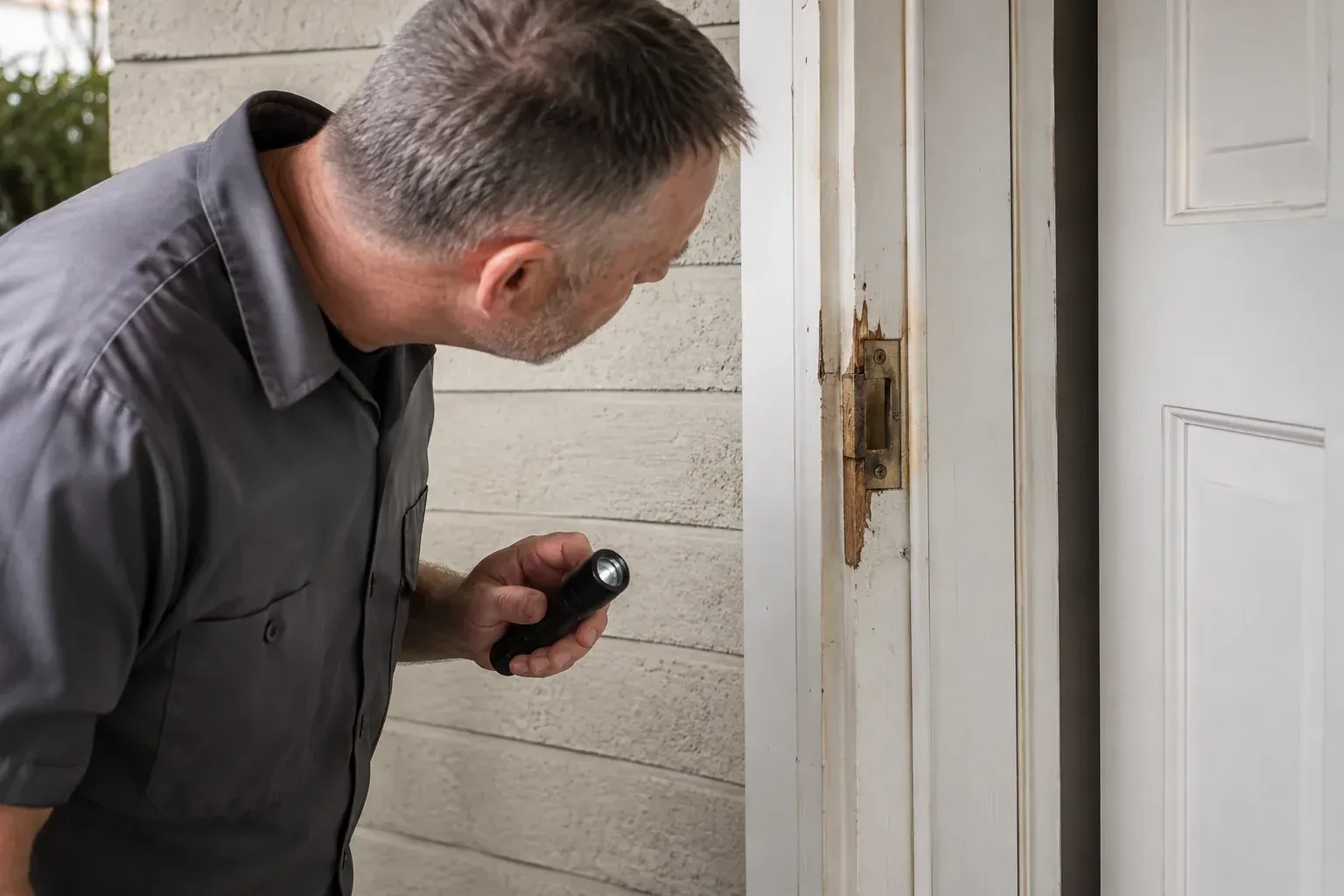
How the visit goesThe back door looks closed until you touch it. The edge is crushed where a bar went in, the latch is bent sideways, and the door swings free with a gentle push no matter how you turn the key.
Break-In Damage Lock Repair
How the visit goes
Who is asking, and is the scene clear
The first minutes are about people, not hardware. The locksmith confirms that the caller has authority over the property: photo identification with the address, a lease, an ownership record or an instruction from the property manager. A break-in is precisely the moment a stranger could ask for a lock to be changed, so the check protects the household. The second question is whether anyone is hurt and whether the intruder is certainly gone; if the police have not yet been called, that call comes before any work, and the door is left as found until they say the scene is released. Only then does the assessment of the opening begin.
Rebuilding the strike side
The strike is where most forced doors failed, so it is rebuilt rather than reattached. The old plate comes off and the bolt pocket is cut to full depth, since a pocket that is too shallow stops the bolt from extending completely and leaves it easier to push back. A security strike with a boxed pocket is set flush into the jamb, its long screws driven through the jamb and shim space into the wall stud, with the longest screws placed nearest the door stop where the bolt bears. Pilot holes are drilled first so the screws seat without splitting the repaired wood. The bolt now pushes against framing lumber instead of two short screws in soft trim.
Stronger than it was before
A repaired door is usually the strongest door in the house, because the parts that failed have been replaced with the parts that should have been there. The bolt now sits in a boxed strike anchored to the stud by long screws, the hinge side is fixed to framing rather than trim, the door edge is sleeved in steel where it was soft, and a full-throw deadbolt with a hardened insert has replaced the light one. None of this shows from the street. What changes is that a repeat attempt meets resistance at every point the first one found weak, and the noise and time that demands is exactly what intruders avoid.
Break-In Damage Lock Repair
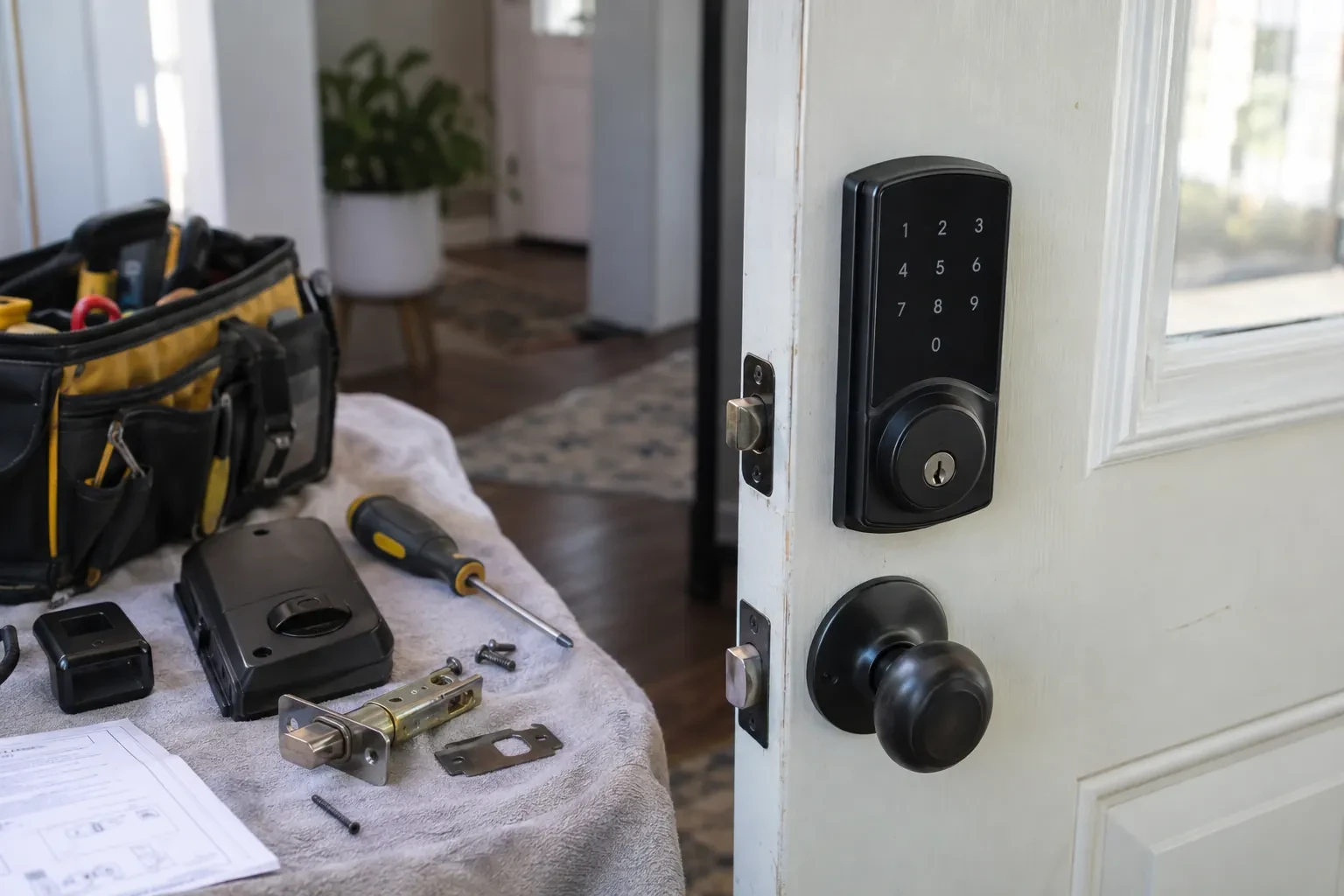
In the van
Two-part wood epoxy and shims
Plywood and cleats for boarding
Jamb repair plate
Rekeying pins and key blanks
Latch guard plate
Break-In Damage Lock Repair
What affects the quote
Strike and hinge reinforcement
A security strike box, hinge reinforcement plates and three-inch screws on both sides of the door are listed as their own items, so you can see what strengthens the frame beyond replacing what broke.
Work referred to another trade
A shattered frame, a broken door slab or smashed glass is listed as needing a carpenter, door installer or glazier, and that work is quoted by those trades rather than by the locksmith.
Door edge reinforcement
A wrap-around edge reinforcer is added when the wood around the bore is crushed or split. It is a separate part, chosen to suit the door thickness and the hardware going into it.
What to have ready
- Have the police been called, and do you have an occurrence number?
- Is the damage to the lock, the frame, the door edge or the glass, or several?
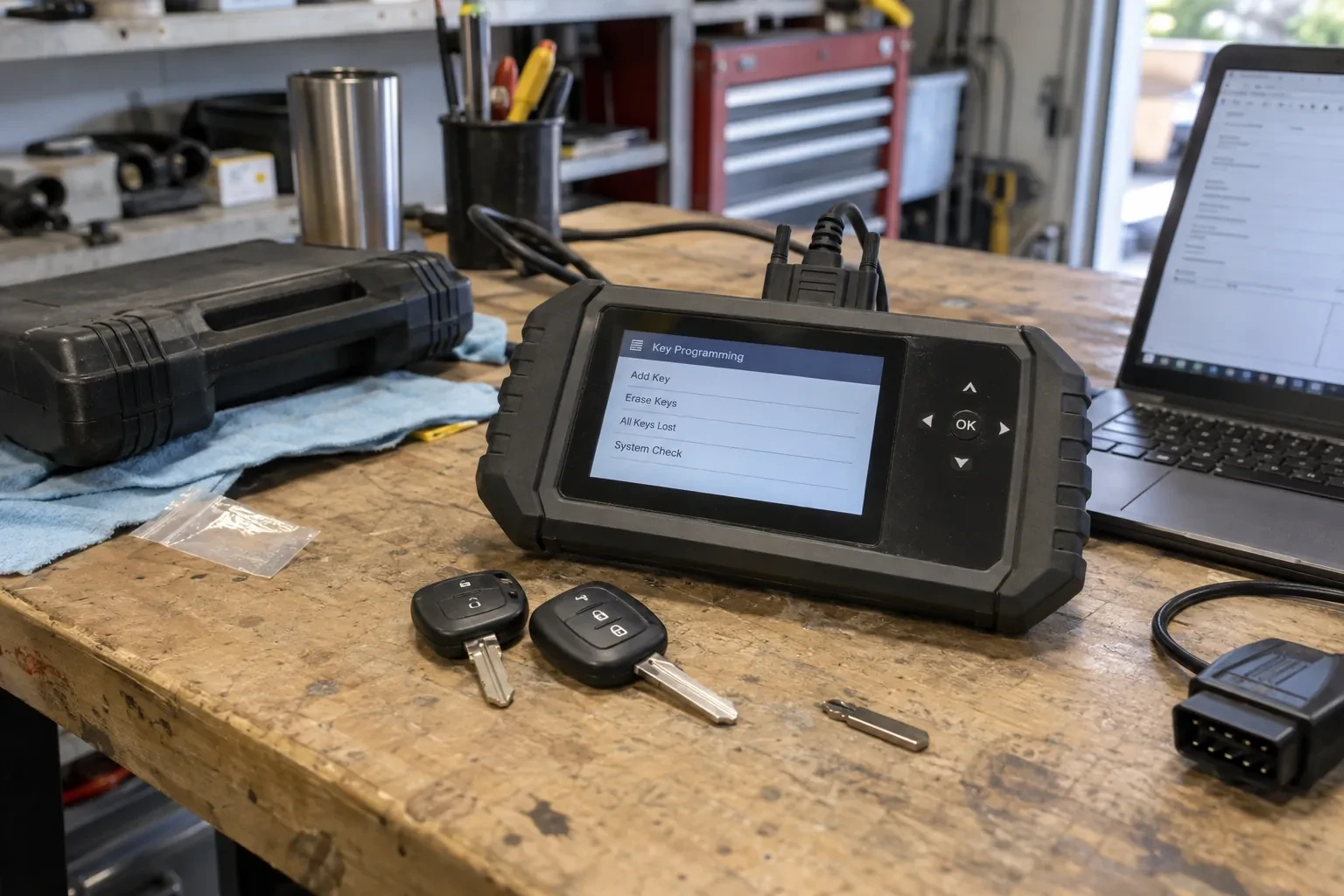
- Were any keys, garage remotes or alarm codes taken?
Break-In Damage Lock Repair: questions
QuestionsI rent. Who arranges the repair, and can I change the lock myself?
Tell your landlord or property manager as soon as the police have been called; provincial tenancy law makes the landlord responsible for repairs to the unit, and most will arrange the locksmith. A tenant may not change locks without the landlord's agreement, and a landlord who changes them must give the tenant keys, so the visit is coordinated between you. If you arrange securing yourself in an emergency, keep the receipt and the record of what was done for both sides.
Will the repair be visible from outside?
Mostly not. A boxed strike sits flush in the jamb, long screws hide behind hinge and strike plates, and a repaired jamb is filled and dressed so paint or stain covers it. A wrap-around door edge reinforcer is the one part that shows, as a slim steel band at the lock, and it can be finished to match the hardware. New deadbolts are matched to the trim on your other doors where you want them to blend in.
Should I upgrade to a stronger deadbolt while you are here?
It is the natural moment, because the door is already open for repair. A deadbolt with a full one-inch throw, a hardened insert against sawing and a low-profile face that resists a wrench grip, graded to a recognised durability standard, takes little extra effort to fit now compared with a return visit. Pair it with the reinforced strike and long screws and the door becomes hard to attack from any side. The choice is yours; the locksmith shows the options and lets you decide.
Related services
- Business Lockout ServiceAfter last night's power flicker the card reader beside the clinic door shows nothing.
- Broken Key ExtractionThat key had been bending a little for years, and you kept straightening it.
- Seized & Jammed Lock OpeningThe old mortise lock on the front door of the house turns the key halfway and stops with a dull clunk.