Car keys · Buttonville
Car Lockout Service in Buttonville
Your toddler is buckled in the back seat, the doors locked when you shut yours, and your keys are on the front seat beside your phone.
In plain words
Safety and authorisation frame every car lockout, and both are on your side. Confirming that you own the vehicle, or have its owner's say-so, protects your car from being opened for anyone else who might one day claim it; photo identification with the vehicle permit or a rental agreement settles it, and the check can finish once the glovebox is reachable. On a highway shoulder the locksmith parks as a shield, works from the side away from traffic and keeps hazard lights going, following the same rules the provincial driver's handbook gives stranded drivers. A calm, methodical opening is the outcome of both.
How the visit goesYou stepped out at the pump to pay inside, the passenger locked their door out of habit, and the driver's door caught behind you. The engine is off, the keys are in the ignition, and the line of cars behind you is growing.
Car Lockout Service
How the visit goes
Proving the car is yours to open
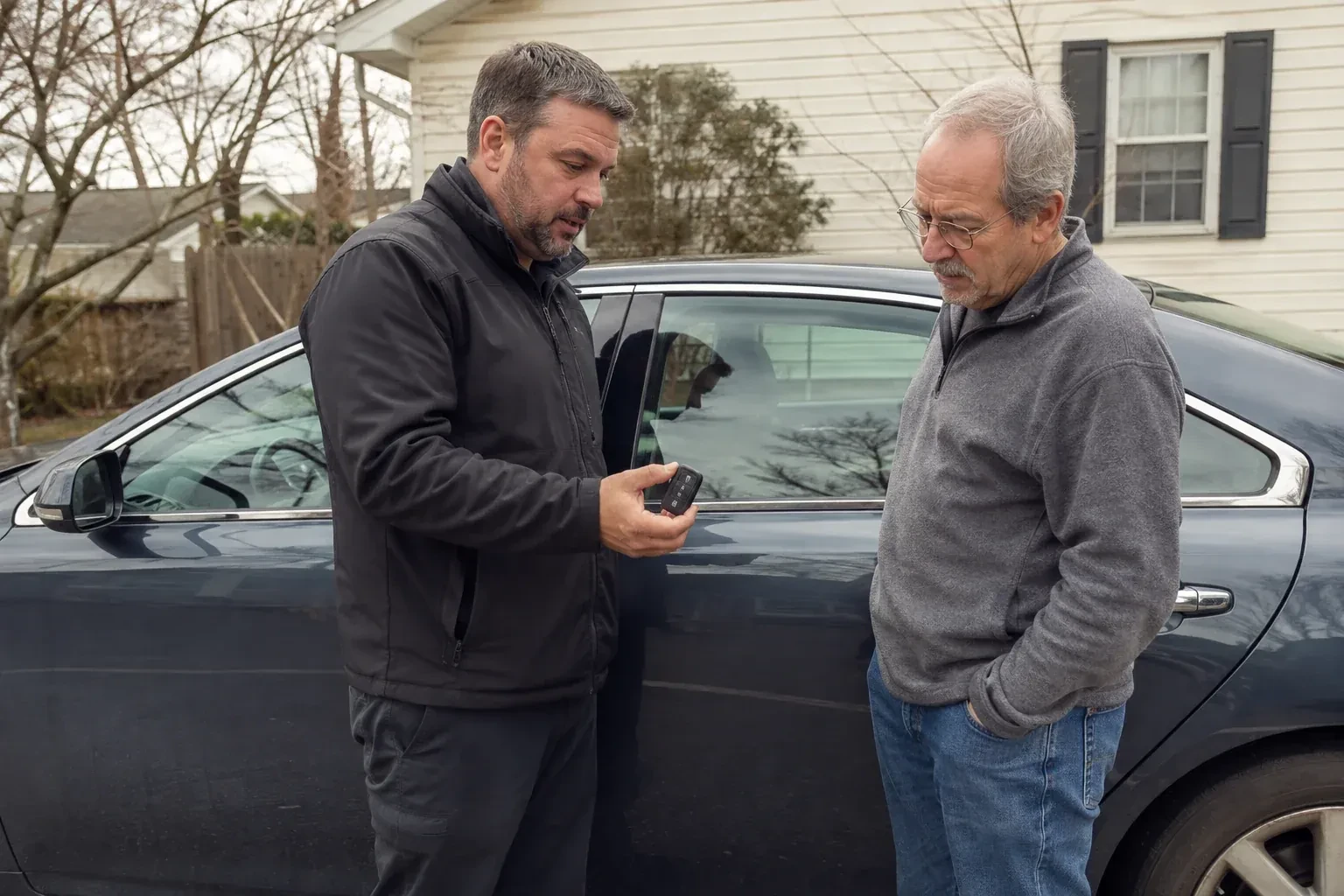
Before a wedge or pick comes out, the locksmith confirms that the person asking has the right to be in that vehicle. Photo identification alongside the vehicle permit, the insurance card or a rental agreement settles it in a moment, because the permit carries the plate number and the owner's name and address. When those papers are in the glovebox, as they usually are, the locksmith notes your identification, opens the door, and matches the documents before leaving. A company vehicle is confirmed with a call to the fleet contact. Roadside clubs ask their contractors for the same thing, and it is the step that keeps your own car safe from a stranger's claim.
Making a key when the keys are gone
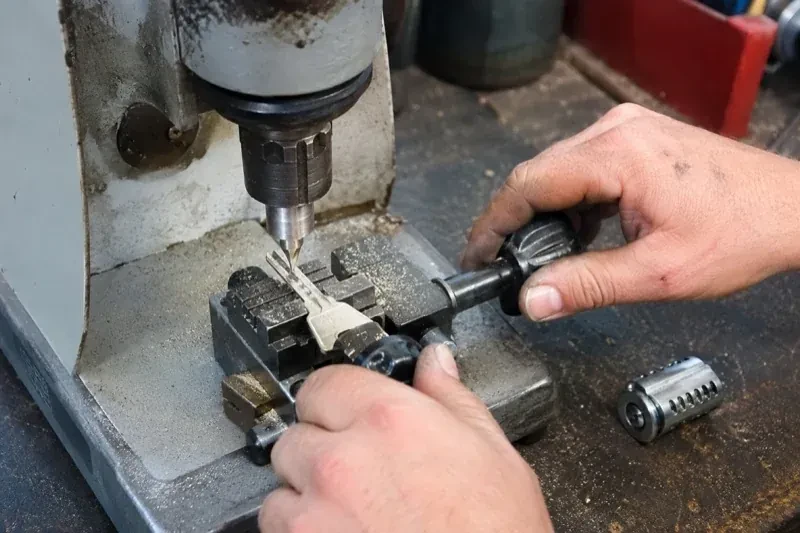
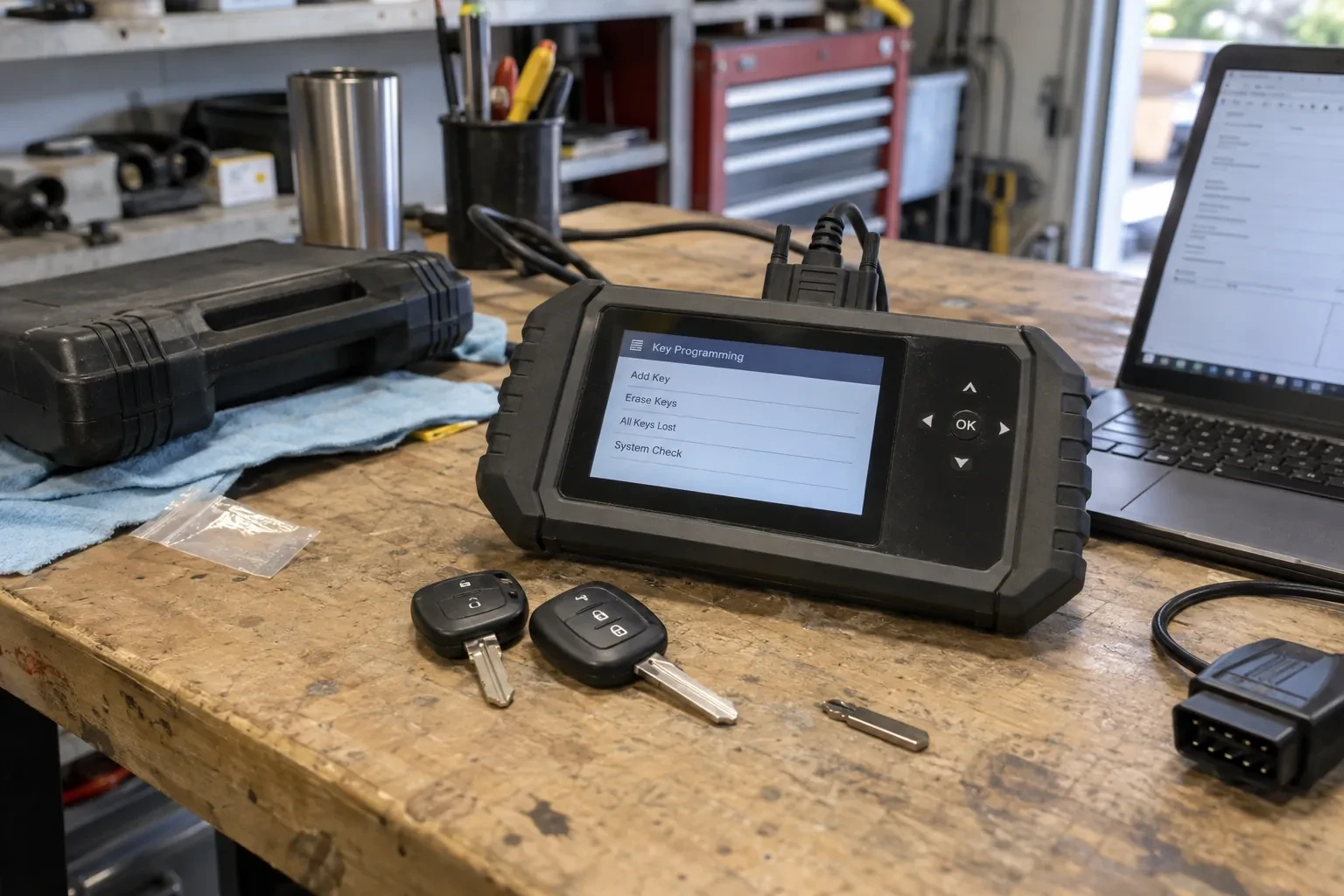
Lost keys turn the visit into two stages. First the car is opened without damage. Then the locksmith produces a working key: the door cylinder is decoded to read the mechanical cuts, or the key code is drawn from the vehicle's records against your proof of ownership, and a blade is cut on the machine in the van. A transponder key or fob is then programmed where the vehicle's own security system supports it, sometimes needing manufacturer credentials or a different procedure, and where the vehicle allows, the lost keys are erased so they no longer start the car. You leave with a key that unlocks, starts and locks, tested at the roadside.
Keys in hand and a plan for the spare
Once the keys are back in your pocket, a minute on spares is well spent. A second key kept at home, with a family member or in a small lockbox at the house turns the next lockout into a phone call to someone you know. For a keyless car, the spare fob should be stored away from the car and away from the main fob, so a lost bag does not take both. If the vehicle came to you with a single key, the locksmith can cut and program a duplicate while the tools are out, and can show you how the mechanical blade hides inside the fob for the day the battery quits.
Car Lockout Service
In the van
Twelve-volt jump pack
Fob coin batteries
Transponder key blanks
Key cutting machine
Inflatable air wedge
Car Lockout Service
What affects the quote
Weather on the day
A cylinder frozen solid or a door frozen shut against its seal takes patient thawing before any opening can begin, so a call during a deep cold snap is quoted with that time in mind.
Damage from earlier attempts
A seal stretched by a coat hanger or a cylinder scarred by a screwdriver may need attention beyond the opening. The locksmith points out what was already there before quoting any repair.
Type of key or fob
A plain metal key, a transponder key with a chip, a remote-head key and a proximity fob each cost different amounts as parts, and each takes its own programming step when one has to be replaced.
What to have ready
- Is the lock or the door frozen, and how cold has it been overnight?
- Where are the keys right now: inside, in the trunk, lost, broken or in a fob that has stopped working?
- If the keys are lost, do you want a replacement key made in the same visit?
Car Lockout Service: questions
QuestionsCan you open a pickup, a motorcycle, a trailer or a motorhome?
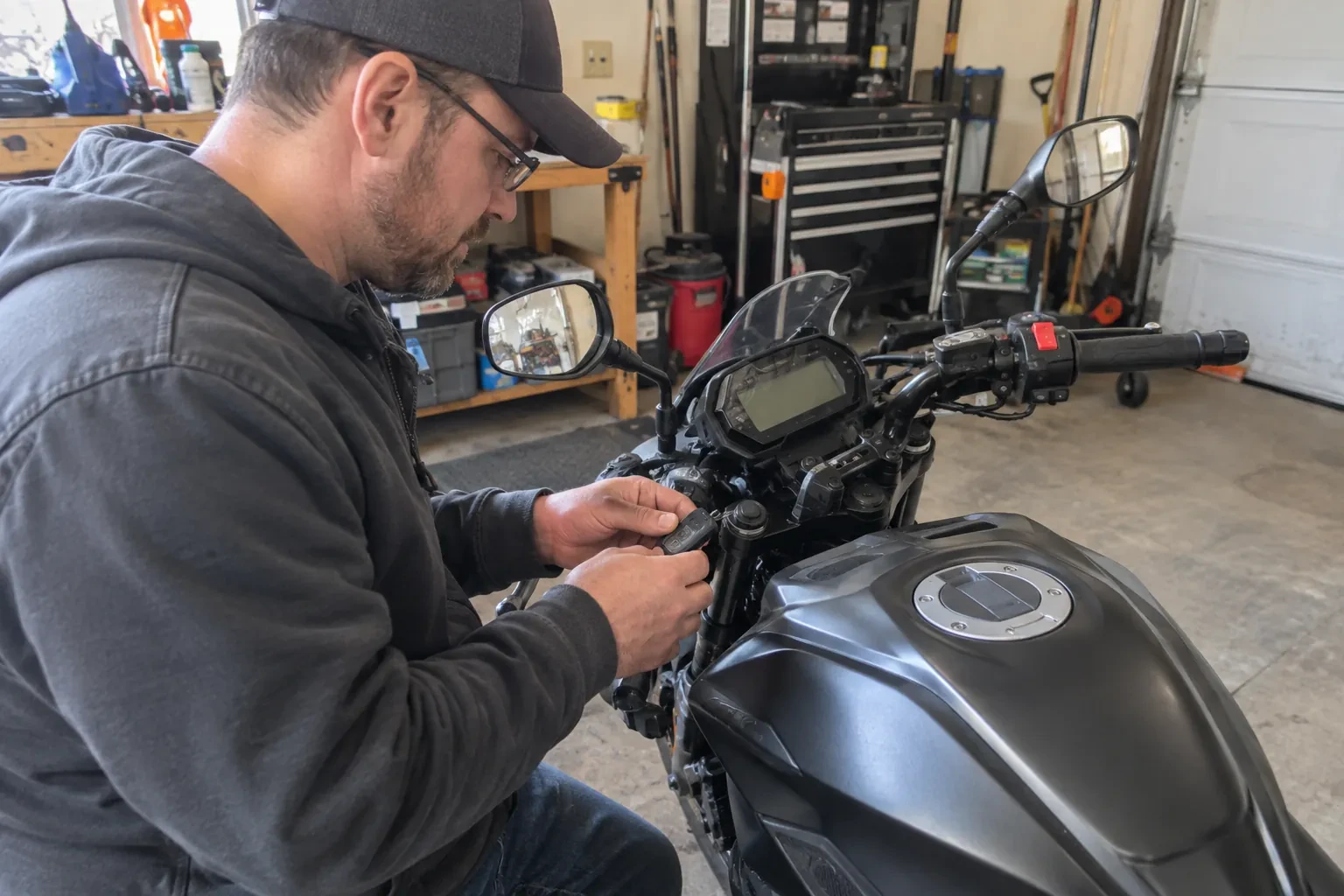
Yes. Trucks and vans often have a separate cargo or tailgate lock, motorhomes use household-style cylinders on their living-space doors, trailers and hitch locks are padlock-type hardware, and motorcycle seat and steering locks are small wafer cylinders. Say what the vehicle is when you call so the right picks and blanks are in the van, and expect the same authorisation check for each.
I am on the shoulder of the highway. Is it safe for you to work there?
It can be, with the routine stranded drivers are given: hazard lights on, out of the driving lanes, and nobody standing on the traffic side. The locksmith parks behind the car as a shield, works from the side away from traffic, and asks you to wait somewhere safe. If the shoulder is too narrow or the traffic too heavy, moving the car a short way to the next exit or lot by tow may be the better order of things.
The alarm went off. Is that a problem?
It is expected. Opening a door without the fob or key wakes most factory alarms, and quieting them is part of finishing the job: a turn of the key in the door or ignition, or a press of the fob once the car has power, usually does it. An aftermarket alarm is reset from its own valet switch. The locksmith stays until the car is quiet and every lock has been cycled.
Related services
- Spare Car Key DuplicationThe paperwork for the used car changed hands last week, and the previous owner mentioned, almost as an afterthought, that a second key never turned up.
- Key Fob ProgrammingButtons on the fob still light up and the remote still clicks, but the vehicle refuses to start even with the fob sitting in the cupholder.
- Transponder Key ProgrammingEvery key that ever opened the car is gone at once, one taken with a stolen bag, the spare misplaced months ago and never replaced.