Brown's Corners Locksmith Pros · Markham
Transponder Key Programming: inside the visit
Locksmith · Markham, Ontario
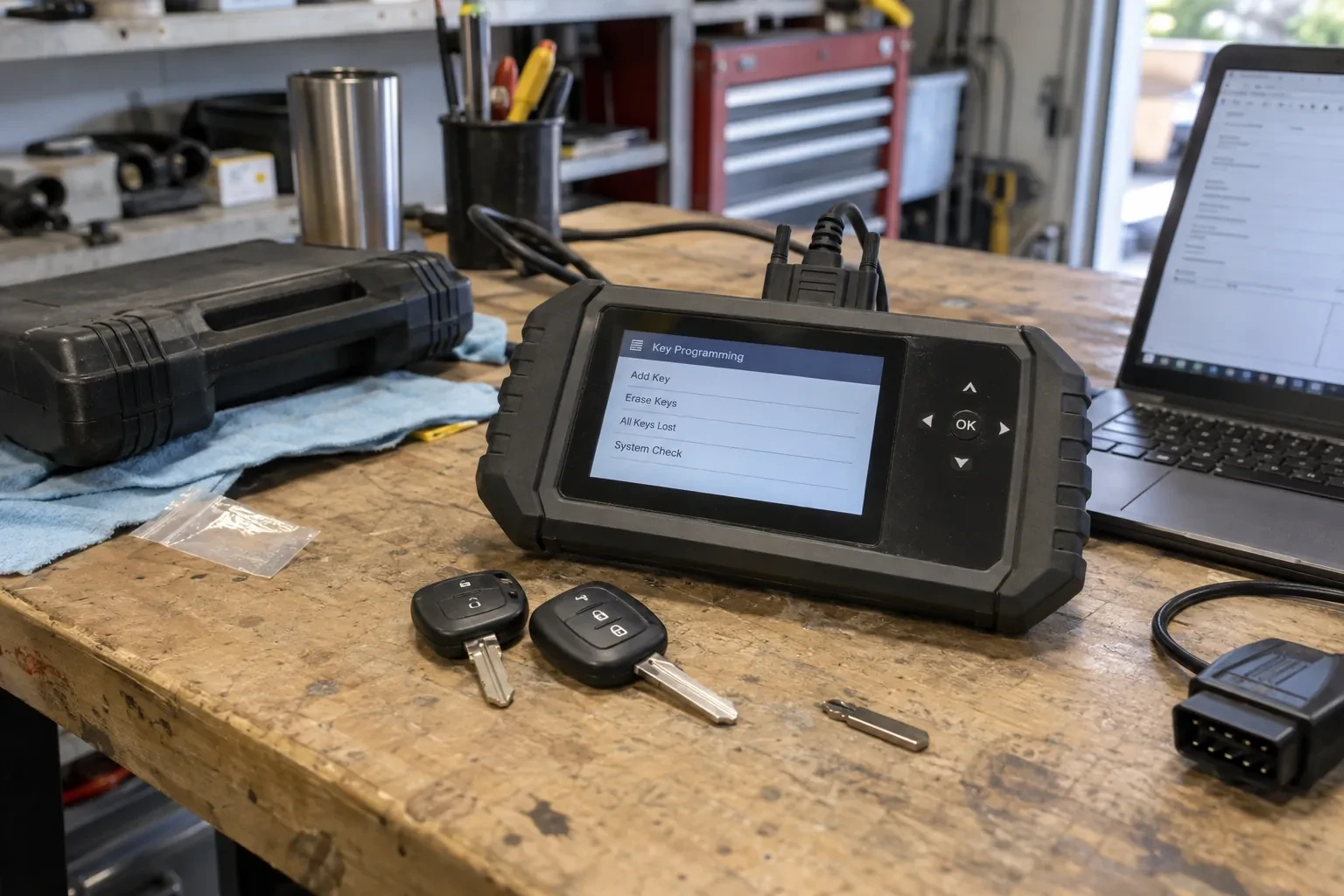
When every key for a vehicle is genuinely gone, there is nothing left to vouch for a new one, so the visit starts by re-establishing secure access to the immobilizer's own module, sometimes through the vehicle's manufacturer network. Only once that access is confirmed can a fresh key be cut and its chip written in. It takes longer than adding a spare with an existing key on hand, but it follows the same underlying logic and finishes with the same test: an engine that starts on the new key alone.
How the vehicle's key list is reached
Some vehicles let a locksmith see and edit the key list directly once a diagnostic tool is connected to the onboard port. Others hide that list behind a manufacturer security session that has to be established first, particularly on newer models with more layers between the port and the immobilizer itself. Knowing which situation applies before starting sets the right expectation for how the visit will unfold, and for all-keys-lost work it decides whether the first step is reached directly or has to be built from nothing.
Clearing a lost key's identity
When a key has been lost or stolen, its identity is removed from the immobilizer's memory so that key can no longer start the vehicle, wherever it happens to be. This is done in the same programming session as adding the new key, using the same connection to the vehicle's module. The old key remains a real object that still turns a lock somewhere, but it stops being able to authorize the engine, which is the part of the vehicle that mattered in the first place.
A spare that already exists, not one for later
A spare key made before it is needed sits in a drawer doing nothing until the day the only other key is lost, and on that day it is worth more than any amount of good intention would have been. Households that arrange this while it is convenient rarely regret it, and the visit that adds a driver's key or a genuine spare is no more involved than the one that replaces something already missing. The difference is only in when it happens.